The Psychodynamic Theory of Forgetting
- The psychodynamic theory, first set out by Freud, says some forgetting is motivated rather than accidental.
- A memory that would cause distress is kept out of awareness to protect you from that feeling.
- The memory itself is not lost; it is pushed down and becomes hard to reach.
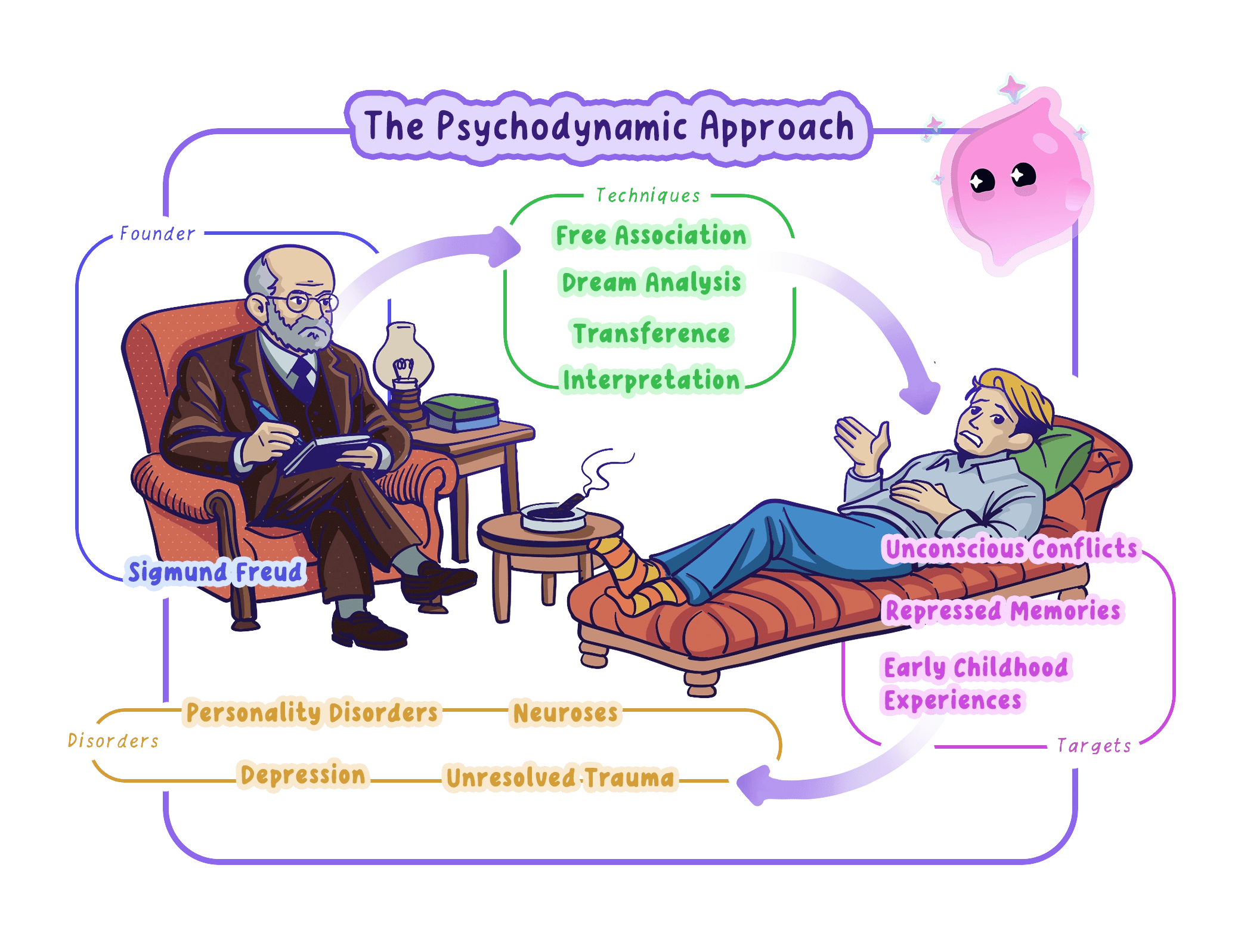
Key Idea
- Motivation is the driver: the mind keeps distressing memories hidden on purpose.
- The memory stays stored, so it is blocked rather than destroyed.
- This is what sets the theory apart from decay and displacement.
How Motivated Forgetting Works
Definition
Motivated forgetting
Forgetting that happens for a reason rather than by accident: the mind keeps a distressing memory out of conscious awareness to protect the person from anxiety.
- Freud argued that forgetting is not always a simple accident of memory.
- When a memory brings anxiety, shame or fear, holding it in mind is uncomfortable.
- The mind is motivated to push that memory down, away from conscious awareness.
- Because the memory is hidden rather than erased, the person feels less anxiety day to day.
Example
- You fail your driving test badly, and afterwards you honestly cannot recall the moment you stalled at the junction.
- The theory would say the embarrassing memory has been kept out of awareness to spare you the discomfort.
Repression
Definition
Repression
A defence mechanism in which the mind pushes a distressing memory into the unconscious without the person choosing to, so it cannot normally be recalled.
- The theory calls this hiding process repression.
- In repression the mind moves the memory out of awareness without you deciding to do it.
- Because it is not a conscious choice, you cannot simply decide to bring the memory back.
Common Mistake
- The memory is hidden, not gone, so never say it has been erased.
- This is not decay: the mark comes from the role of motivation, the fact that the mind hides the memory on purpose.
How It Differs from Decay and Displacement
- Decay and displacement are accidental, with no purpose behind them.
- Motivated forgetting happens for a reason: the memory is distressing.
- In decay and displacement the memory is truly lost, but here it stays stored and only blocked.
Self review
- What does it mean that forgetting can be motivated?
- What is repression?
- How does motivated forgetting differ from decay?
- According to the theory, is the distressing memory lost or hidden?
