- You can process any piece of information at one of three depths.
- These are structural, phonemic and semantic, running from shallow to deep.
- The deeper the level you use, the stronger and longer-lasting the memory it leaves.
Key Idea
- Structural is shallow, phonemic sits in the middle, and semantic is deep.
- Semantic processing, thinking about meaning, gives the most durable memory of the three.
The Three Levels, From Shallow to Deep
- Structural processing: noticing only the visual features of something, like whether a word is written in capitals.
- This is the shallowest level, so it leaves the weakest memory.
- Phonemic processing: focusing only on the sound, like what a word rhymes with.
- This sits in the middle, giving a stronger memory than structural but a weaker one than semantic.
- Semantic processing: thinking about the meaning, like whether a word fits sensibly into a sentence.
- This is the deepest level, and it leaves the strongest, longest-lasting memory.
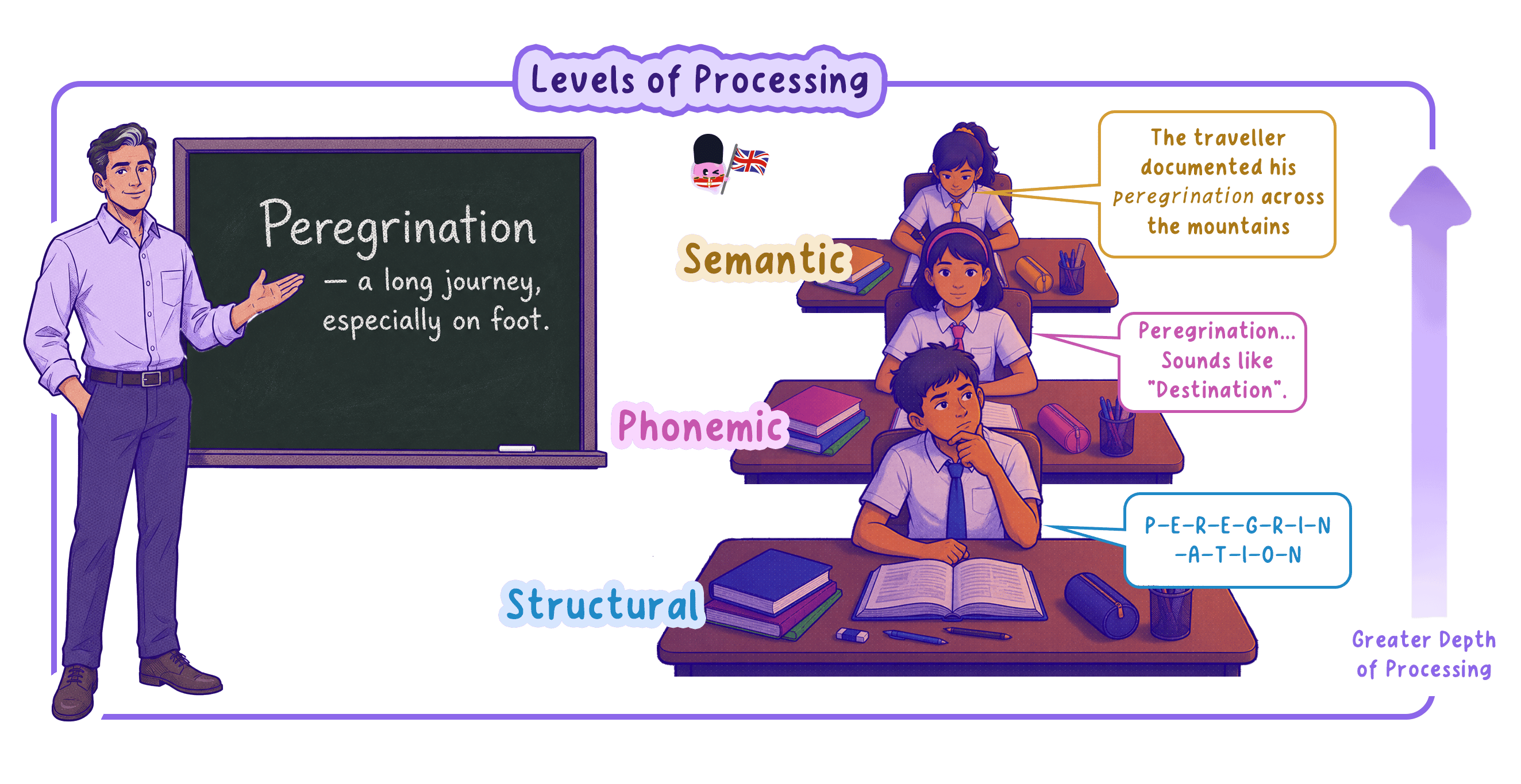
Example
- Asking whether a word is in capitals is a structural question, so that word is remembered least well.
- Asking whether a word fits a sentence is a semantic question, so that word is remembered best.
Why Semantic Processing Works Best
Definition
Semantic processing
Processing information by thinking about what it means. It is the deepest level of processing and produces the strongest, longest-lasting memories.
- Processing meaning ties the new item to things you already know.
- Those links make the memory stronger and far easier to find again later.
- That is why semantic tasks lead to the best recall of the three levels.
Common Mistake
- Phonemic and semantic are easy to blur, but one is about sound and the other about meaning, and they are different depths.
- Never predict strong recall from shallow, structural processing, since noticing how a word looks barely fixes it.
Classifying a Task and Predicting Recall
- For a task-classification item, quote what the task asks about: how the word looks, how it sounds, or what it means.
- Map look to structural, sound to phonemic and meaning to semantic, and name the level rather than just calling it shallow or deep.
- Then predict recall from that depth, since you earn the mark only by saying the deeper level gives the stronger memory.
Self review
- Name the three levels of processing, from shallowest to deepest.
- Which level gives the strongest memory?
- Classify the question 'does this word rhyme with cat?' by its level.
- Why does thinking about meaning improve recall?
