A firm's aims change as the business and its circumstances change
Definition
Objective: a goal a business works towards. Objectives are reviewed because the conditions facing a business do not stay the same.
- A business may begin with one priority and later need another. The important point is not simply that objectives change, but what changed in the business or its environment and why that makes a different objective more suitable.
- A start-up may initially focus on survival. After several years of reliable trading, stronger cash flow and a larger customer base can make profit, higher sales or a larger market share more realistic priorities.
Example
A gym planning a second site may abandon expansion and switch its priority to survival if customer numbers suddenly collapse. Once demand recovers, expansion can become realistic again.
Why aims and objectives change
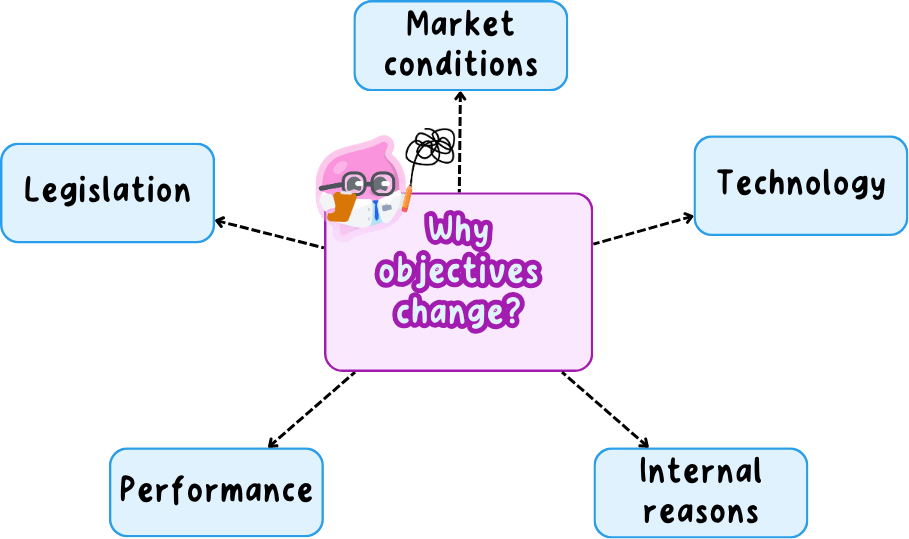
- Market conditions: changes in demand and competition can alter what a business needs to achieve. Falling demand may make survival and financial security more important, while a growing market may create opportunities to increase sales or market share.
- A restaurant may postpone a planned expansion when customers cut discretionary spending, because protecting cash becomes more important than opening another site.
- Technology: new technology can create opportunities, change customer expectations or make existing ways of operating less competitive. A business may therefore set new objectives linked to online sales, productivity or adapting its products.
- A retailer that previously relied on one physical shop may set an objective to increase online sales after e-commerce makes a much wider market accessible.
- Performance: the results a business achieves affect what it can realistically target next. Strong performance can support more ambitious objectives, while weak performance may force the business to reduce its ambitions.
- A business that has achieved steady profits may decide it can now afford to target higher sales or market share, while one making repeated losses may return to survival and financial security.
- Legislation: new laws can change the standards a business must meet or the costs it faces. This may create new objectives or force existing ones to be adjusted.
- New environmental rules could lead a manufacturer to set an objective to reduce waste or emissions because its previous methods no longer meet legal requirements.
- Internal reasons: changes inside the business, such as a new owner, new management, different finances or a change of strategy, can alter what the organisation is trying to achieve even when the outside market has not changed.
- A founder who valued independence may sell the business to new owners who are more willing to bring in outside finance and pursue expansion.
The direction of the change matters
- The same objective can become more or less important over time. Survival is not only a start-up objective: an established business can return to it after a severe fall in demand or a major financial problem.
- Changes can also reverse. A business that delays expansion during a downturn may return to objectives such as higher sales or market share when demand, performance and financial security improve.
Exam technique
For this topic, link the trigger to the new priority. For example, weaker demand makes survival more important, while stronger performance can make higher sales or market share realistic.
Self review
- Name the five reasons in this article why aims and objectives may change.
- How could weaker market conditions change a firm's objectives?
- How can new technology cause a business to set a different objective?
- Why can strong performance lead to more ambitious objectives?
- Give one internal reason a firm's aims might change.