The statement of comprehensive income shows how trading produces operating profit
Statement of comprehensive income: a financial statement showing a business's revenue, costs and profit over a period of time, often called an income statement.
- The statement works down from revenue to gross profit and then operating profit, showing how different costs reduce the value created by sales during the period.
- Edexcel uses the IAS term revenue. Sales revenue is also widely used, and in this context both mean the value of the business's sales.
Sales revenue and cost of sales determine gross profit
Cost of sales: the direct cost of the goods or services that generated the sales revenue for the period.
Gross profit: the profit remaining after cost of sales is subtracted from revenue.
- Gross profit therefore shows what remains from sales after the direct cost of the items sold has been covered, before the other expenses of running the business are deducted.
Expenses reduce gross profit to operating profit
Operating profit: the profit remaining after operating expenses are deducted from gross profit.
- Expenses are the other costs of running the business that are not included in cost of sales, such as rent, wages, marketing, insurance and utilities.
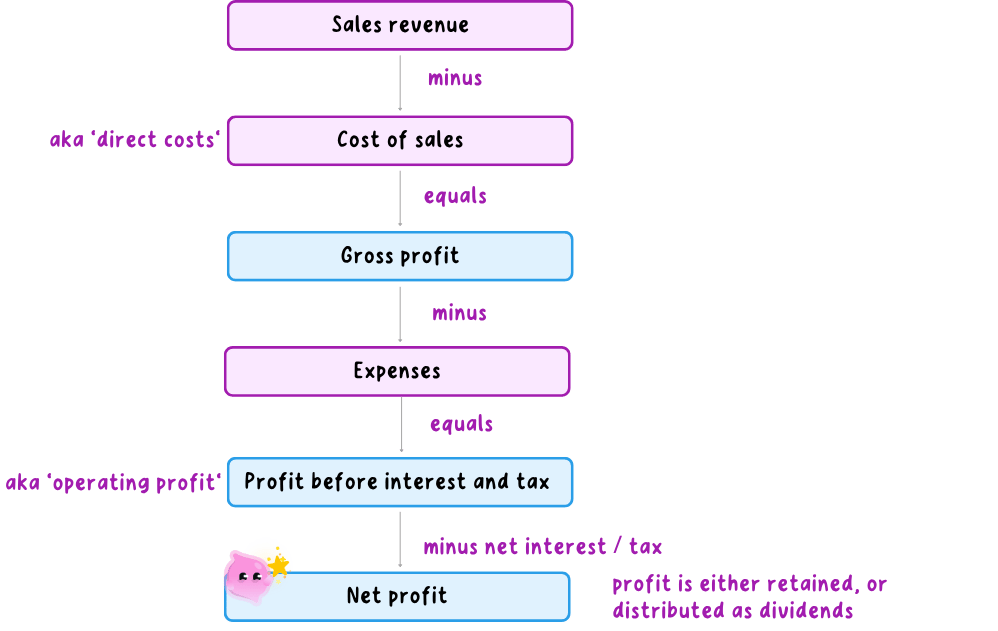
Edexcel uses the term operating profit for the stage often called profit before interest and tax (PBIT); both terms are widely used, but use operating profit in Edexcel answers.
A complete example shows the order of the statement
- Riverside Café has sales revenue of £100,000, cost of sales of £60,000 and operating expenses of £25,000 for the year.
| Statement of comprehensive income, year ended 31 Dec | £ |
|---|---|
| Sales revenue | 100,000 |
| Cost of sales | (60,000) |
| Gross profit | 40,000 |
| Expenses | (25,000) |
| Operating profit | 15,000 |
- The £40,000 gross profit comes from £100,000 minus £60,000, then expenses of £25,000 reduce it to an operating profit of £15,000.
Do not subtract all expenses before finding gross profit: cost of sales is deducted from revenue first, then the other operating expenses are deducted from gross profit.
Gross and operating profit reveal different parts of business performance
- Gross profit focuses on the relationship between sales revenue and cost of sales, while operating profit also reflects the other expenses needed to run the business.
- This separation is useful because a business can have a healthy gross profit but a much smaller operating profit when its operating expenses are high.
- Read the statement in order: sales revenue, cost of sales, gross profit, expenses, operating profit.
- Use revenue minus cost of sales for gross profit.
- Use gross profit minus expenses for operating profit and keep the two profit figures distinct.
- What does a statement of comprehensive income show?
- What is cost of sales?
- State the calculation for gross profit.
- State the calculation for operating profit.
- Using the example, why is operating profit lower than gross profit?