Exchange rate changes affect international competitiveness, importers and exporters
Definition
Appreciation: a rise in the value of a currency against another currency.
Depreciation: a fall in the value of a currency against another currency.
- An exchange rate change alters what overseas customers pay for exports and what domestic businesses pay for imports. This can change competitiveness even when the business has not changed its own price.
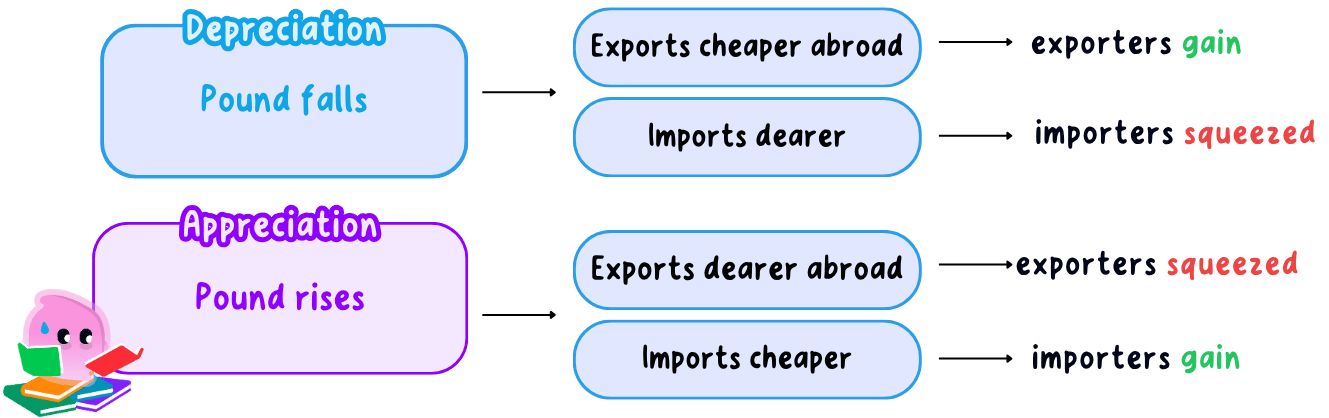
A weaker home currency
- Exports become more competitive: when the home currency depreciates, a product priced in the home currency becomes cheaper for overseas buyers if the business keeps its home-currency price unchanged.
- A UK exporter may therefore gain more overseas orders because foreign customers see a lower price compared with competing products.
- Import costs rise: imported materials and finished goods become more expensive in the home currency, increasing costs for businesses that rely on overseas suppliers.
- A UK manufacturer importing components may pay more pounds for the same order, which can reduce profit unless it cuts other costs or raises its selling price.
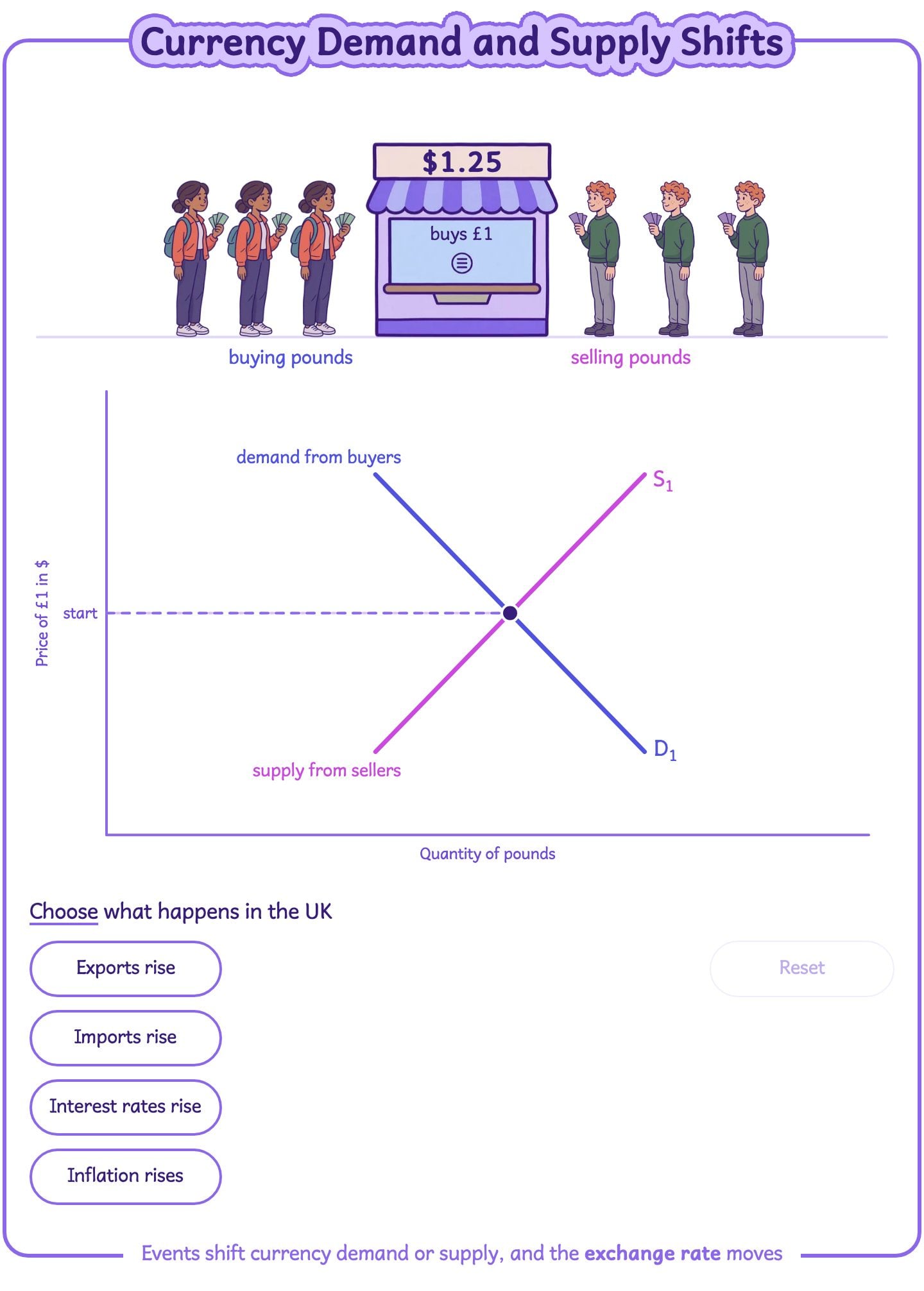
Shift demand for or supply of the currency and watch the exchange rate rise or fall.
A stronger home currency
- Exports become less competitive: when the home currency appreciates, products priced in that currency become more expensive for overseas customers, which can reduce export demand.
- Import costs fall: overseas goods and materials become cheaper in the home currency, reducing costs for importers.
- An importer may keep the saving as higher profit or lower its own prices in an attempt to increase sales.
The same exchange rate movement can help and harm one business
- Some businesses both import inputs and export finished products. A weaker home currency may make their exports more competitive at the same time as increasing the cost of imported materials.
- The overall effect depends on how much of the firm's costs come from imports and how important overseas sales are to its revenue.
- Demand also matters. An exchange-rate movement can change the overseas price, but the size of the sales response depends on how willing customers are to switch between competing products.
Exam technique
Identify two things before judging the effect: whether the home currency strengthened or weakened, and whether the business mainly imports, exports or does both.
Self review
- What is currency depreciation?
- How can a weaker home currency affect an exporter?
- How can a weaker home currency affect an importer?
- How can a stronger home currency affect international competitiveness?
- Why can the same exchange-rate change create both a benefit and a cost for one business?