Needs and wants: what every business exists to satisfy
Definition
Need: A good or service that is essential for survival, such as food, water, shelter, clothing or warmth.
Want: A good or service that people would like to have but can survive without.
- Every good or service a business sells satisfies either a need or a want.
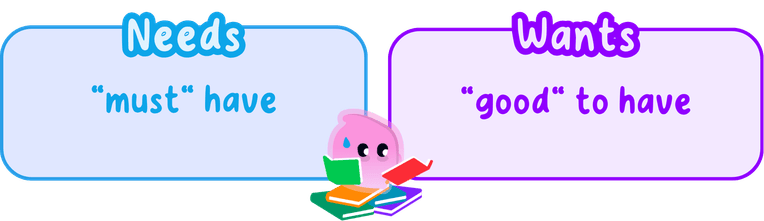
- The quick test: a need is what a customer must have, while a want is only good to have.
- Food, clothing, shelter and healthcare are needs; toys, ice cream, a games console and the newest phone are wants.
- Because people cannot go without needs, demand for them stays fairly steady even when incomes fall.
- Wants are shaped by income, fashion and advertising, so new ones appear as fast as old ones are satisfied.
- Spending on wants falls first when household incomes are squeezed, so a business built on wants carries more risk than one built on needs.
- Whether an item counts as a need or a want depends on the buyer's situation, not on the item itself.
- A phone is a need for a self-employed delivery driver who takes every booking on it, and a want for someone replacing a handset that still works.
Common Mistake
- Do not label a product as always a need or always a want.
- Classify it by asking whether this particular buyer could survive without it.
Scarcity: unlimited wants against finite resources
Definition
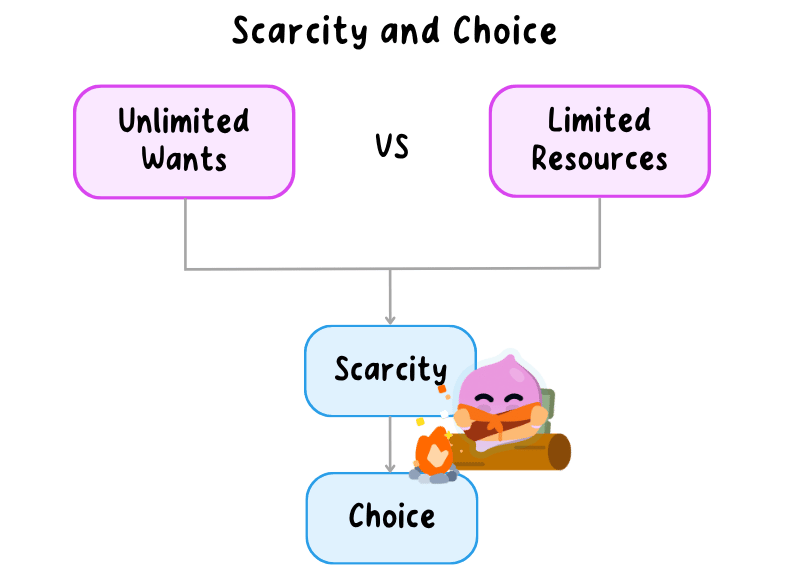
Scarcity: There are not enough resources available to satisfy everyone's unlimited wants, so choices have to be made.
- Human wants are unlimited, because as soon as one is satisfied another appears.
- The resources available to satisfy those wants are finite: there is only so much land, so many skilled workers, so much machinery and so much money.
- Basic economic problem: the gap between unlimited needs and wants and the finite resources available to satisfy them.
- Scarcity forces a choice on everyone who uses resources.
- Consumers choose what to buy with a limited income.
- Businesses choose which products to make and which projects to fund with limited money, staff, time and space.
- Governments choose how to split a limited budget between schools, hospitals and roads.
- Business activity exists because of scarcity: firms combine scarce resources into the goods and services people most want.
Analogy
- You have £20 of birthday money and you want trainers, a game and a cinema trip, so two of the three have to go.
- A business faces the same squeeze, with capital and staff hours in place of birthday money.
Opportunity cost: the value of what you gave up
Definition
Opportunity cost: The benefit of the next best alternative given up when a choice is made.
- Every choice carries an opportunity cost, because putting a scarce resource to one use always means giving up another use of it.
- Only the single best rejected option counts, not the whole list of things that were turned down.
Example
- A bakery has £10,000 spare and could buy a second oven, run an advertising campaign or refit the shop front.
- The owner judges advertising the strongest of the three alternatives, but buys the oven instead.
- The opportunity cost is the extra sales the advertising campaign would have brought in, not the £10,000 that was spent.
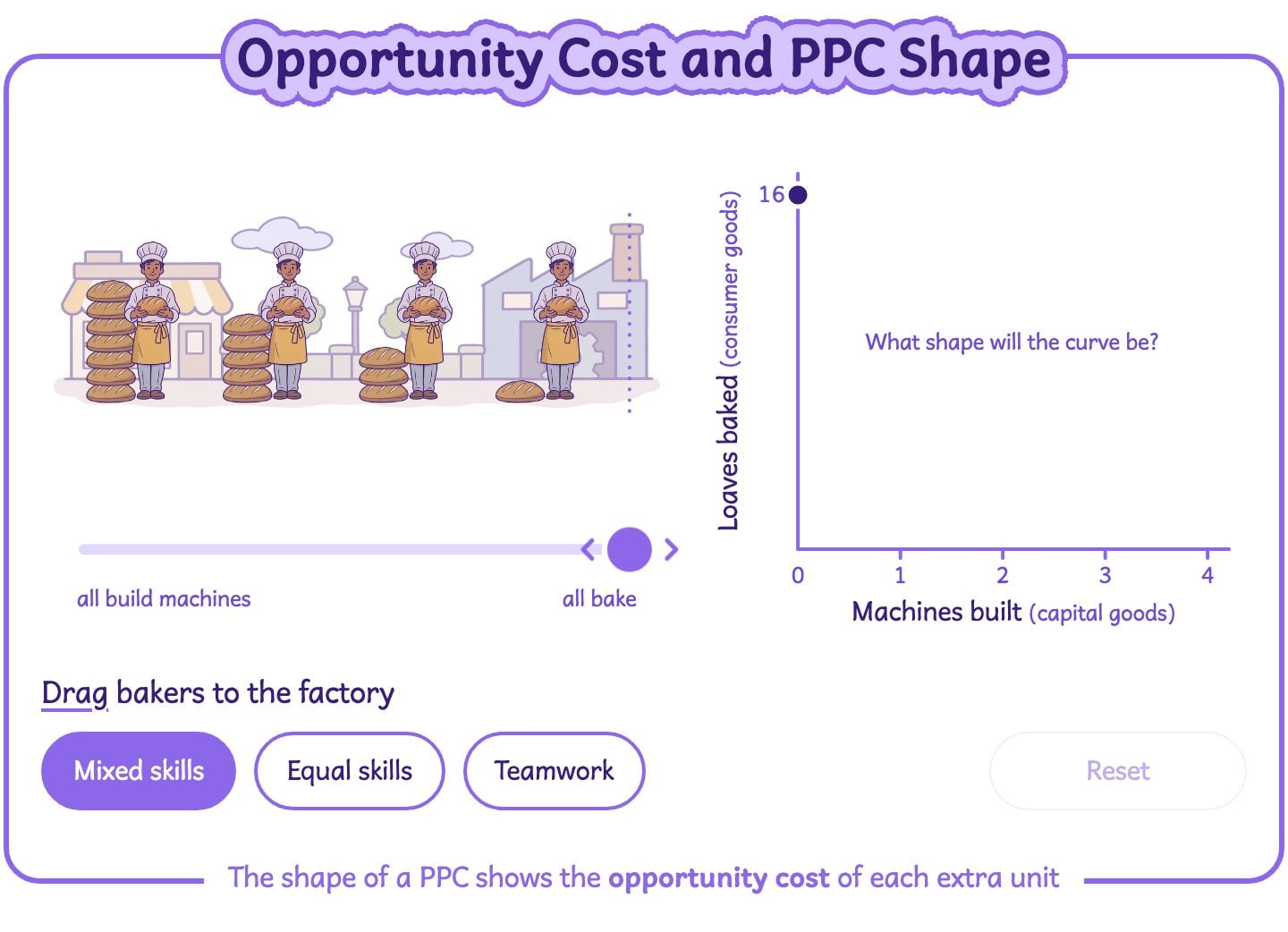
Move along the production possibility curve and see how much of one good is given up per extra unit.
Opportunity cost beyond money: governments and time
- Opportunity cost applies to every decision maker, so money a government spends on new roads cannot also pay for extra hospital appointments.
- Time carries an opportunity cost as well as money, because an evening the owner spends on the accounts is an evening not spent serving customers.
- Setting out the opportunity cost is what turns a list of options into a decision, because it forces the business to say what the rejected option was worth.
Exam technique
- Asked for the opportunity cost of a £5,000 van, name the alternative that was dropped, such as the marketing campaign, rather than answering "£5,000".
- When a question sets out two options and the business takes one, the opportunity cost is the other one.
- Opportunity cost is easiest to miss on time, so when an owner spends an evening on the accounts, say which customers went unserved.
Self review
- Define a need and a want, and give one example of each.
- Why can the same product be a need for one customer and a want for another?
- What is the basic economic problem?
- Give one choice that scarcity forces a business to make.
- A cafe owner spends £2,000 on new tables rather than a better coffee machine: what is the opportunity cost?