What pollution is
Definition
Pollution
The release of harmful substances into the environment, such as into the air, water or land.
- Pollution is the release of harmful substances into the environment, into the air, water or land.
- Human activities such as farming, industry and transport are the main sources of pollution.
Sewage and fertiliser in water
- Untreated sewage and excess fertiliser washed off fields add extra nutrients and organic matter to rivers, lakes and seas.
- Microorganisms feed on the organic matter and on the plant material that grows, and their numbers increase.
- These microorganisms use up the dissolved oxygen in the water during aerobic respiration.
- With little oxygen left, fish and other aquatic animals cannot respire and die, so the biodiversity of the water falls.
Note
The step-by-step mechanism of how added nutrients lower the oxygen level, called eutrophication, is Supplement content and is explained in the next article, 20.3.2.
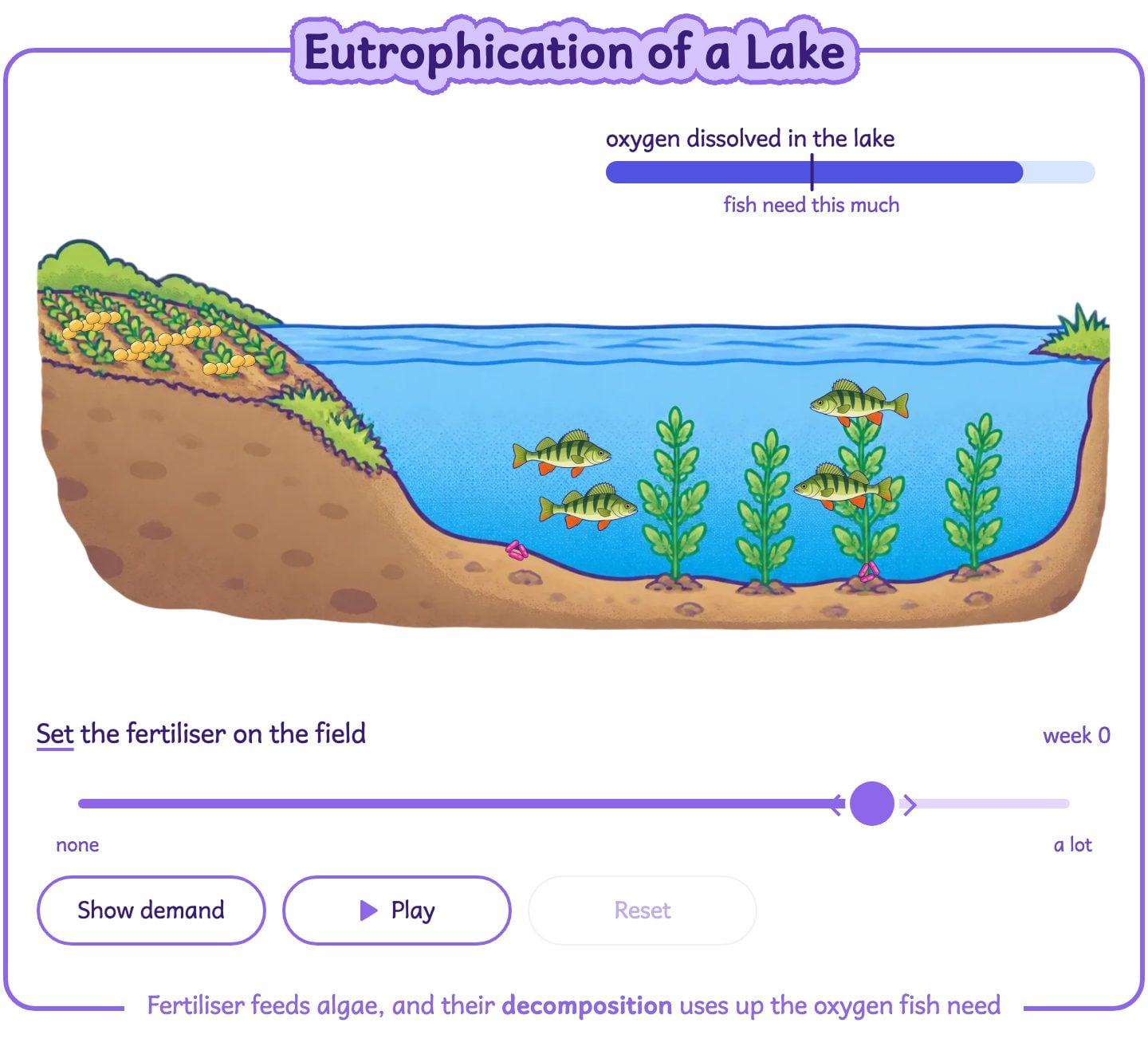
Step through the sequence and watch fertiliser feed algae, then oxygen run out as they decay.
Non-biodegradable plastics
Definition
Non-biodegradable
Describes a material that cannot be broken down by decomposers, so it stays in the environment for a very long time.
- Plastics are non-biodegradable, which means decomposers cannot break them down, so they remain in the environment for a very long time.
- In aquatic ecosystems, animals such as turtles, fish and seabirds swallow plastic or become tangled in it, which can injure or kill them.
- As larger pieces break into tiny microplastics, these are eaten by small organisms and pass along food chains.
- In terrestrial ecosystems, plastic litter builds up in the soil and can harm or trap land animals.
Example
A seabird that fills its stomach with floating plastic feels full, so it eats less real food and can slowly starve.
Air pollution and the greenhouse effect
Definition
Enhanced greenhouse effect
The extra warming of the atmosphere caused by rising levels of greenhouse gases released by human activity.
- Carbon dioxide is released when fossil fuels are burned in power stations, vehicles and industry.
- Methane is released from cattle, from rice fields and from rotting waste in landfill sites.
- Both gases are greenhouse gases: they trap heat that would otherwise escape from the Earth.
- As their levels rise, more heat is trapped, which is called the enhanced greenhouse effect.
- This causes global warming and long-term climate change.
Effects of climate change
- Rising temperatures melt ice and raise sea levels, flooding low-lying land and habitats.
- Changing rainfall and more extreme weather alter where species can live, so some populations decline while others move.
- These changes reduce biodiversity and make it harder to grow food in some regions.
Self review
- Explain why adding untreated sewage to a river can kill the fish in it.
- Why do non-biodegradable plastics stay in the environment for so long?
- Name two greenhouse gases and give a source of each.
- What is the enhanced greenhouse effect, and what does it cause?