Meiosis produces gametes
Definition
Meiosis
A reduction division that produces genetically different haploid gametes, halving the chromosome number from diploid to haploid.
- Meiosis is a type of cell division that takes place in the reproductive organs.
- It produces the gametes, the sex cells such as sperm and egg cells.
- One diploid parent cell divides to form the gametes.
- The gametes made by meiosis are genetically different from one another.
Note
- Meiosis is Supplement content, assessed only on the Extended papers (Papers 2 and 4).
- The named stages of meiosis are not required for 0610.
Meiosis halves the chromosome number
Definition
Gamete
A sex cell, such as a sperm or egg cell, which is haploid.
- Meiosis is a reduction division: it halves the chromosome number.
- A diploid cell, with two sets of chromosomes, divides to make haploid cells with one set.
- In humans, a cell with 464646 chromosomes produces gametes with 232323.
- Halving the number matters because, at fertilisation, two gametes join and the diploid number is restored.
- The gametes are also genetically different, which is a source of variation in the offspring.
Self review
- Where in the body does meiosis take place, and what does it produce?
- Why is meiosis called a reduction division?
- How many chromosomes does a human gamete contain?
- Why does halving the chromosome number matter at fertilisation?
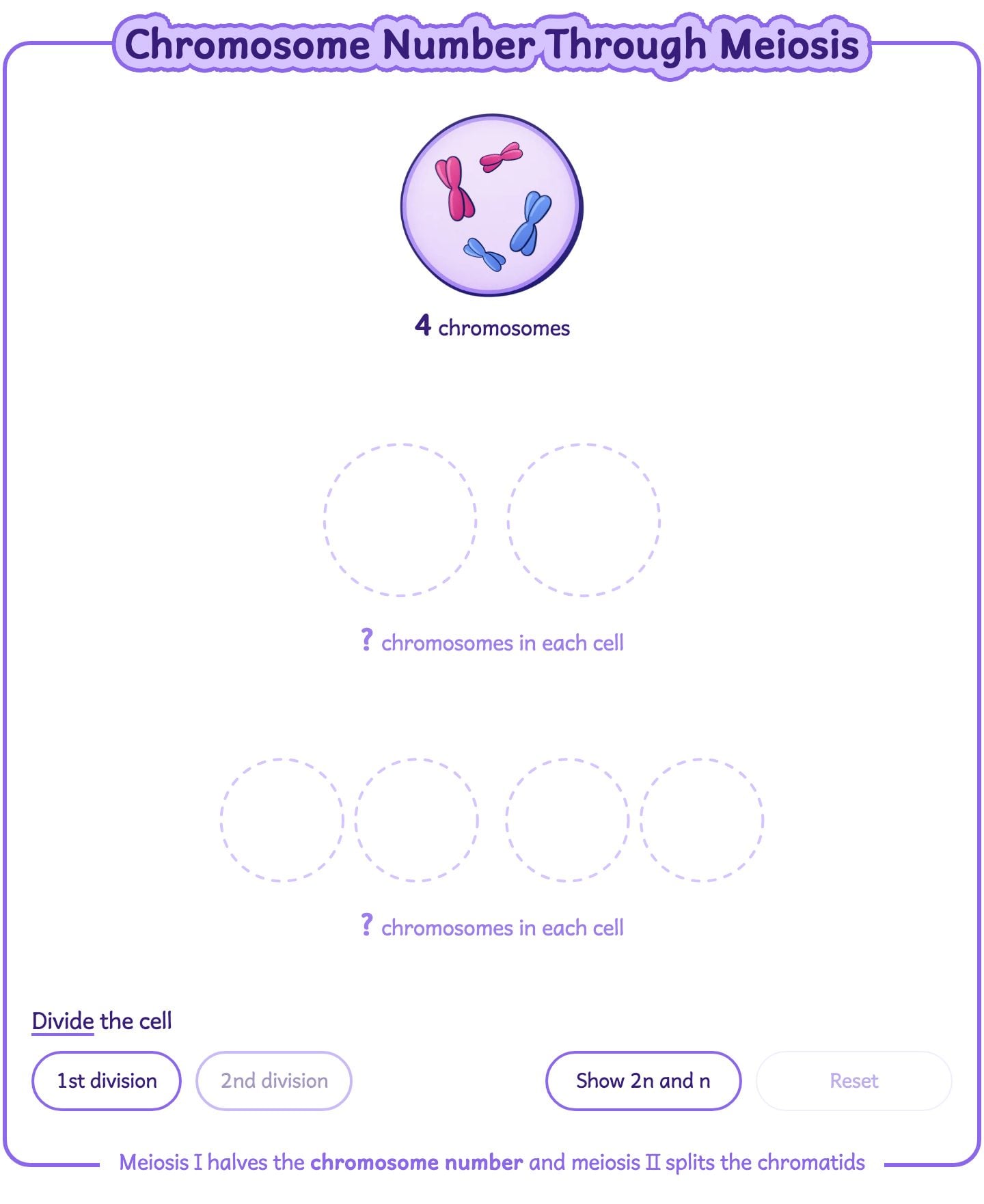
Step through the two divisions and notice how the chromosome number is halved in the gametes.