What a sexually transmitted infection is
Definition
Sexually transmitted infection (STI)
A sexually transmitted infection (STI) is an infection that is transmitted through sexual contact.
- A sexually transmitted infection (STI) is an infection that is passed on through sexual contact.
- Like any infection, it is caused by a pathogen.
- Some STIs are caused by bacteria and some by viruses.
Note
The pathogen is spread in body fluids passed on during sexual contact.
HIV is a pathogen that causes an STI
Definition
HIV
HIV (human immunodeficiency virus) is a pathogen that causes a sexually transmitted infection and gradually damages the immune system.
- HIV (human immunodeficiency virus) is a virus.
- It is a pathogen that causes a sexually transmitted infection.
- HIV infects and damages the cells of the immune system, a type of white blood cell.
Note
Because HIV is a virus, it cannot be treated with antibiotics.
HIV can lead to AIDS
- Over time HIV can destroy so many immune-system cells that the body can no longer fight infection well.
- This stage is called AIDS (acquired immune deficiency syndrome).
- A person with AIDS becomes ill from other infections that a healthy immune system would normally control.
- Antiretroviral drugs can control HIV and delay or prevent AIDS, but there is no cure.
Self review
- Define a sexually transmitted infection.
- What type of pathogen is HIV?
- Which cells does HIV damage?
- What is AIDS, and how is it related to HIV?
- Why can HIV not be treated with antibiotics?
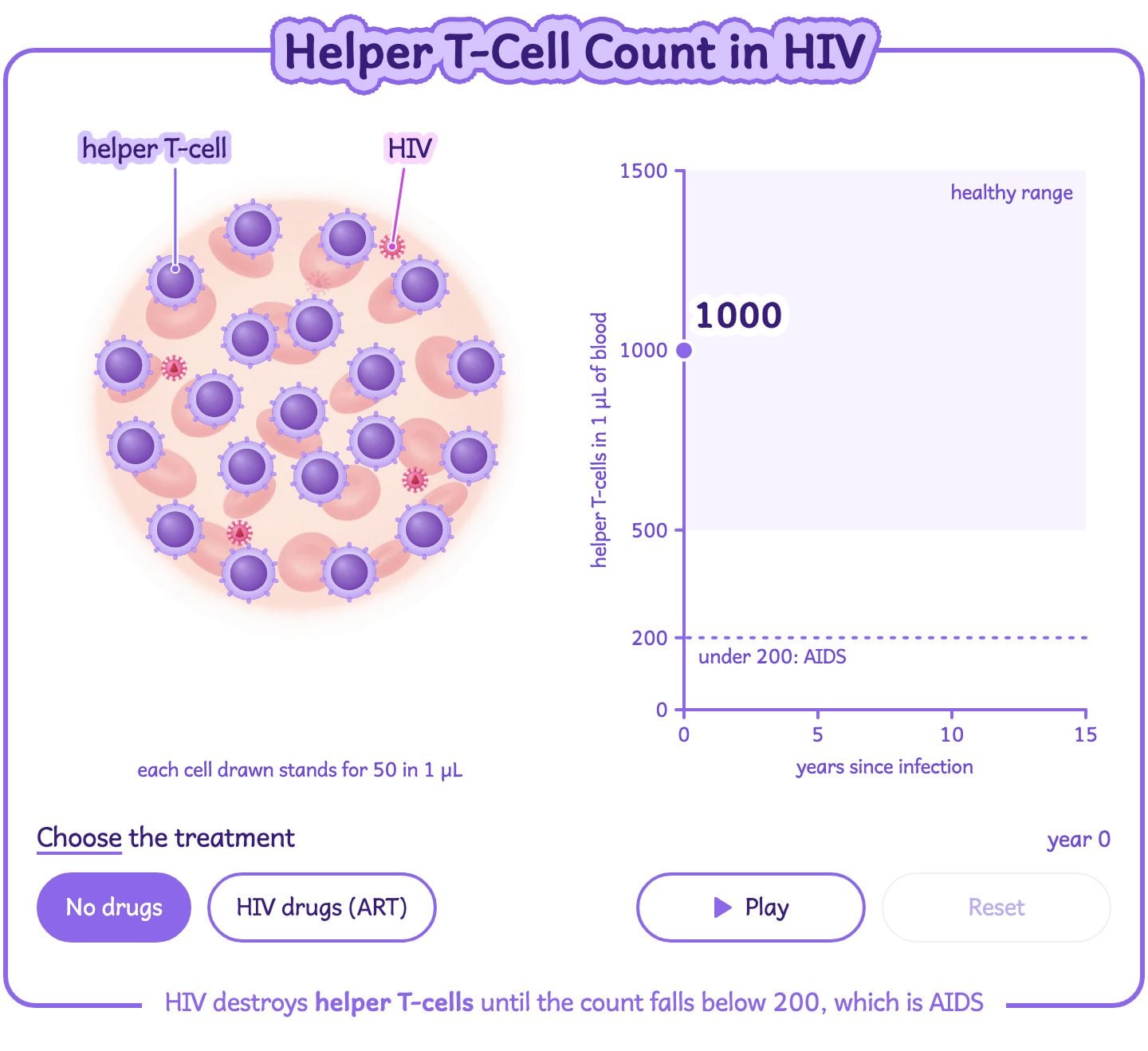
Follow the helper T-cell count falling over the years and notice when HIV becomes AIDS.