Revision notes for OCR GCSE Psychology Development of Treatments for Insomnia. Open the guide for explanations and worked examples. Written against the OCR GCSE Psychology (J203) specification, so the content matches what's examinable rather than general Psychology background.
Development of Treatments for Insomnia
What you'll learn
- How to recognise the main features of insomnia.
- How the nervous system can keep someone too alert to sleep.
- How relaxation techniques and sleep hygiene can reduce insomnia.
- How damage to the hypothalamus can disrupt normal sleep.
Big picture: why treatments are developed
Treatments for insomnia are based on what psychologists think is causing or maintaining the sleep problem.
If insomnia is linked to high arousal in the body, relaxation techniques aim to calm the nervous system. If insomnia is linked to the physical environment, sleep hygiene aims to change the bedroom and bedtime routine. If insomnia follows brain damage, especially to the hypothalamus, treatment may need medical support as well as behavioural strategies.
Key Idea
Treatment follows the cause
For GCSE Psychology, remember the treatment logic: high arousal → relaxation, and poor sleep environment → improved sleep hygiene.
1. Features of insomnia
Definition
Insomnia
Insomnia is a sleep disorder where a person has repeated difficulty falling asleep, staying asleep, or getting refreshing sleep, even when they have the chance to sleep.
Common features include:
- taking a long time to fall asleep
- waking up often during the night
- waking too early and being unable to return to sleep
- feeling tired, irritable, low in mood, or unable to concentrate the next day
- worrying about sleep, which can make the problem worse
One bad night is not enough to count as insomnia. The key idea is that the sleep difficulty is repeated and affects everyday functioning.
Common Mistake
Calling any tiredness insomnia
Do not write that insomnia simply means “being tired”. Tiredness is a possible daytime effect of insomnia, but insomnia itself is about difficulty with sleep.
2. The nervous system and insomnia
Definition
Nervous system
The nervous system is the body’s communication system. It includes the brain, spinal cord, and nerves, and it helps control behaviour and body responses.
A major reason some people struggle to sleep is that their body is too alert at bedtime. This is called high arousal.
Definition
Arousal
Arousal means the body’s level of alertness or activation. High arousal involves being mentally and physically “switched on”.
Sympathetic and parasympathetic responses
The autonomic nervous system controls automatic bodily functions, such as heart rate, breathing, and digestion. It has two important branches:
- The sympathetic nervous system prepares the body for action, sometimes called the “fight or flight” response.
- The parasympathetic nervous system helps the body calm down and recover, sometimes called “rest and digest”.
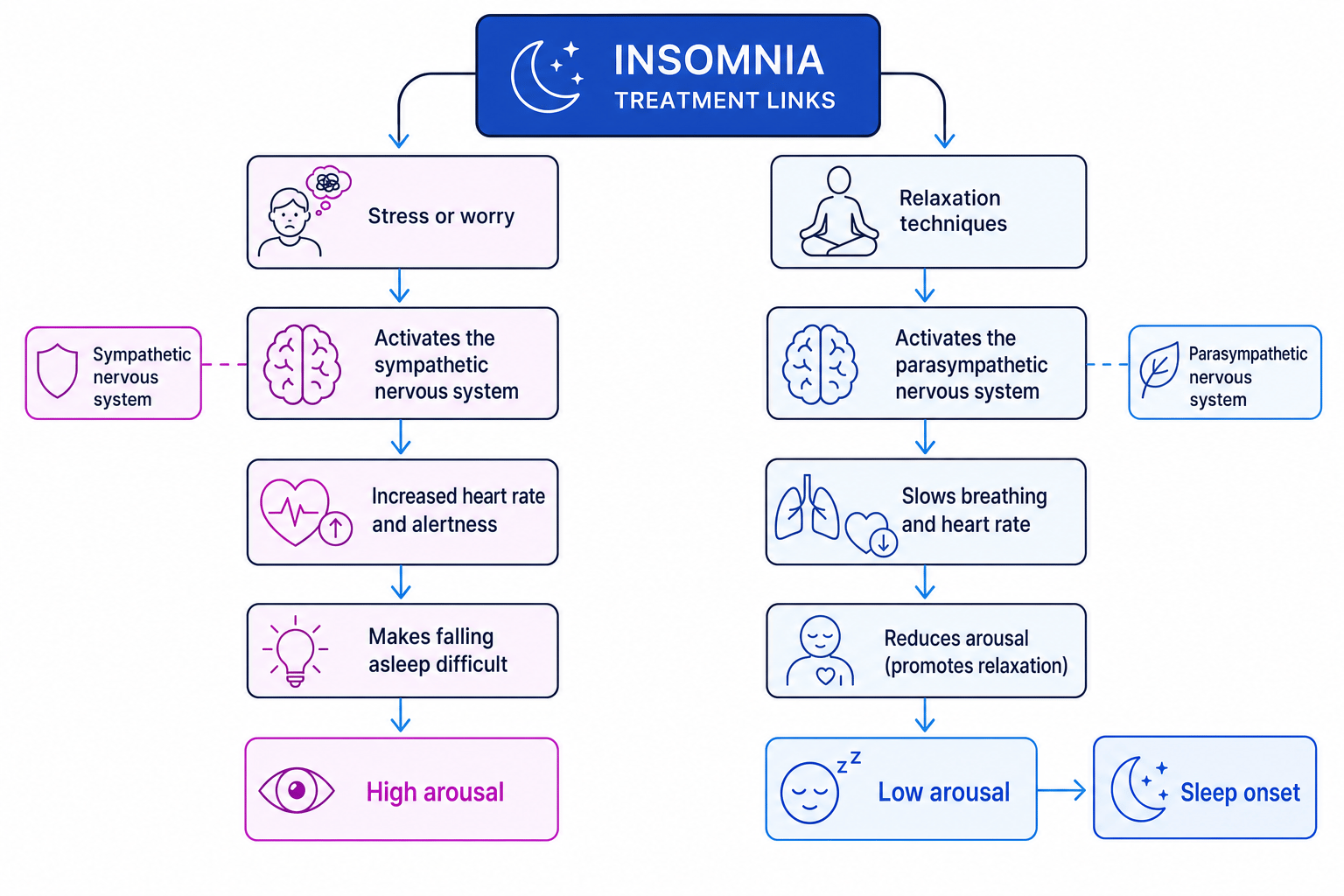
When someone is stressed, worried, or overstimulated at bedtime, the sympathetic nervous system may stay active. This can increase heart rate, breathing rate, muscle tension, and alertness. These responses make sleep less likely.
Relaxation techniques aim to shift the body towards parasympathetic activity, lowering arousal and making sleep onset easier.
Definition
Relaxation techniques
Relaxation techniques are methods used to reduce physical and mental arousal, such as controlled breathing, progressive muscle relaxation, meditation, or guided imagery.
Examples of relaxation techniques
Controlled breathing involves slowing the breath on purpose. This can reduce physical signs of arousal.
Progressive muscle relaxation involves tensing and then relaxing different muscle groups. This helps the person notice and release tension.
Guided imagery involves imagining a calm scene, which can reduce worrying thoughts and support relaxation.
Example
Choosing a relaxation treatment
A student says: “I get into bed and my heart races because I start worrying about tomorrow. I feel tense and wide awake.”
- The main maintaining factor is high arousal, because the student describes a racing heart, tension, worry, and alertness.
- This suggests the sympathetic nervous system is active at bedtime, keeping the body prepared for action rather than sleep.
- A suitable treatment would be relaxation techniques, such as controlled breathing or progressive muscle relaxation, because these aim to activate the parasympathetic nervous system and reduce arousal.
Tip
Link symptom to treatment
In application questions, match the symptom to the treatment. If the scenario mentions worry, tension, fast breathing, or a racing heart, relaxation is likely to be relevant.
3. The physical environment and insomnia
Definition
Physical environment
The physical environment means the surroundings a person sleeps in, such as light, noise, temperature, comfort, and technology use in the bedroom.
The sleep environment can make insomnia worse. For example:
- bright light can make the brain more alert
- screens may delay sleepiness, especially if used close to bedtime
- noise can wake someone or stop them relaxing
- an uncomfortable bed can make it harder to settle
- a room that is too hot or too cold can disturb sleep
Light is especially important because it acts as an external cue for the body clock. In the wider Sleep and Dreaming topic, this links to circadian rhythms: light helps tell the body when to be awake and when to become sleepy.
Definition
Sleep hygiene
Sleep hygiene means habits and environmental changes that improve the chances of good sleep.
Improving sleep hygiene
Sleep hygiene treatment might include:
- keeping the bedroom dark, quiet, and comfortable
- reducing screen use before bed
- using a regular bedtime and wake-up time
- avoiding caffeine close to bedtime
- keeping the bed mainly for sleep, rather than homework, gaming, or scrolling
- having a calm wind-down routine before bed
The aim is not to “force” sleep. The aim is to remove cues that keep the person awake and add cues that signal sleep.
Example
Improving sleep hygiene
A teenager has insomnia. They revise in bed, drink an energy drink at 9 pm, and fall asleep with videos playing on their phone.
- The likely problem is partly environmental, because the bed and bedroom are linked with alert activities, caffeine, light, and noise.
- Sleep hygiene would target those cues: revise away from the bed, avoid caffeine late in the evening, and stop videos before trying to sleep.
- These changes make the bedroom more strongly associated with sleep and reduce stimulation, so sleep onset should become easier.
Common Mistake
Sleep hygiene is not just cleanliness
In psychology, sleep hygiene does not mean washing your sheets or having a tidy room, although comfort can help. It means sleep-promoting habits and environmental changes.
4. The hypothalamus and sleep
Definition
Hypothalamus
The hypothalamus is a small area near the base of the brain that helps regulate important body functions, including sleep, temperature, hunger, and hormone control.
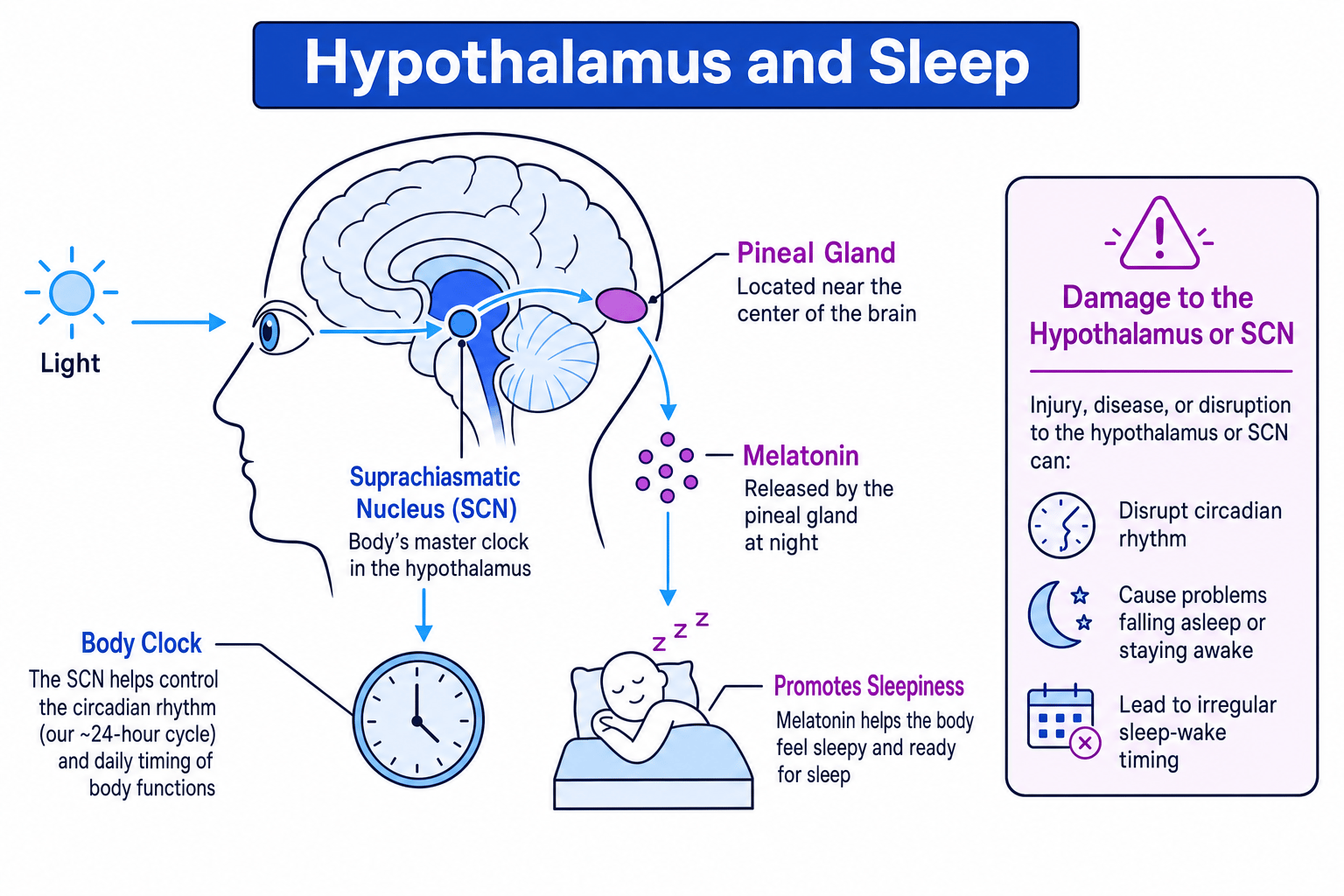
The hypothalamus is important for sleep because it helps control the body’s daily rhythm. A key part of the hypothalamus is the suprachiasmatic nucleus, often shortened to SCN.
Definition
Suprachiasmatic nucleus
The suprachiasmatic nucleus, or SCN, is a small area in the hypothalamus that acts as the body’s “master clock”, helping to regulate the sleep-wake cycle.
The SCN receives information about light from the eyes. It helps coordinate the body’s circadian rhythm, which is the roughly 24-hour cycle of sleepiness and alertness.
The SCN also influences the pineal gland, which releases melatonin.
Definition
Melatonin
Melatonin is a hormone released mainly at night that helps the body feel sleepy and ready for sleep.
Impact of neurological damage to the hypothalamus
Definition
Neurological damage
Neurological damage means damage to the brain or nervous system, for example through injury, illness, stroke, tumour, or infection.
Damage to the hypothalamus, especially areas involved in the body clock, can disrupt sleep. Possible effects include:
- irregular sleep-wake timing
- difficulty falling asleep at night
- being sleepy during the day
- disturbed hormone rhythms, including melatonin release
- problems regulating body temperature, which can also affect sleep quality
This matters because it shows that insomnia is not always caused by poor habits or stress. Sometimes sleep problems have a biological cause.
Example
Explaining sleep problems after hypothalamus damage
A person has a brain injury affecting the hypothalamus. Since then, they feel sleepy during the day but cannot sleep properly at night.
- The hypothalamus is relevant because it helps regulate the body clock and sleep-wake timing.
- Damage may disrupt the SCN’s control over circadian rhythm, so the person’s sleepiness may occur at unusual times.
- Relaxation or sleep hygiene may still help, but they may not fully solve the problem because the cause includes neurological damage.
5. Evaluating treatments for insomnia
Strengths of relaxation techniques
Relaxation techniques are practical and low cost. They do not require medication and can be used at home. They also give the person an active coping strategy, which can improve confidence.
They are especially useful when insomnia is maintained by stress, worry, muscle tension, or high arousal.
Weaknesses of relaxation techniques
Relaxation techniques require practice. They may not work immediately, and some people may give up before they become effective.
They may also be less useful if insomnia is mainly caused by pain, shift work, medication, or neurological damage to the hypothalamus.
Strengths of sleep hygiene
Sleep hygiene is easy to apply to everyday life. It targets real environmental factors such as light, noise, caffeine, and technology use.
It is also a good first step because it is safe and can be combined with other support.
Weaknesses of sleep hygiene
Sleep hygiene can be too simplistic if insomnia has a deeper cause, such as anxiety, depression, trauma, or brain damage.
It also assumes the person can control their environment. This may not be true if they share a room, live somewhere noisy, have caring responsibilities, or work irregular shifts.
Key Idea
Best answers are balanced
A strong evaluation says treatments can be helpful, but they are not “one size fits all”. The best treatment depends on what is maintaining the insomnia.
6. Debates and wider issues
Reductionism and holism
A reductionist explanation breaks insomnia down into one factor, such as nervous system arousal or hypothalamus damage. This can be useful because it leads to specific treatments.
However, a holistic approach may be better because insomnia often involves biological, psychological, and environmental factors together.
Nature and nurture
The hypothalamus shows the role of nature, because brain structures and hormones can affect sleep. Sleep hygiene shows the role of nurture, because the environment and learned habits also matter.
Free will and determinism
Sleep hygiene suggests people have some free will to change routines. But neurological damage or difficult living conditions can be more deterministic, because the person may have limited control over the cause of their insomnia.
7. Ethics in real-world support
If a psychologist or sleep clinic collects sleep diaries, questionnaire data, or monitoring data, they should follow ethical principles from the British Psychological Society’s Code of Ethics and Conduct.
This includes gaining informed consent, protecting confidentiality, allowing the right to withdraw, avoiding psychological harm, and explaining what the assessment or treatment involves.
Exam technique
In the exam
- Describe the feature first, then link it to treatment: high arousal links to relaxation; poor bedroom conditions link to sleep hygiene.
- Use biological language accurately: sympathetic means increased arousal, parasympathetic means calming, and the hypothalamus/SCN helps regulate the body clock.
- Evaluate with limits: relaxation and sleep hygiene are useful, but may not fully treat insomnia caused by neurological damage or serious mental health difficulties.
Self review
Check yourself
- What are three features of insomnia, including at least one daytime effect?
- How do relaxation techniques affect the sympathetic and parasympathetic nervous systems?
- Why might damage to the hypothalamus cause sleep-wake problems?
Sleep and Dreaming
Guide 3 of 3
You've reached the end
Test yourself on this topic, or move on to the next guide.
How was this guide?