The three main divisions of the brain
Cerebellum
A structure at the back of the brain, part of the hindbrain, involved in balance, posture and the coordination of movement.
- The brain has three main divisions: the cerebrum, the cerebellum and the brainstem.
- The cerebrum is the large outer part that handles thinking, language and the storage of long-term memories in its outer layer, the cerebral cortex.
- The cerebellum sits at the back and co-ordinates balance and movement, and the brainstem below it runs automatic functions such as breathing and heart rate while relaying signals between the brain and the body.
- Memory depends on several regions, so damage to one region produces a particular kind of memory problem.
- The three pairings to learn are the hippocampus with anterograde amnesia, the frontal lobe with retrograde amnesia, and the cerebellum with procedural memory.
- Memory is not kept in one place, so which region is damaged decides which part of a person's memory stops working.
- Hippocampal damage stops new memories being laid down, frontal lobe damage blocks the search for memories of the past, and cerebellar damage disrupts practised skills.
- That is why someone can lose every new memory and still sit down and play a piece of music learned years earlier.
How the brain forms a memory
Hippocampus
A structure deep in the brain that helps transfer new information from short-term memory into long-term memory. Damage to it makes forming new long-term memories very difficult.
- Neurons carry information through the brain as electrical impulses.
- Each neuron passes its signal on across a tiny gap called a synapse, using chemicals called neurotransmitters.
- Repeated firing between the same neurons strengthens their connections, and that lasting physical change is the memory trace.
- Rehearsing or using the information keeps those connections firing, which strengthens the trace.
- The hippocampus deals with new information first and then passes it to the cerebral cortex, where long-term memories are held, so a memory takes time to settle.
- A memory trace is a strengthened set of connections rather than a copy of the event filed away somewhere in the brain.
- Because the hippocampus hands information on to the cortex over time, a memory from this morning is more fragile than one from ten years ago.
- Damage to the hippocampus therefore hits memories that are still being formed rather than those already settled in the cortex.
The hippocampus and anterograde amnesia
Anterograde amnesia
An inability to form new long-term memories after an injury, illness or traumatic event, while memories from before it are usually kept.
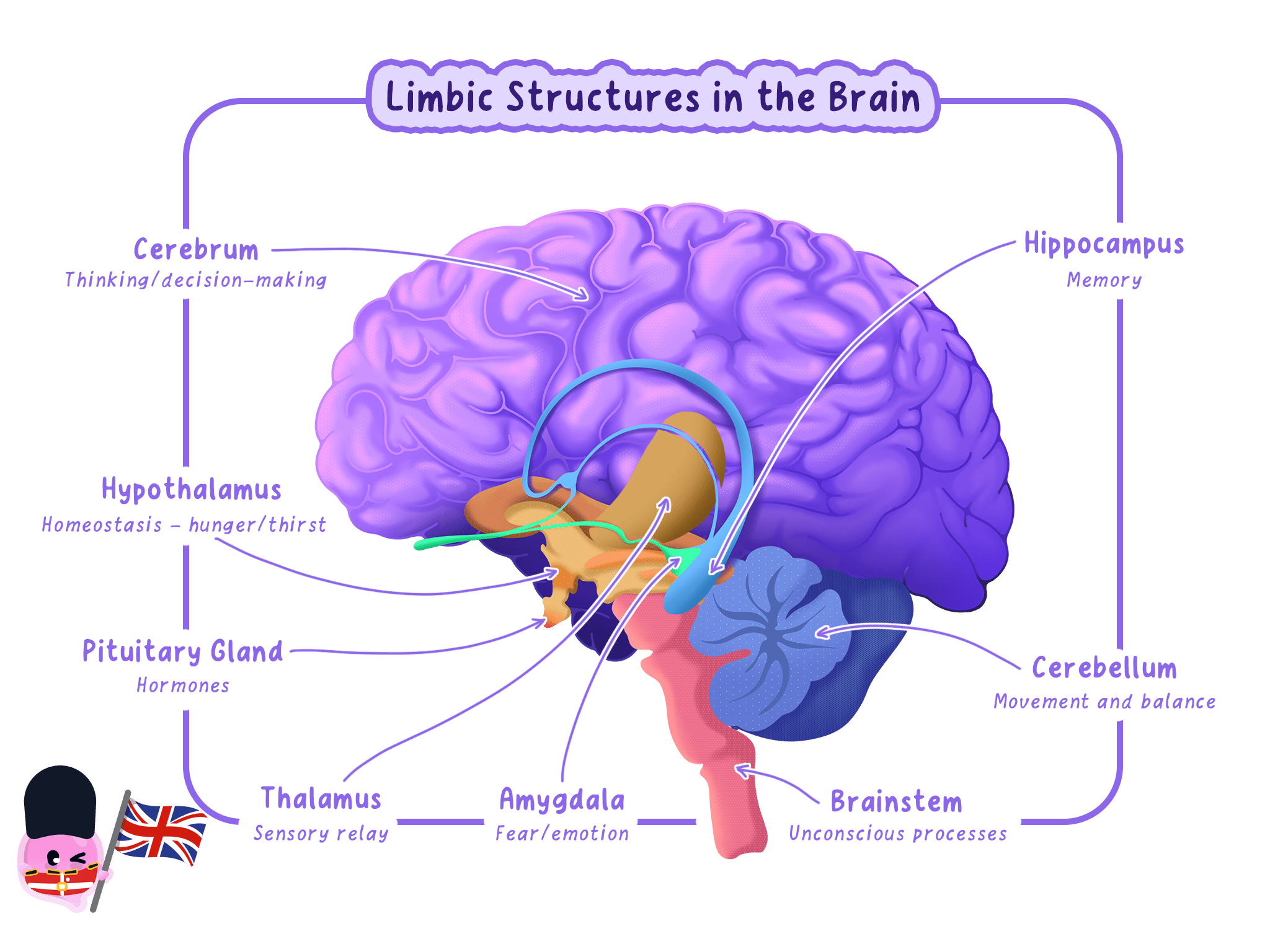
- The hippocampus moves new information from short-term memory into long-term memory, so damage there makes forming new long-term memories extremely difficult.
- Short-term memory often keeps working, so a person can hold a conversation and have no memory of it minutes later.
- Memories laid down before the damage are usually kept, because they are already stored in the cortex.
- Clive Wearing, a British musician, developed severe amnesia in 1985 after a viral infection damaged his hippocampal formations and nearby temporal lobe areas.
- He could no longer form new long-term memories, and he had also lost much of his past, so his amnesia was both anterograde and retrograde.
- He could still read music, play the piano and conduct, because those skills did not depend on the damaged regions.
The frontal lobe and retrograde amnesia
Retrograde amnesia
A loss of memories formed before an injury, illness or traumatic event, while the ability to form new memories is usually kept.
- The frontal lobe sits at the front of the cerebrum and organises the search for memories that were laid down before an injury.
- Damage there breaks that search, so memories of the past become hard or impossible to reach, which is retrograde amnesia.
- The most recent memories are usually the worst affected, because older ones have had longer to become firmly stored across the cortex.
- New learning can still work, so a person with retrograde amnesia may form new memories after the injury.
- After a head injury in a road collision, a person may be unable to recall the weeks leading up to it.
- They can still learn the names of the staff on the ward, because forming new memories does not depend on the damaged frontal tissue.
The cerebellum and procedural memory
Procedural memory
A type of long-term memory for how to perform learned skills and actions, such as riding a bike, which you can carry out without consciously thinking through the steps.
- Memory for skills is handled separately from memory for facts and events.
- The cerebellum co-ordinates movement and holds these well-practised routines, so they run smoothly without conscious effort.
- Damage there makes practised actions clumsy and badly timed, such as riding a bike or writing at speed.
- An undamaged cerebellum is why a person with severe amnesia can still sit down and play a piece of music they learned years earlier.
- There is no reliable figure for how many seconds Clive Wearing's memory lasted, so his case rests on what he could and could not do rather than on a span.
- His preserved playing and conducting are the detail that shows this, because those skills did not depend on the damaged regions.
- Procedural memory covers skills, so a question about recalling facts or events is not asking about the cerebellum.
Neurological damage and memory
- Neurological damage means physical harm to brain tissue, caused by infection, a blow to the head, a stroke, a lack of oxygen or a long-term illness such as dementia.
- The damage destroys neurons and the synapses between them, so signals can no longer travel the pathway a memory depends on.
- The effect depends on which region is harmed, whether new memories, past memories, skills or more than one of these.
- Damage rarely stops neatly at one structure, so a real case often shows a mixed pattern, as Clive Wearing's did.
- The two amnesias are not interchangeable, because hippocampal damage stops new memories forming and frontal lobe damage blocks memories of the past.
- No single area runs all of memory, because each region has its own job.
Turning this into marks
- Name the region and the specific loss together, because writing that brain damage affects memory does not secure the knowledge mark.
- Decide first which kind of memory has gone, whether new memories, memories of the past or a practised skill, and let that choose the region.
- Fill in the middle of the chain by saying what the region normally does and how damaged neurons break that pathway, because a pairing with no mechanism gains no development mark.
- The mark most often lost is swapping the two amnesias, so keep the hippocampus with anterograde amnesia and the frontal lobe with retrograde amnesia.
- Name the three main divisions of the brain and one function of each.
- Outline how neurons and synapses are involved in forming a memory.
- Which region is linked to anterograde amnesia, and why?
- Damage to which region is linked to retrograde amnesia?
- What kind of memory does the cerebellum support, and give an example.
