Drug treatments and the synapse
Definition
Synapse
The tiny gap between the end of one neuron and the start of the next, where the signal is passed from one to the other.
- Drug treatments work at the biological level, changing the actions of the brain to reduce the symptoms of a mental health condition.
- Neurons never quite touch, so a signal has to cross the tiny gap between them, called the synapse.
- The sending neuron releases a neurotransmitter into it, which is a chemical messenger.
- It crosses the gap and binds to receptors on the receiving neuron, and only then does the signal carry on down the chain.
- Whatever is left over is cleared away, either broken down by enzymes or taken back into the sending neuron, which is reuptake.
- Both drug types alter one of those steps, so they work by changing the interactions between neurons and synapses.
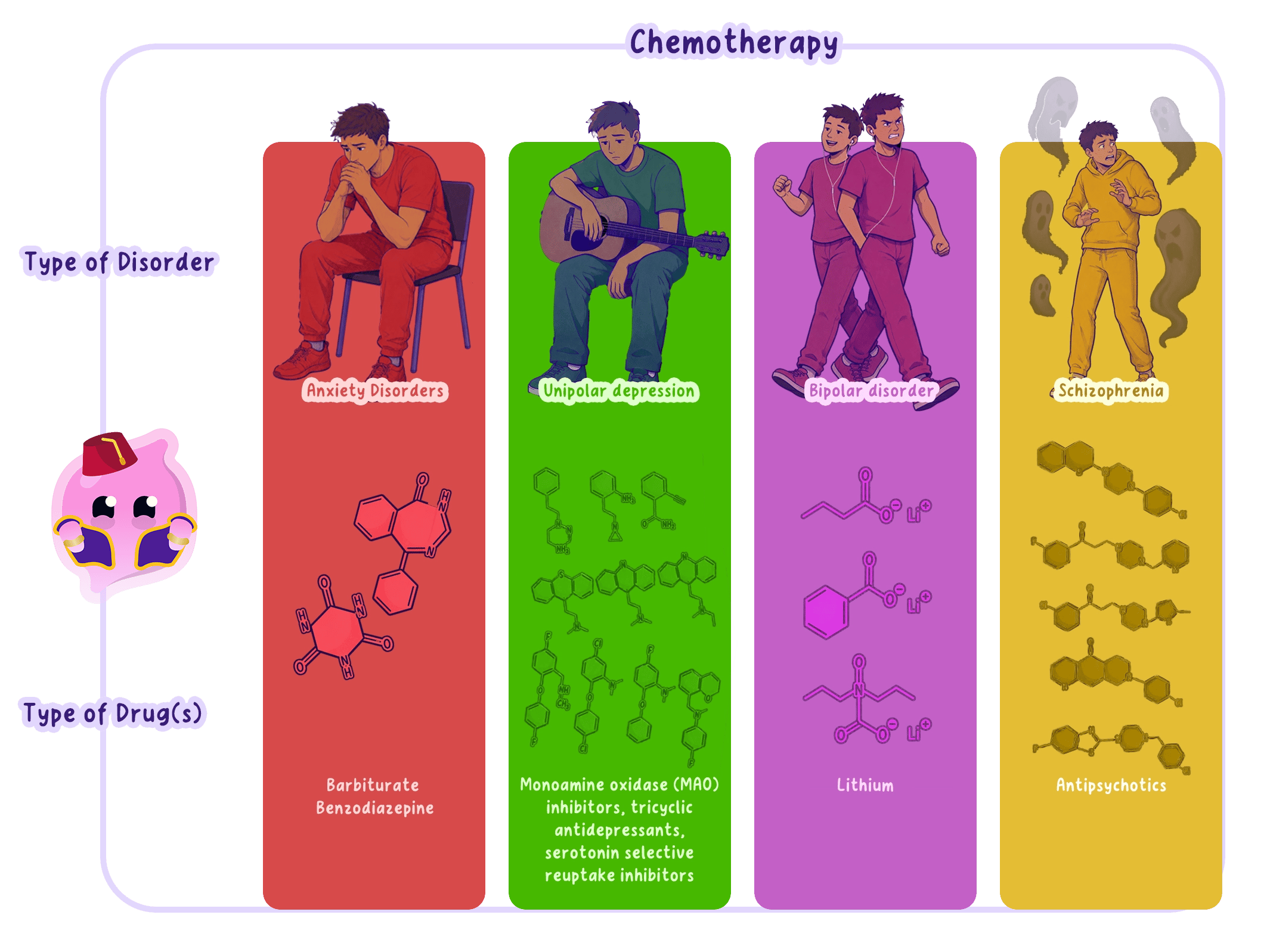
- The two drug types are anti-depressants for clinical depression and anti-psychotics for schizophrenia.
Key Idea
- Both drug types act on one step of the synapse, either leaving more of a neurotransmitter in the gap or blocking the receptors it binds to.
- An SSRI blocks reuptake so serotonin stays in the synapse longer, and mood tends to lift over about two to four weeks.
- An anti-psychotic occupies dopamine receptors so less dopamine binds, which eases hallucinations and delusions.
- Neither drug cures the condition, and both are usually offered alongside a talking therapy.
Anti-depressants
Definition
Antidepressant
A type of medication used to treat depression, most commonly by increasing the amount of the neurotransmitter serotonin available at the synapse.
- Serotonin is a neurotransmitter involved in regulating mood, sleep and appetite.
- The most common anti-depressants are SSRIs, selective serotonin reuptake inhibitors.
- An SSRI blocks that reuptake.
- More serotonin therefore stays in the synapse for longer, so it binds to receptors on the receiving neuron more often.
- That raises the level of signalling between neurons in the brain circuits linked to mood.
- Over about two to four weeks that change is thought to lift mood and to ease symptoms such as low energy and disturbed sleep.
- Some anti-depressants act on noradrenaline as well as serotonin, and the principle at the synapse is the same.
Example
- On the NHS a GP might prescribe an SSRI such as fluoxetine for moderate depression.
- The person is usually told it can take two to four weeks before they notice a difference.
- Talking therapy would normally be offered alongside the medication.
Anti-psychotics
Definition
Antipsychotic
A type of medication used to treat psychosis and schizophrenia, usually by reducing the activity of the neurotransmitter dopamine in the brain.
- The dopamine hypothesis links schizophrenia to an overactive dopamine system, so these drugs target dopamine.
- Anti-psychotics are dopamine antagonists, which means they occupy dopamine receptors on the receiving neuron.
- With those receptors taken, dopamine cannot bind, so less signal gets through.
- Cutting dopamine transmission in this way eases the positive symptoms, meaning hallucinations, delusions and disordered thinking.
- Negative symptoms such as withdrawal and low motivation respond less well.
- As the symptoms ease, a person is usually better able to manage daily life and to take part in other support.
- Anti-psychotics manage symptoms rather than cure schizophrenia, so they are often taken over the long term.
- Dosage is adjusted by a doctor, together with the person taking the medication, to balance the benefit against the side effects.
Note
- Blocking dopamine also reaches the pathways that control movement, which is where side effects such as stiffness and tremor come from.
- These drugs act on the positive symptoms, so help with withdrawal and low motivation has to come from support of another kind.
Strengths of drug therapy
- Strength, speed: drugs are easy to take and can work relatively quickly, which matters for someone in crisis.
- Strength, evidence: clinical trials find that they reduce symptoms for many people, which frees them to engage with other help.
- Strength, access: a prescription is quicker and cheaper for the NHS to provide than a full course of therapy, so waiting times are shorter.
Common Mistake
- A drug manages the symptoms rather than curing the condition, and it usually works best alongside a talking therapy.
- Serotonin belongs here only as the mechanism the drug acts on, since the biological explanation of depression is social rank theory rather than a shortage of serotonin.
Weaknesses of drug therapy
- Weakness, side effects: these can be unpleasant, and they lead some people to stop taking their medication.
- Weakness, symptoms not causes: a drug leaves a person's thoughts, relationships and circumstances exactly as they were.
- Weakness, relapse: symptoms often return once the medication stops, so the benefit depends on staying on it.
Note
- Changing or stopping medication is a decision for a person and their doctor together, and stopping suddenly is what raises the risk of relapse.
- Comparing drugs with talking therapy on cost alone leaves out that many people do best on both at once.
Turning this into marks
- When a strength and a weakness are both asked for, make them genuinely separate rather than one point rephrased.
- Name the neurotransmitter and the step at the synapse, because naming the drug on its own does not secure the knowledge mark.
- The mark most often lost is describing what a drug does to mood without saying what it does at the synapse.
Self review
- Describe the steps of a signal crossing a synapse.
- What does an SSRI do at the synapse, and what happens as a result?
- How do anti-psychotics change dopamine activity?
- Which symptoms of schizophrenia respond least well to anti-psychotics?
- Give two strengths and two weaknesses of drug therapy.
