This article covers 3.2.3 Brain and neuropsychology of the AQA GCSE Psychology specification.
Synaptic Transmission
Key Idea
- At a synapse the electrical signal in one neuron is turned into a chemical signal that crosses the gap to the next neuron.
- That chemical signal can either encourage the next neuron to fire or hold it back.
Crossing the Synapse: Electrical to Chemical and Back
Definition
Synapse
The tiny gap between the end of one neuron and the start of the next, where the signal is passed from one to the other.
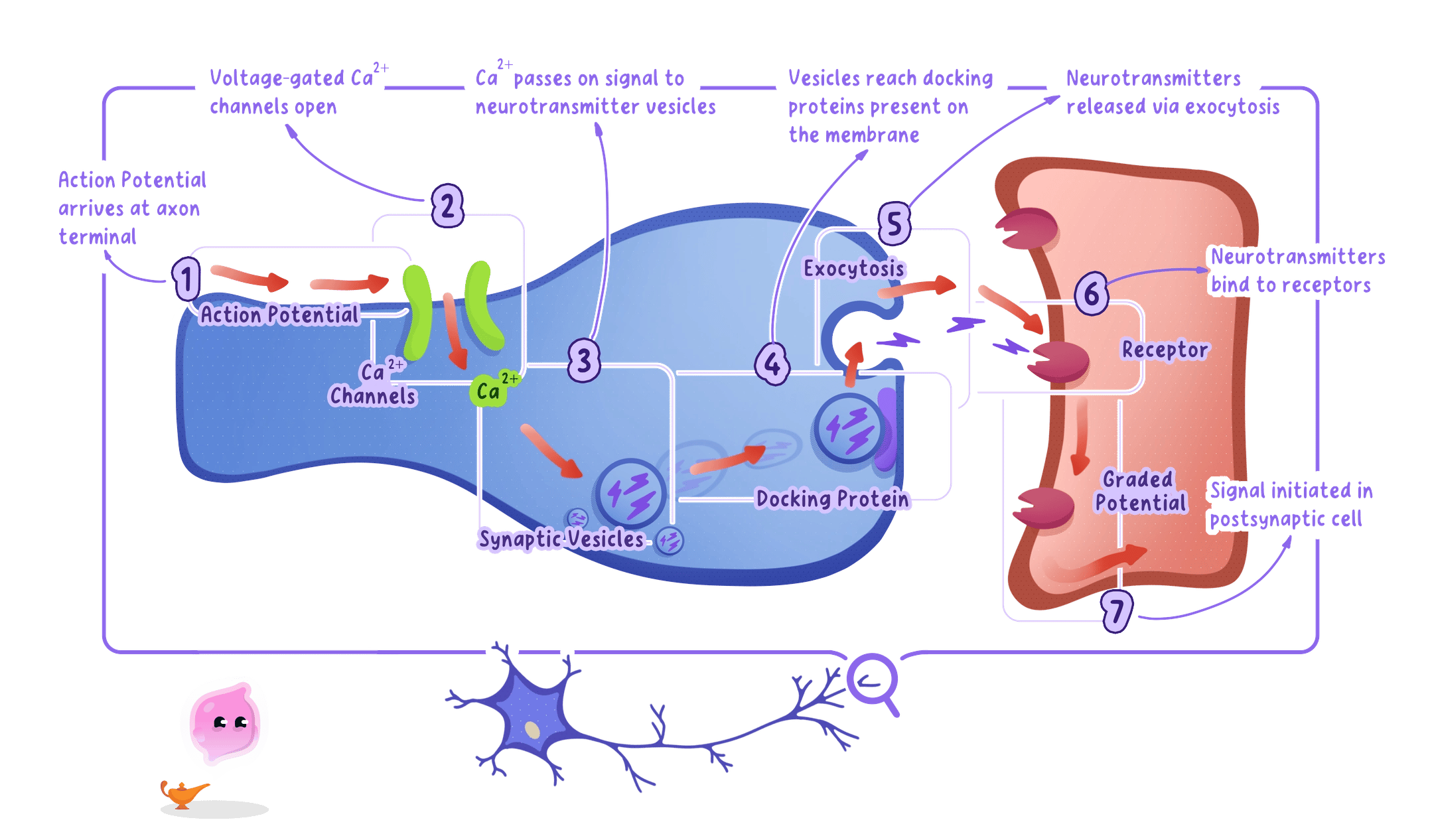
- An electrical signal travels down the first neuron and reaches the axon terminal.
- This triggers tiny sacs called vesicles to release neurotransmitter into the synapse.
- The neurotransmitter diffuses across the gap to the receiving neuron.
- It binds to receptors on the membrane of that neuron.
- If enough binds, a new electrical signal is set off in the receiving neuron.
- The neurotransmitter is then broken down or reabsorbed by reuptake, which resets the synapse.
Note
- Turning the electrical signal into a chemical one is like a relay runner handing over a baton: the message keeps moving but changes carrier.
- Reuptake clears the leftover neurotransmitter quickly, so the synapse is ready for the next signal.
Excitation and Inhibition
Definition
Neurotransmitter
A chemical released by a neuron that carries the signal across the synapse and binds to the next neuron.
- Excitatory neurotransmitters make the receiving neuron more likely to fire.
- Inhibitory neurotransmitters make it less likely to fire.
- The receiving neuron adds up all the excitatory and inhibitory signals it gets at once.
- It only fires if the excitatory signals outweigh the inhibitory ones past a certain threshold.
Common Mistake
- Do not say the signal jumps or sparks across the gap; a chemical neurotransmitter carries it across.
- Do not treat a neuron as simply on or off; it weighs excitatory and inhibitory signals together before firing.
Why the Signal Travels Only One Way
- Only the first neuron stores neurotransmitter and releases it into the synapse.
- Only the receiving neuron carries the matching receptors, so the signal can cross in one direction only.
Self review
- What is a synapse?
- Describe how a signal crosses the synapse from one neuron to the next.
- What is the difference between an excitatory and an inhibitory signal?
- What happens to the neurotransmitter after it has passed on the signal?