What makes an equation quadratic?
What makes an equation quadratic?
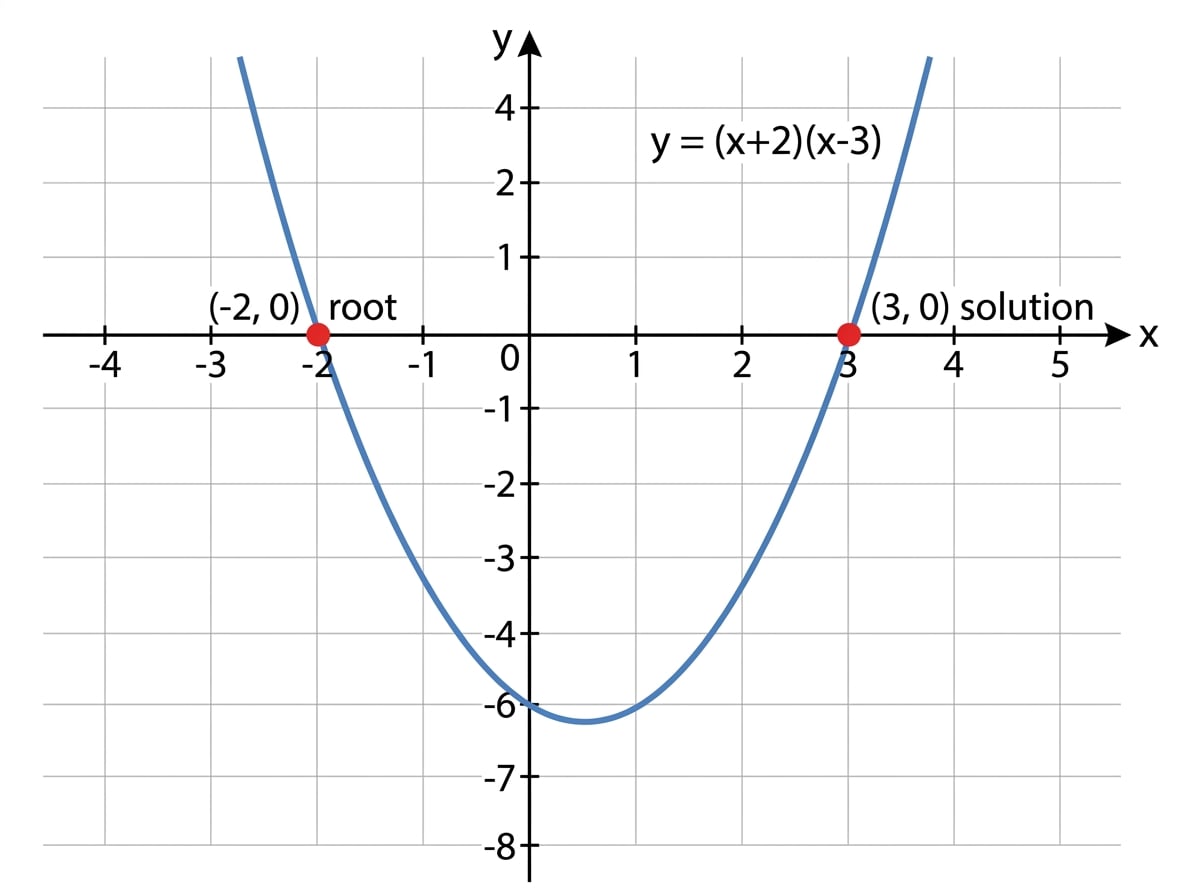
A quadratic equation has a squared term as its highest power, such as x2−x−6=0x^2-x-6=0x2−x−6=0. The graph above is of y=(x+2)(x−3)=x2−x−6y=(x+2)(x-3)=x^2-x-6y=(x+2)(x−3)=x2−x−6, so its roots are x=−2x=-2x=−2 and x=3x=3x=3. In this lesson, we focus on equations of the form x2+bx+c=0x^2+bx+c=0x2+bx+c=0, where the coefficient of x2x^2x2 is 1.
Solving Quadratics Lesson
Step-by-step lessons on OCR GCSE Maths Solving Quadratics. Each one builds up to exam-style questions. Build fluency with number, ratio and algebra first, since geometry, probability and statistics topics rely on them, and leave extra time nearer the exam for Higher-tier problem-solving and multi-step reasoning questions.