Markets decide what gets made without anyone planning
Definition
Price mechanism: the way prices moving up and down in free markets settle what is produced, how much of it, and who gets it.
- No official decides how many loaves the UK bakes, yet the shelves are stocked, because the price does the deciding.
- Buyers reveal what they want by paying for it, and producers follow the prices that cover their costs, as set out in 2.4.1.
- The question of how resources should be allocated is posed in 1.2.2, and the price mechanism is the market economy's answer.
Prices signal, ration and give incentives
- Signalling: a price tells producers what buyers want more of and what they want less of, without any survey being taken.
- Incentive: a higher price raises the profit on offer, which gives producers a reason to move resources into that market.
- Rationing: when a good is scarce the price rises until only those willing to pay the most still buy, which decides who gets it.
- The three work together, so the same price rise that signals scarcity also rewards extra production and limits who consumes.
Example
- The UK farmgate milk price fell about 21% in the year to July 2026, from 44.4p to 35.0p a litre (Source: Defra).
- As a signal that says buyers and processors want less milk at the old price; as an incentive it makes dairying less profitable; as rationing it means milk is no longer scarce enough to need a high price to share it out.
- One number is doing all three jobs at once, which is why economists treat price as a mechanism rather than just a label.
Markets connect so a change spreads outwards
- Because resources can move between uses, a change in one market alters what is available to every market that competes for the same resources.
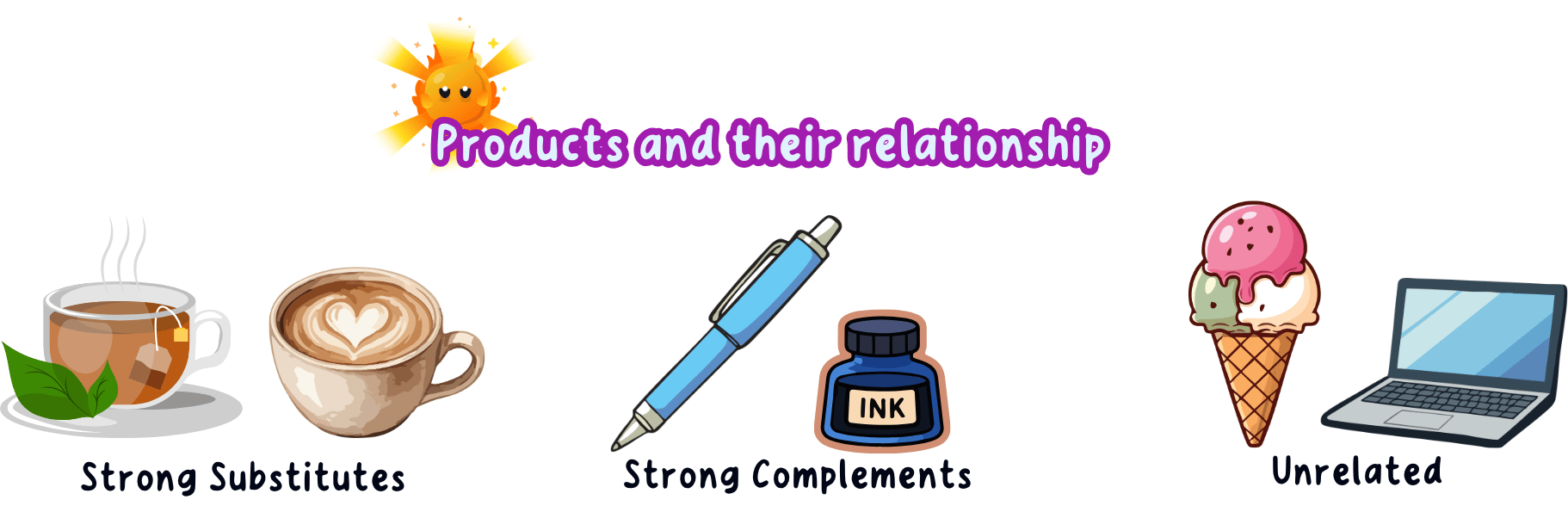
- Goods are linked on the demand side too, so a price change reaches the markets for substitutes and complements, as analysed in 2.4.4.
- Factor markets and product markets are linked in the same way, which is the interdependence set out in 2.1.3.
Markets allocate well but not perfectly
- The strength of the mechanism is speed and information, because prices adjust continuously and use knowledge no planner could gather.
- It also has no administrative cost, since nobody has to be paid to work out what should be produced.
- The weakness is that a price counts only what buyers and sellers pay each other, so effects on anyone else are left out, as covered in 3.8.1.
- Rationing by price also means the outcome depends on who has the money, so a market answers what people can pay for rather than what they need.
Exam technique
- Name the function you mean when you write about price, because signalling, incentive and rationing are three different jobs.
- Give the mechanism's limitation as well as its strength when a question asks about its role, since a one-sided answer stops short.
Self review
- What is the price mechanism?
- Name the three functions a price performs.
- How does a price ration a scarce good?
- Why does a change in one market reach other markets?
- Give one thing the price mechanism fails to take into account.
