Inflation is a rise in the price level
Definition
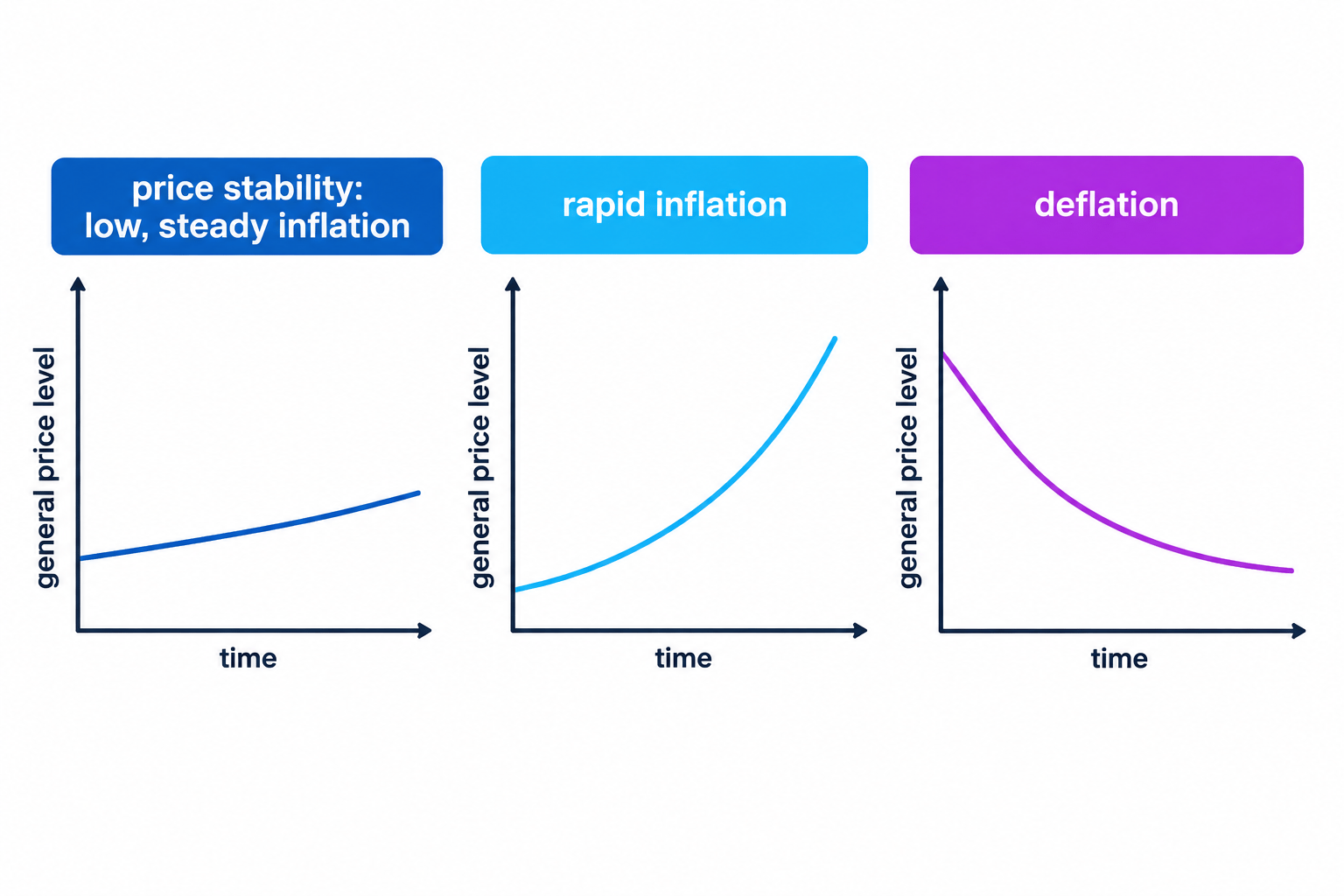
Price stability: a situation where the general price level is rising only slowly and predictably, rather than not rising at all.
Inflation: a sustained rise in the general price level, measured as the percentage change over a period, usually a year.
Deflation: a sustained fall in the general price level, so the average price of goods and services is going down.
- Inflation is a rate, not a level, so 2.9% inflation means prices are 2.9% higher than a year before rather than that prices are high.
- It is the general price level that counts, because some individual prices always fall while the average rises.
- Falling inflation is not deflation, since a rate dropping from 4% to 2% still means prices are rising, only more slowly.
- The UK target for CPI inflation is 2%, so price stability in practice means slow steady increases rather than none at all (Source: Bank of England).
Common Mistake
- Do not say inflation means prices are high, because it means prices are rising.
- Do not call a fall in the inflation rate deflation, since deflation needs the price level itself to fall.
Real values strip out the price changes
Definition
Nominal value: an amount measured in the prices of the day, with no adjustment for inflation.
Real value: an amount adjusted for inflation, so it shows what the money will actually buy.
- A pay rise smaller than inflation leaves a worker able to buy less, even though the cash figure on the payslip went up.
- Every comparison across time therefore has to say whether it is in real or in nominal terms.
- The same distinction applies to savings, because interest below the inflation rate means the real value of the balance is falling.
- Comparing two years in nominal terms exaggerates any increase, since part of the rise is only higher prices.
Example
- CPI inflation was 2.9% in the twelve months to July 2026 (Source: ONS).
- A worker whose pay rose 2% over that year could buy about 0.9% less than a year earlier, despite a bigger number on the payslip.
- A saver earning 2% interest over the same year lost real value on the balance for exactly the same reason.
Why price stability is a government aim
- Rapid inflation makes planning hard, because a firm cannot judge what a contract signed today will be worth when it is finally paid.
- It also cuts the real value of savings and of any income that does not rise with prices.
- Deflation brings its own problem, since households delay purchases when they expect prices to fall further, which weakens demand.
- A low and steady rate avoids both, which is why the aim is stability rather than zero.
How that rate is measured is covered in 3.4.2, and the calculations behind it in 3.4.3.
Self review
- What is meant by inflation?
- What is the difference between inflation and deflation?
- Explain the difference between a real value and a nominal value.
- Why is the aim price stability rather than zero inflation?