1.3 How prices are determined
123456789101112131415161718192021222324252627282930313233343536373839404142434445464748495051525354555657585960616263646566676869707172737475767778798081828384858687888990919293949596979899100101102103104105106107108109110111112113114115116117118119120121122123124125126127128129130131132133134135136137138139140141142143144145146147148149150151152153154155156157158159160161162163164165166167168169170171172
Question 147
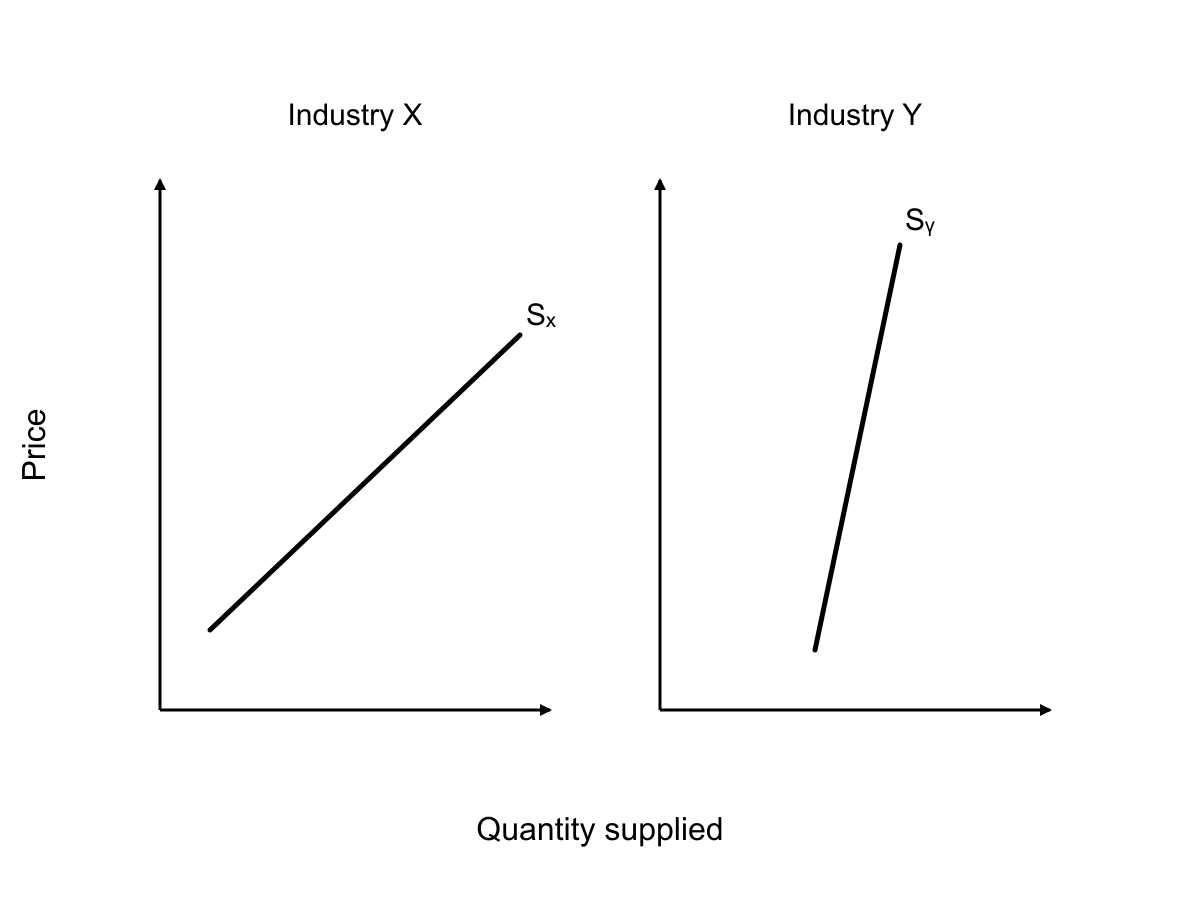 Both industries experience the same rise in price from P₀ to P₁. Which statement is most likely to be correct?
Both industries have unitary price elasticity of supply because the price change is the same
Industry X has more price-elastic supply, so its quantity supplied changes proportionately more
Industry X has perfectly inelastic supply because its curve is not vertical
Industry Y has more price-elastic supply because its supply curve is steeper
1.3 How prices are determined Questions
236 exam-style questions on AQA GCSE Economics 1.3 How prices are determined, covering 1.3.1a Demand and the factors that influence it, 1.3.1b The demand curve, 1.3.2a Supply and the factors that influence it, 1.3.2b The supply curve, 1.3.3a Determining equilibrium price, 1.3.3b Applying diagrams and showing revenue, 1.3.4a Complements and substitutes, 1.3.4b Effects of changes on related markets, 1.3.5a Price elasticity of demand, 1.3.5b Factors affecting price elasticity of demand, 1.3.5c Measuring PED and its implications, 1.3.6a Price elasticity of supply, 1.3.6b Factors affecting price elasticity of supply, and 1.3.6c Measuring PES and its implications. Each one has a worked solution and a mark scheme showing where the marks go.