An exchange rate is the price of one currency
Exchange rate: the price of one currency expressed in terms of another currency.
Floating exchange rate: an exchange rate determined by the demand for and supply of the currency on the foreign exchange market, rather than fixed by the government or central bank.
- The pound is a floating currency, so its value against the dollar or the euro changes as trading conditions change.
In August 2026 the pound traded at around 1.35 dollars and 1.17 euros, having been broadly stable to modestly stronger against both currencies over the year.
Appreciation and depreciation describe a rate rising or falling
- If the pound appreciates, each pound buys more foreign currency than before; if it depreciates, each pound buys less.
Appreciation: a rise in the value of a currency against another currency.
Depreciation: a fall in the value of a currency against another currency.
- Do not confuse appreciation and depreciation with inflation.
- They describe a currency's value against other currencies, not the general price level in the economy.
A floating rate is set by demand and supply
- The demand for pounds comes from anyone who needs pounds, such as foreigners buying British exports or placing money in the UK.
- The supply of pounds comes from anyone offering pounds in exchange for other currencies, such as UK residents buying foreign goods or investing abroad.
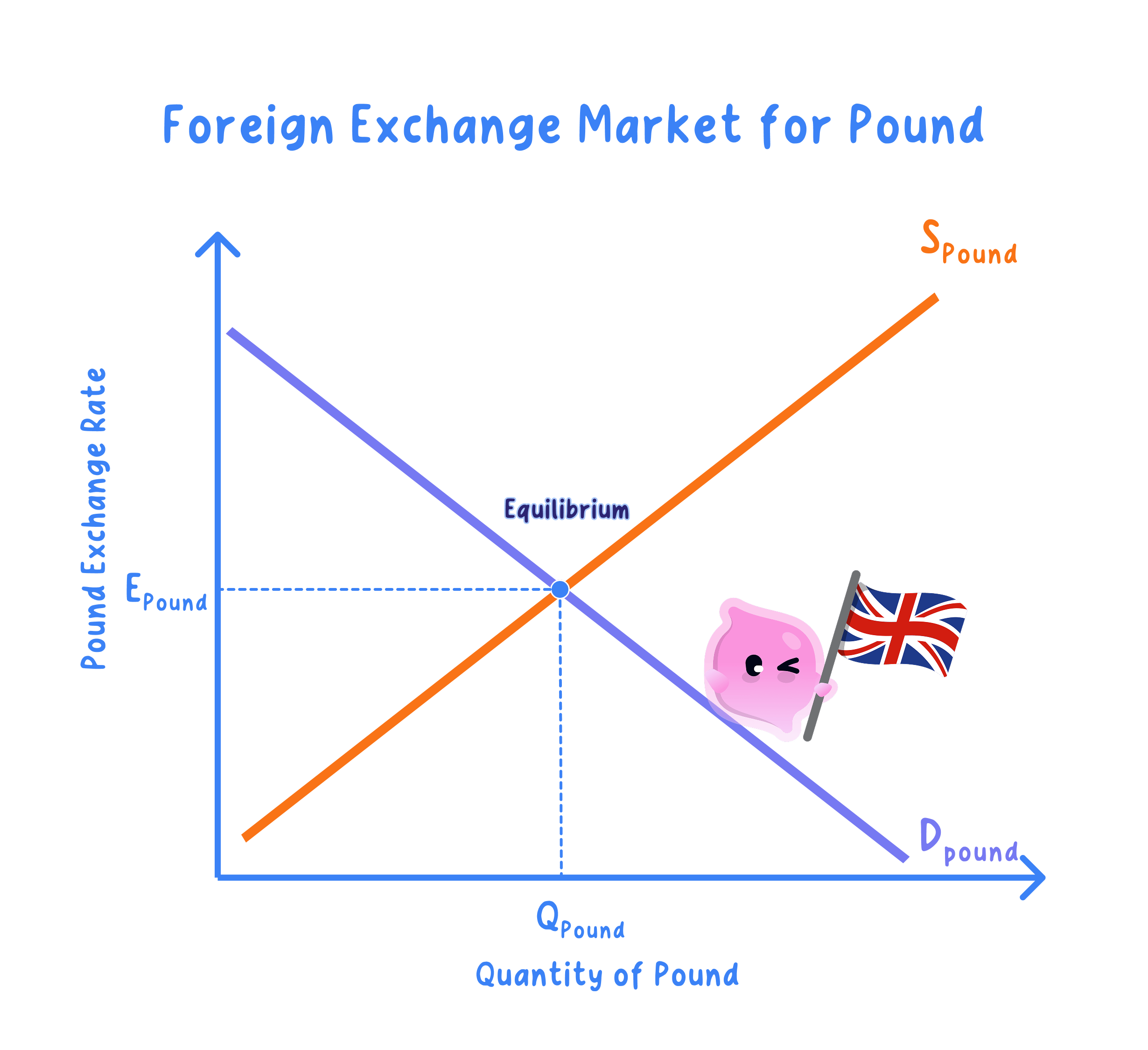
- The rate settles where the quantity of pounds demanded equals the quantity of pounds supplied.
Think of the pound as a product on sale in a giant market: its price, the exchange rate, settles where the amount buyers want matches the amount sellers offer.
A demand and supply diagram shows the equilibrium rate
- The vertical axis shows the price of the pound in another currency and the horizontal axis shows the quantity of pounds traded; demand slopes down and supply slopes up.
- Equilibrium, and the equilibrium exchange rate, is found where the two curves cross.
- A common mistake is to assume a government simply chooses the exchange rate.
- Under a floating system the rate is set by trading in the market, so it moves as demand and supply change.
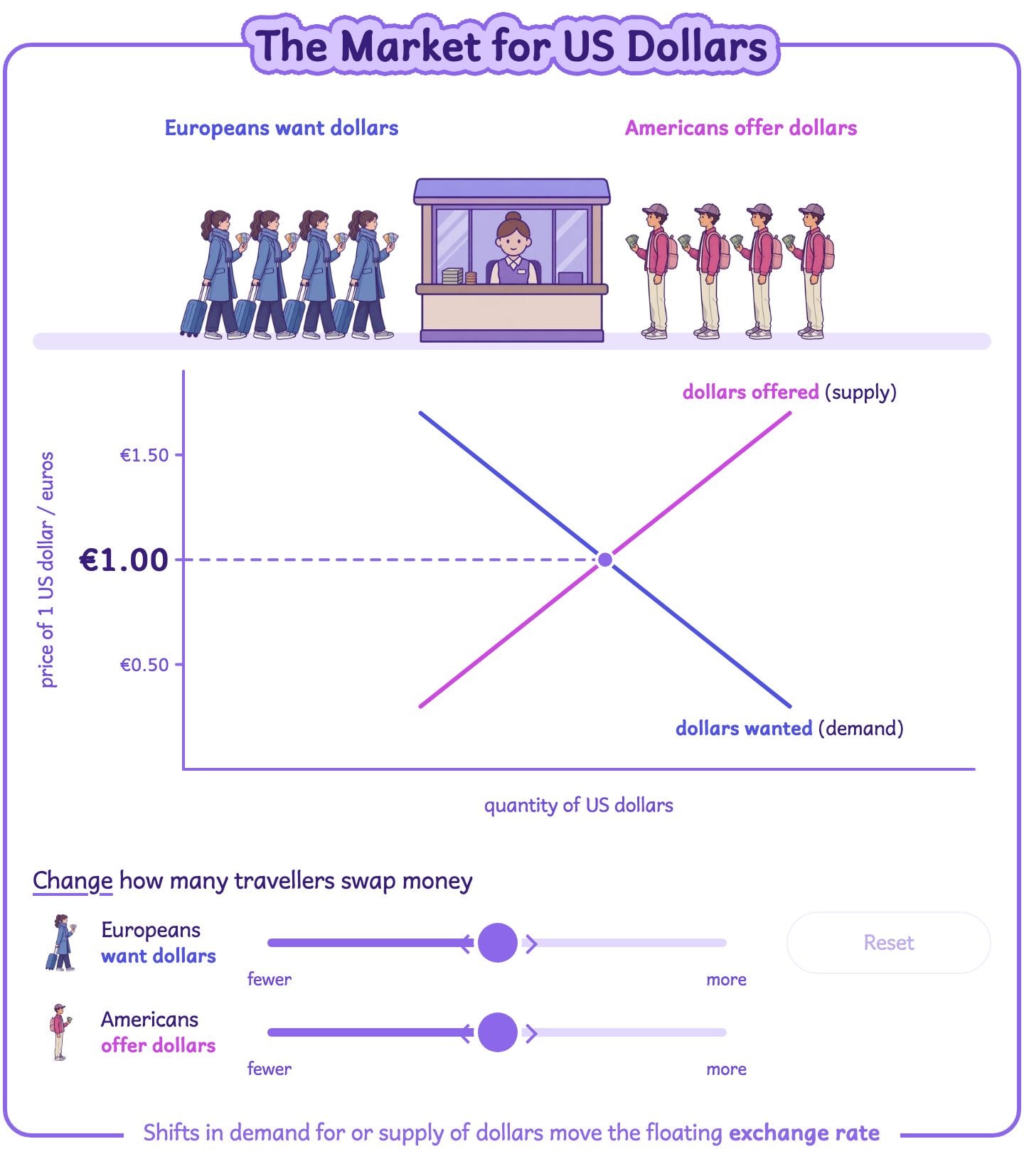
Shift the demand for or supply of the currency and watch the exchange rate appreciate or depreciate.
Away from equilibrium, the market pushes the rate back
- If the pound is above the equilibrium rate, more pounds are supplied than demanded, creating a surplus that pushes the rate back down.
- If the pound is below the equilibrium rate, demand exceeds supply, creating a shortage that pulls the rate back up.
- Whenever the underlying demand for or supply of the currency changes, for example if more foreigners want to buy British exports, the equilibrium rate settles at a new level.
- In a floating system, what two forces decide the exchange rate?
- What is the difference between an appreciation and a depreciation?
- Name what goes on each axis of the currency demand and supply diagram.
- Explain what happens to the rate if there is a surplus of pounds.