Taxes are classified in two separate ways
- The first classification asks what a tax is charged on, dividing taxes into direct and indirect.
- The second classification asks how the share of income taken changes as income rises, dividing taxes into progressive, regressive and proportional.
- The two classifications are separate, so any tax can be described using both at the same time, for example as direct and progressive.
Direct taxes are charged on income and profits
Direct tax: a tax charged on income or profits and paid straight to the government by the person or firm being taxed.
- Income tax is charged on the money people earn from work, and National Insurance is charged on earnings too, both deducted straight from wages.
- Corporation tax is charged on the profits that companies make, and is paid directly by the firm.
Indirect taxes are charged on spending
Indirect tax: a tax charged on spending on goods and services, collected by firms and passed to the government, so it can be added to the price the customer pays.
- VAT is charged on most goods and services at the point of sale.
- Fuel duty is charged on the petrol and diesel sold at the pump, on top of VAT.
- The income tax taken from a worker's wages is a direct tax on what they earn.
- The VAT and fuel duty inside the price of a tank of petrol are indirect taxes on what they spend.
Progressive taxes take a bigger share as income rises
Progressive tax: a tax that takes a larger percentage of income as income rises.
- UK income tax is progressive because it is charged in rising bands (2026/27 tax year): no tax on the first £12,570 earned, then 20 per cent up to £50,270, then 40 per cent up to £125,140, then 45 per cent above that.
- Because more of a higher earner's income falls into the higher bands, they pay a bigger percentage of their total income in tax, not just a bigger amount.
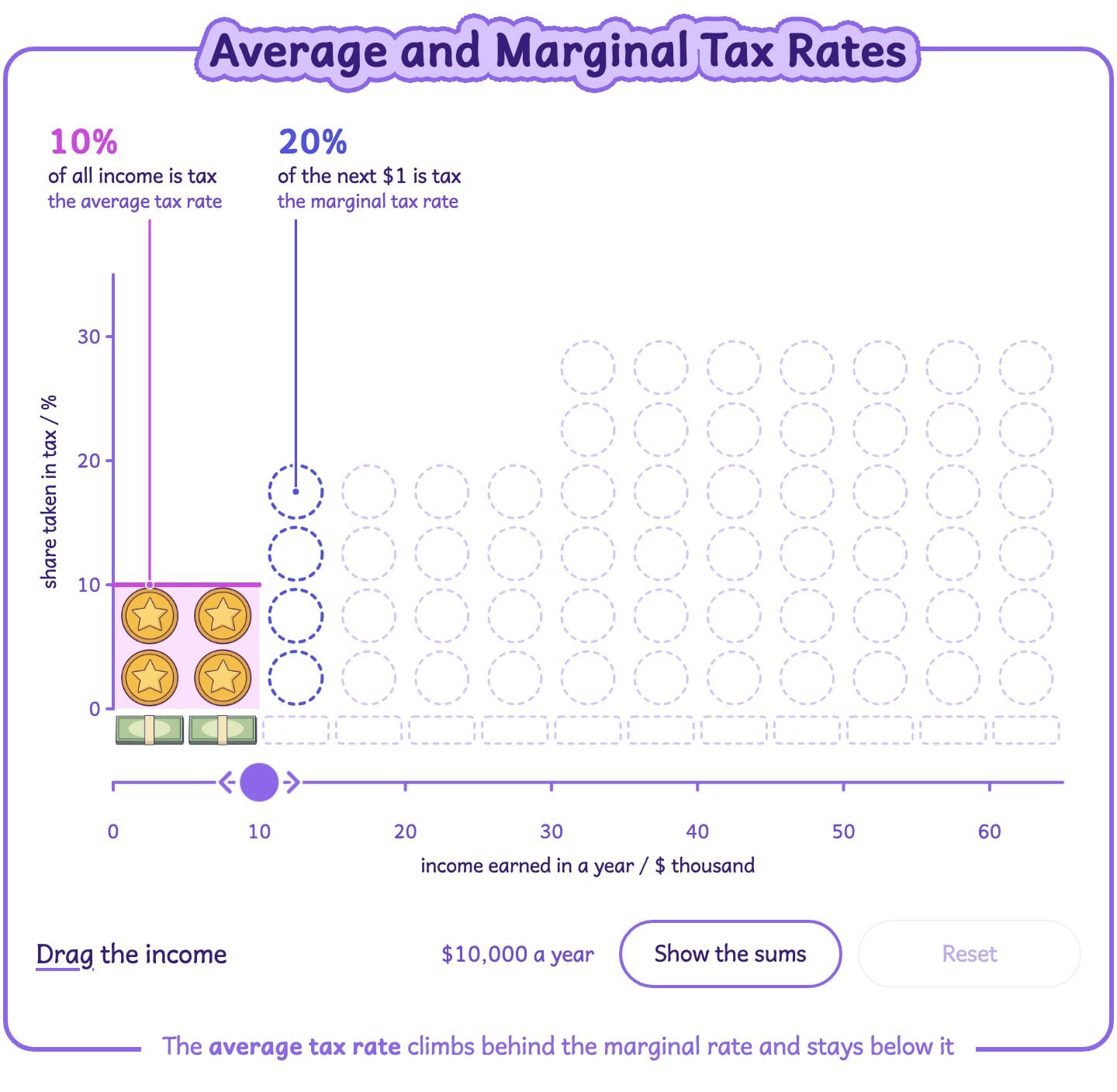
Raise income and watch the share paid in tax climb, which is what makes a tax progressive.
Regressive and proportional taxes behave differently
Regressive tax: a tax that takes a smaller percentage of income as income rises, so it takes a bigger share from lower earners.
Proportional tax: a tax that takes the same percentage of income at every income level, so it is a flat rate.
- A flat-rate indirect tax such as VAT is regressive when measured against income, because a poorer household typically spends a larger share of its income than a richer one, so VAT eats up a bigger percentage of a low income than a high one.

A progressive tax takes a bigger percentage as income rises, not just a bigger amount of money. A flat 20 per cent tax on all income collects more pounds from a richer person but the same percentage from everyone, so it is proportional, not progressive.
A worked example shows why VAT is regressive
- Comparing two households that spend the same amount shows how a flat-rate tax like VAT ends up taking a bigger share of a lower income.
- Suppose two households each spend £6,000 a year, VAT included, on standard-rated goods such as furniture, takeaways and electronics, taxed at the UK standard VAT rate of 20 per cent.
- Household A earns £15,000 a year and household B earns £60,000 a year, but both pay the same £1,000 in VAT.
- VAT takes roughly four times as big a share of household A's income as household B's, even though both paid the same amount, which is what makes a flat-rate indirect tax regressive.
Every tax gets one label from each scale
- Income tax is a direct and progressive tax, since it is charged on earnings and takes a rising percentage as income grows.
- VAT is an indirect and regressive tax, since it is charged on spending and takes a bigger share of a poorer household's income.
- When classifying a tax in an exam, always give both labels to show you understand that the two scales are separate.
- Use the exact terms direct for taxes on income or profits and indirect for taxes on spending, and check the command word, since define wants a precise statement while classify wants the label itself.
- Write the phrase percentage of income when defining progressive, regressive or proportional, so it is clear you mean a share and not a cash amount.
- A common trap is giving only one label when a tax should be placed on both scales, such as direct and progressive together, or claiming VAT takes a bigger amount from the poor when it actually takes a bigger share.
- What is the difference between a direct tax and an indirect tax?
- Define a progressive tax in terms of percentage of income.
- Why is VAT described as regressive, even though everyone pays the same 20 per cent rate?
- Give both classification labels for income tax.
- What is a proportional tax, and how does it differ from a progressive tax?