Demand is buying people can actually pay for
Definition
Demand: the quantity of a good or service that consumers are willing and able to buy at a given price over a period of time.
Quantity demanded: the single amount consumers would buy at one particular price, taken out of that whole set of buying plans.
- Willing and able are two separate tests, and a buyer who fails either adds nothing to the market.
- A shopper who would love a Nissan Leaf but cannot raise the money is willing without being able.
- A millionaire with no interest in motorbikes is able without being willing.
- Buying that passes both tests is effective demand, the only kind that reaches a shop's till.
- A demand figure needs a price attached, because the same shoppers buy a very different amount at £2 as at £5.
- It needs a time period too, since 40 loaves a week and 40 loaves a year describe two different shops.
- Each quantity is what consumers plan to buy, so it is an intention rather than a record of a sale.
Common Mistake
- A fall in the good's own price raises quantity demanded, not demand.
- Demand quoted with no price and no time period cannot be marked.
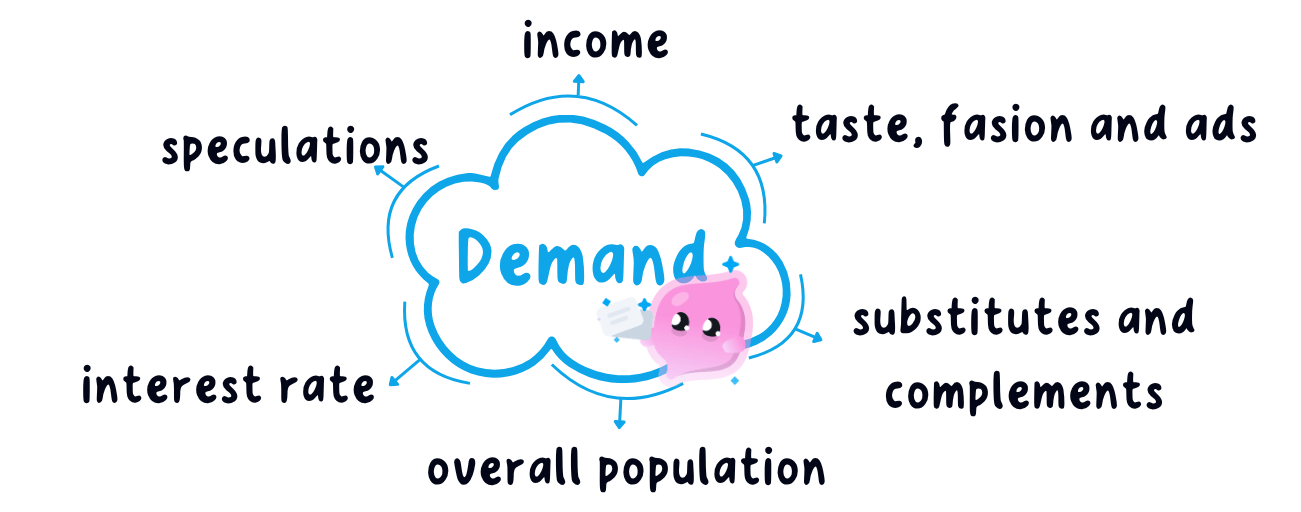
Income raises normal goods, lowers inferior goods
- Real income is what a household's pay will actually buy, so it rises only when wages grow faster than prices.
- A normal good is one people buy more of as real income rises, such as meals out at Wagamama or holidays abroad.
- An inferior good is one people buy less of as real income rises, such as supermarket value ranges or long coach journeys.
- One pay rise pushes the two types in opposite directions, so name the type of good before you give a direction.
- An income tax cut or a rise in benefits works like a pay rise, because all three leave households with more to spend.
Case study
- UK real incomes were squeezed from 2021 as prices rose faster than wages.
- Tesco and Sainsbury's shoppers moved from branded groceries to own-label ranges, and Aldi and Lidl gained market share.
- Value food is the inferior good and the branded version the normal good, both reacting to one change in income.
Tastes, fashion and advertising change demand
- Tastes and fashion change demand because consumers want the good more or less than before, with no price change involved.
- The Greggs vegan sausage roll met a shift in UK tastes towards plant-based food, and queues formed at prices no lower than the meat version.
- Health information moves tastes the other way, so NHS campaigns about sugar have lowered demand for full-sugar fizzy drinks.
- Advertising raises demand by making a good better known and more wanted, which is why firms pay for it.
- John Lewis spends heavily on its Christmas advertisement to lift demand across the whole store in December.
- Advertising by one firm can lower demand for a rival, since the buyers it wins have to come from somewhere.
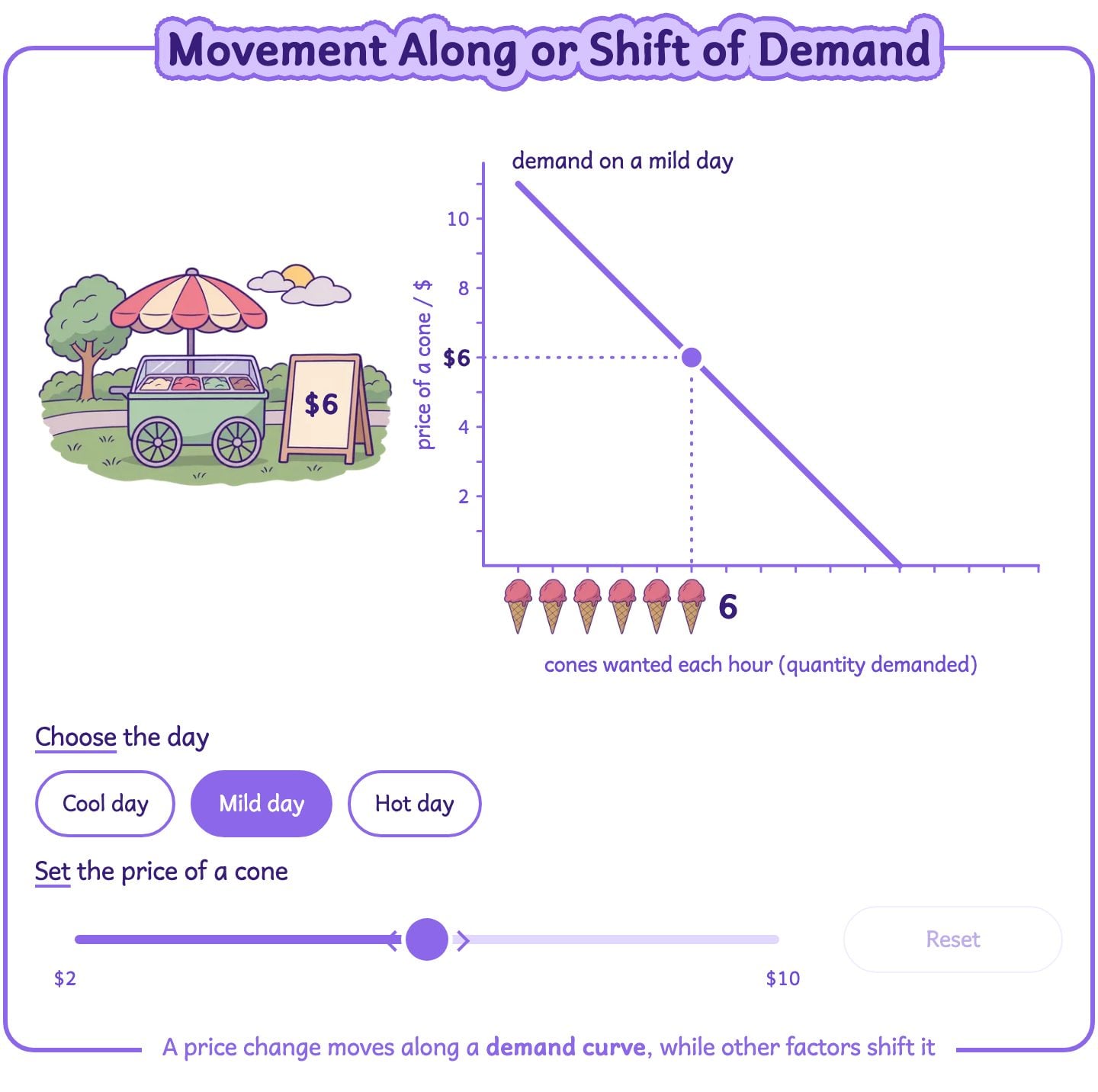
Change a factor such as tastes or income and watch the whole demand curve shift left or right.
Substitutes and complements change demand too
- A substitute is bought instead of the good being studied, so a fall in its price pulls buyers away and lowers demand for that good.
- When Tesco cuts the price of its own-brand cola, demand for Coca-Cola falls even though Coca-Cola's own price has not changed.
- A complement is used together with the good being studied, so a fall in its price raises demand for that good.
- Cheaper games consoles raise demand for the games played on them, and cheaper flights raise demand for hotel rooms.
- The price that moved belongs to the other good, which is why this changes demand rather than quantity demanded.
- Name the related good as a substitute or a complement before you give the effect.
Substitutes and complements, and the knock-on effects between related markets, are developed in sections 1.3.4a and 1.3.4b.
Population and expectations shift demand
- A larger population raises demand for most goods, because there are more buyers in the market.
- Structure matters as well as size, so an ageing UK population raises demand for NHS care and lowers demand for school places.
- Expectations bring buying forward or push it back, so households expecting higher energy bills buy insulation sooner.
- Buyers who expect a price fall wait instead, which lowers demand today and raises it later.
Interest rates and seasons move demand
- Interest rates change demand for anything bought on credit, so a Bank of England rate cut raises demand for cars and new kitchens.
- The seasons move demand at fixed points in the year, so sun cream peaks in July and gas heating peaks in January.
- Not one factor in this article is the good's own price, which is what they all have in common.
Self review
- Give the full definition of demand.
- How does demand differ from quantity demanded?
- Why does a rise in real income lower demand for an inferior good?
- A supermarket cuts its own-brand cola price. What happens to demand for Coca-Cola?
- Name three non-price factors that change demand.