Every carbon atom forms four covalent bonds
Organic compound
A compound based on carbon, usually containing carbon bonded to hydrogen.
- Carbon has atomic number 666 and the electron arrangement 2.4, so it has four outer electrons.
- It shares all four to gain a full outer shell, so each carbon atom forms four covalent bonds.
- In methane, CH4\text{CH}_4CH4, one carbon atom is bonded to four hydrogen atoms.
- These bonds can be to hydrogen, oxygen, nitrogen, the halogens or other carbon atoms.
- Carbon can also form double bonds, as in carbon dioxide and ethene, where two shared pairs join the same two atoms.
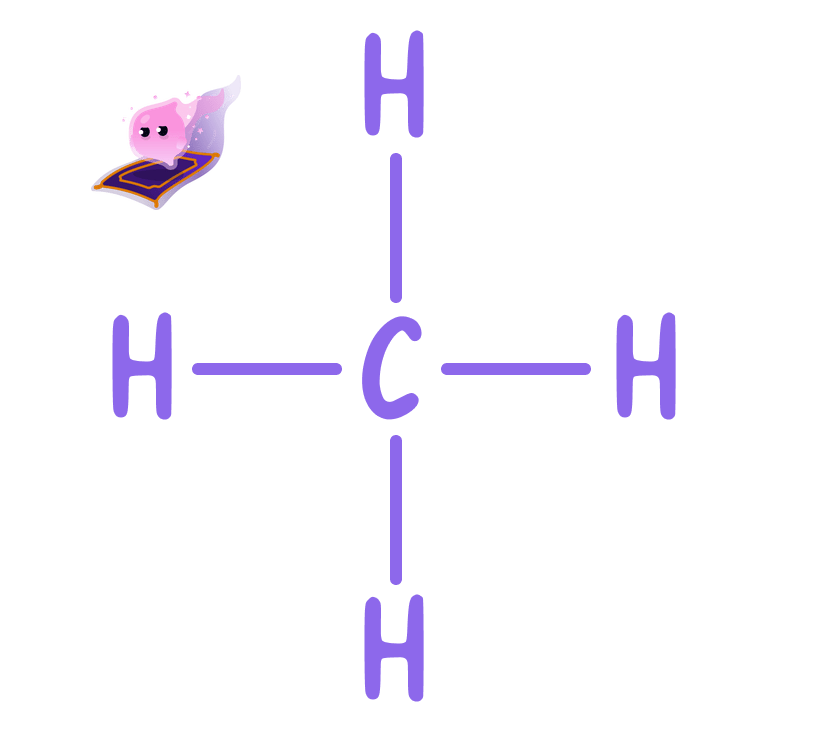
Do not draw a carbon atom with three or five bonds in a displayed formula, because carbon always forms four.
Carbon atoms form long chains, branches and rings
Hydrocarbon
A compound containing carbon and hydrogen atoms only.
- Bonds between carbon atoms are strong, so carbon atoms can link into chains of almost any length.
- Chains can be straight or branched.
- Carbon atoms can also join into rings, such as the ring of six carbon atoms in cyclohexane.
- Poly(ethene) contains chains of thousands of carbon atoms, while methane has only one.
- Chains, branches and rings can be combined in so many ways that there are millions of carbon compounds.
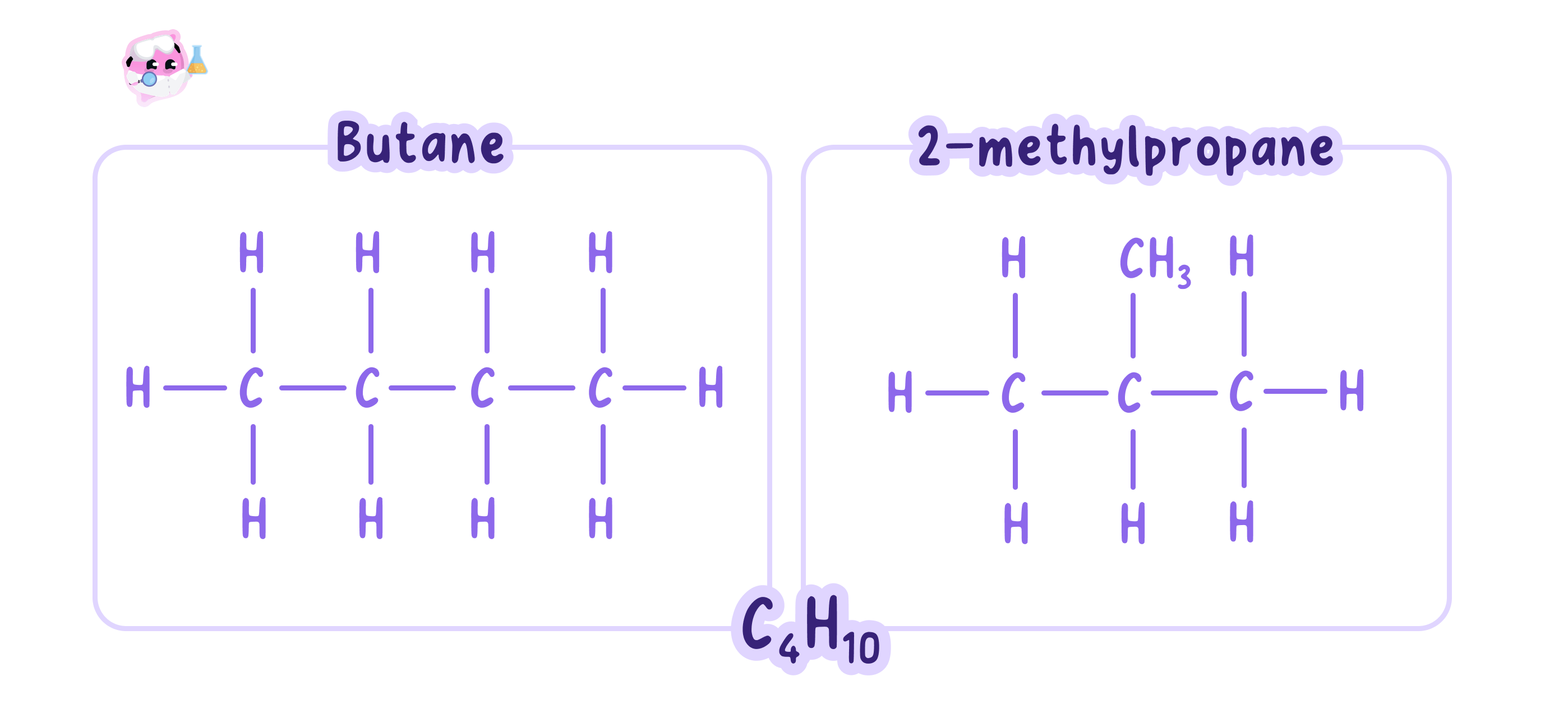
Butane and methylpropane both have the formula C4H10\text{C}_4\text{H}_{10}C4H10, but one is a straight chain and the other is branched, so they are different compounds.
Carbon forms families of compounds with similar reactions
- Members of a family of carbon compounds share the same general structure and differ mainly in the length of the carbon chain.
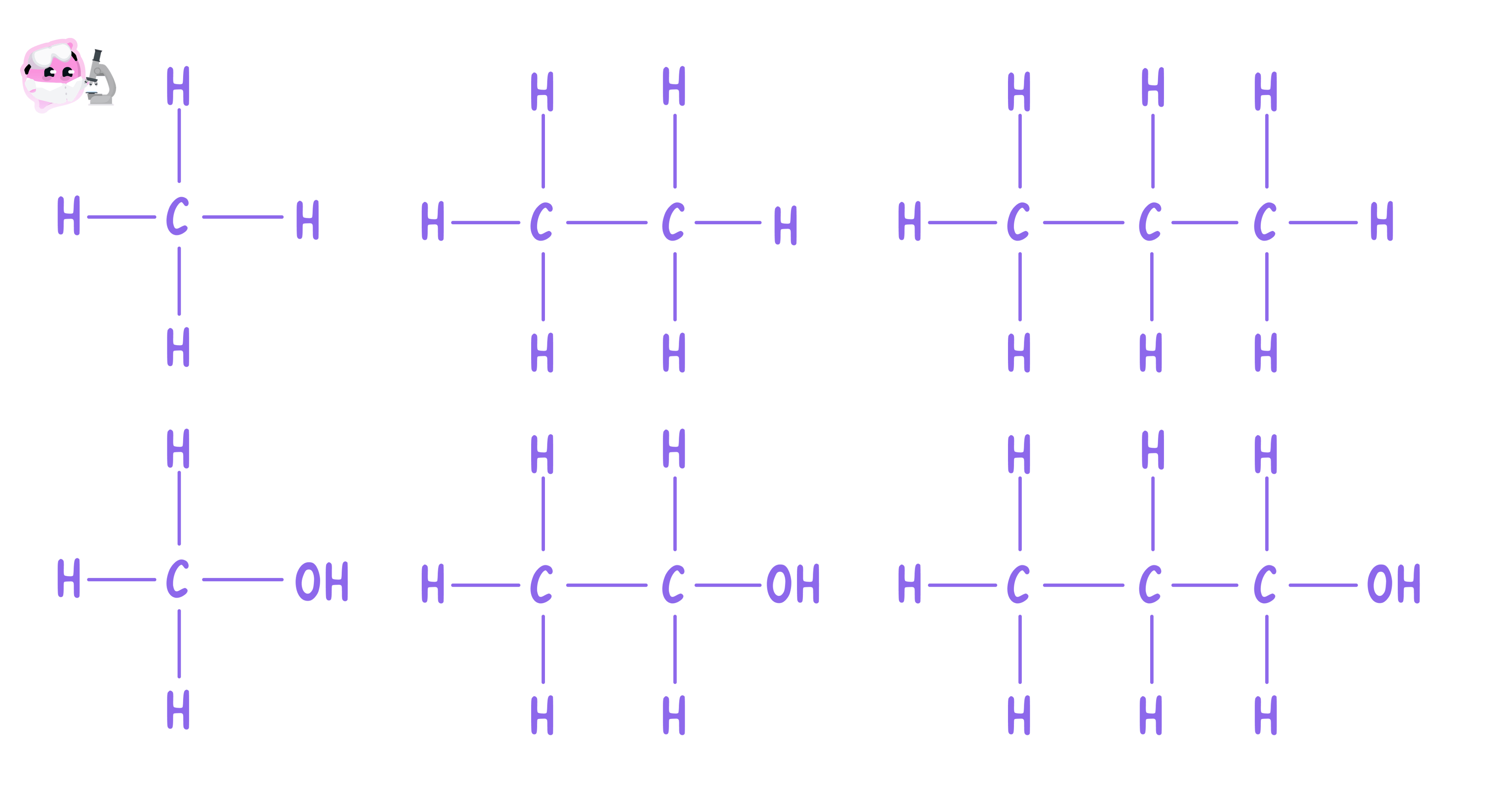
- Methane, ethane and propane belong to the alkanes, where each member has one more CH2\text{CH}_2CH2 than the one before.
- Members of a family react in similar ways, because they contain the same group of atoms that takes part in reactions.
- Ethanol and propanol are alcohols, and each contains an OH\text{OH}OH group.
- Knowing how one member reacts lets chemists predict how the others will react.
Four bonds per atom, strong bonds between carbon atoms and the ability to form chains and rings together explain the huge range of carbon compounds.
Carbon bonding underlies natural and synthetic organic compounds
Synthetic organic compound
An organic compound made by chemical processes rather than produced by a living organism.
- Living things are built from natural organic compounds, such as sugars, fats, proteins and DNA.
- Starch and cellulose in plants are long chains of sugar units joined together.
- Chemists make synthetic organic compounds, including plastics, medicines, dyes and fuel additives.
- Many synthetic compounds are made from crude oil, which is a mixture of hydrocarbons.
- Natural and synthetic compounds rely on the same features of carbon, namely four bonds, chains and rings.
Aspirin is a synthetic organic compound built around a ring of six carbon atoms, first made from a compound found in willow bark.
- How many covalent bonds does a carbon atom form, and why?
- What shapes can chains of carbon atoms form?
- Why are there millions of different carbon compounds?
- What do members of the same family of carbon compounds have in common?
- Give one natural and one synthetic organic compound.
