Electrolytes and electrolysis
Electrolytes and electrolysis
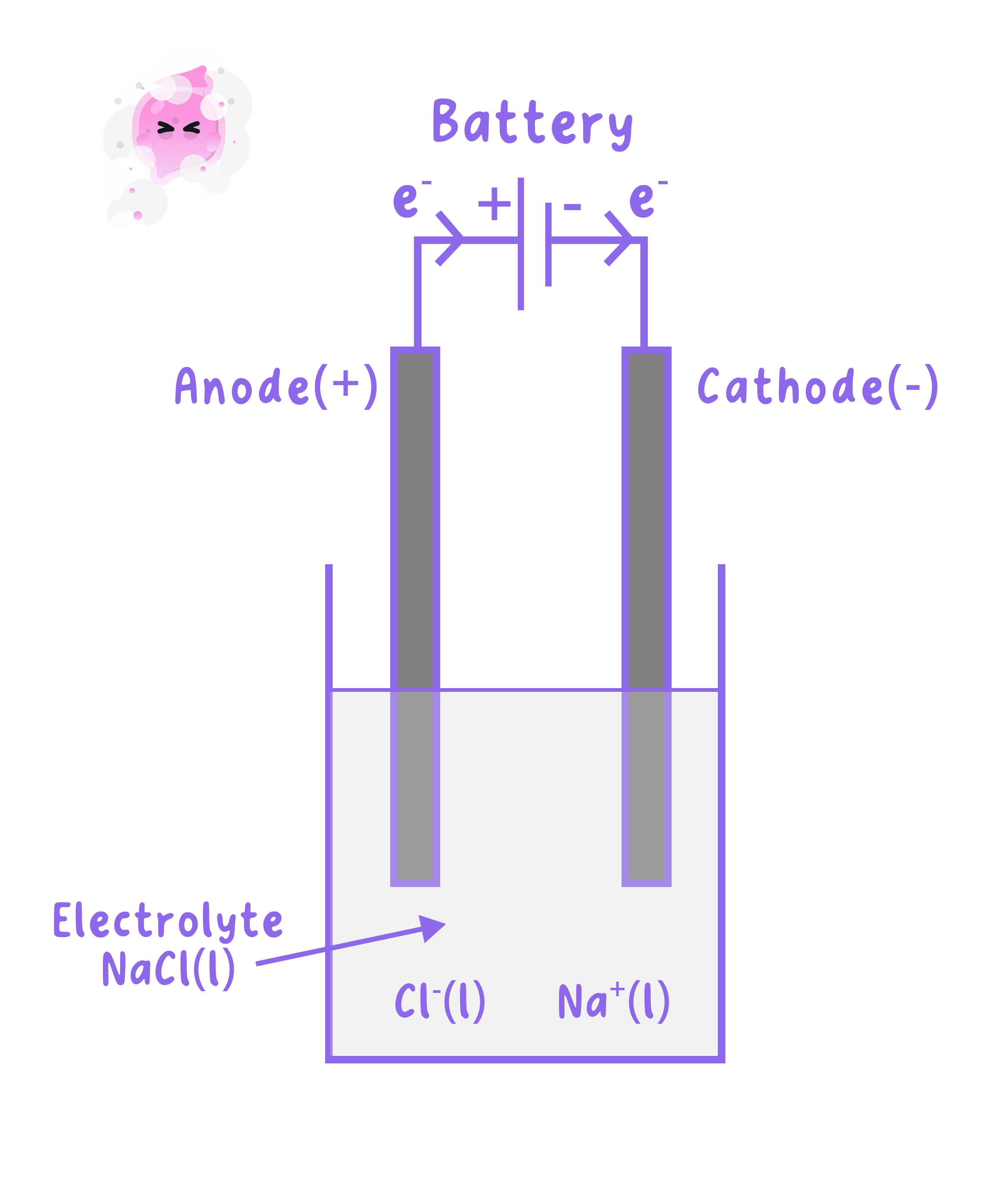
An electrolyte is a substance or solution containing mobile ions, so it can conduct electricity. It may be a molten ionic compound or a solution in which an ionic compound dissolves or a molecular substance forms ions, such as sulfuric acid in water. A solid ionic compound does not conduct because its ions are held in fixed positions in a lattice.
4.2 Electrolytic processes Lesson
Step-by-step lessons on Edexcel GCSE Chemistry 4.2 Electrolytic processes, covering 4.2.1 Electrolytes and the process of electrolysis, 4.2.2 Products of electrolysis using inert electrodes, 4.2.3 Half equations, oxidation and reduction in electrolysis, and 4.2.4 Electrolysis of copper sulfate and purifying copper. Each one builds up to exam-style questions. Nail the core quantitative topics — moles, balancing equations and calculations — early on, since they underpin higher-tier questions across every paper and topic.