Question 1
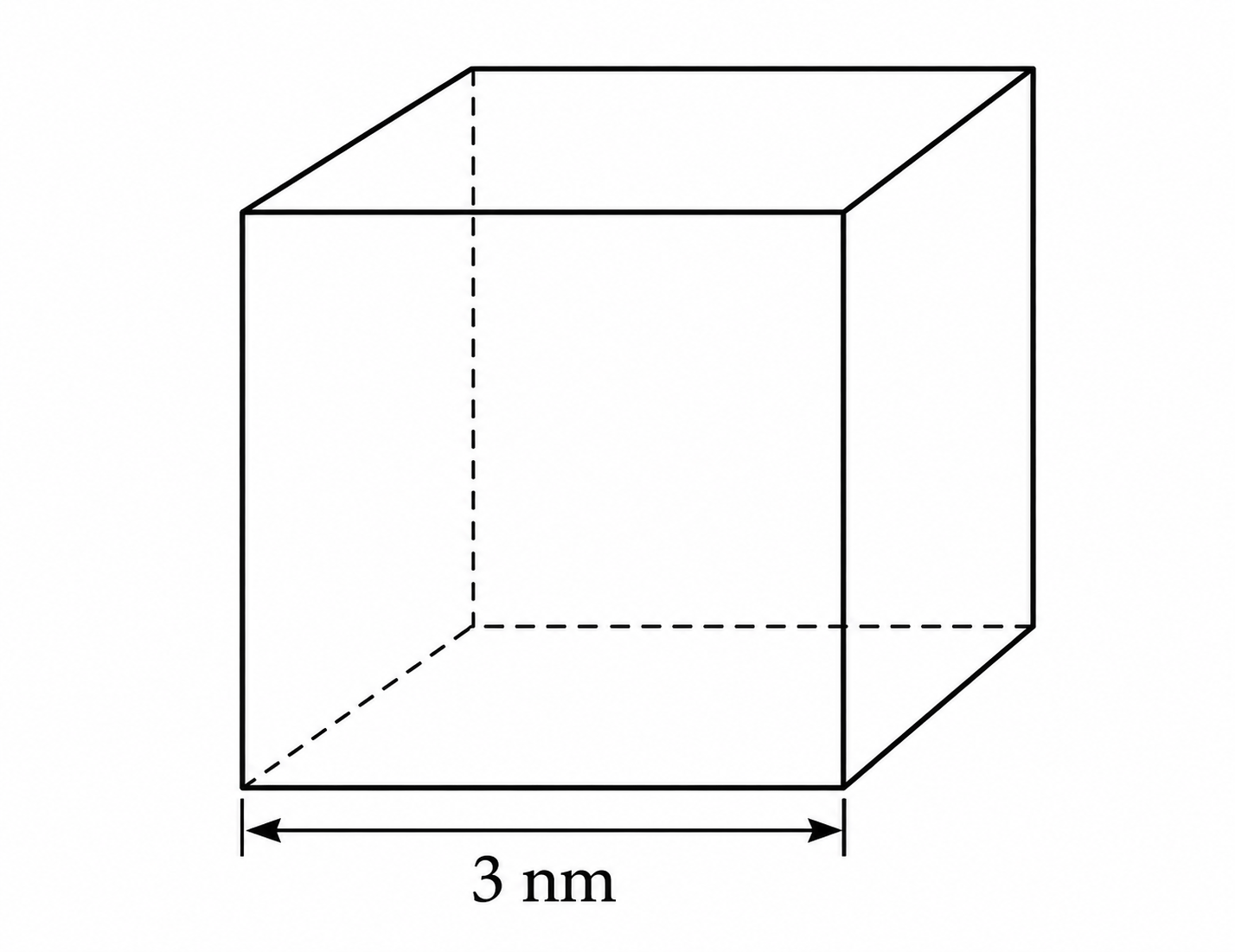
FThe figure represents a cubic nanoparticle.
Figure: A cubic nanoparticle with the length of one side labelled
a.[2]
Calculate the surface area of the cubic nanoparticle.
b.[1]
Calculate the volume of the cubic nanoparticle.
Volume of a cube = (length of side)3(\text{length of side})^3(length of side)3
c.[2]
Determine the surface area to volume ratio of the cubic nanoparticle.
Give your answer in its simplest whole number form.
2.4 Bulk and surface properties of matter including nanoparticles Questions
40 exam-style questions on AQA GCSE Chemistry 2.4 Bulk and surface properties of matter including nanoparticles, covering 2.4.1 Sizes of particles and their properties and 2.4.2 Uses of nanoparticles. Each one has a worked solution and a mark scheme showing where the marks go.