Methods of distribution: retailers, e-tailers and selling direct
Definition
Channel of distribution: the route a product takes from the business that makes it to the customer who uses it.
E-tailer: a retailer that sells through a website or app instead of from a physical shop.
- The place decision is really a decision about who does the selling for you, because each route hands a different amount of the work, the price and the customer to somebody else.
- Retailers: you sell your product to a shop, and the shop sells it on to the customer over its own counter.
- The retailer brings footfall, a location and a reputation the shopper already trusts, and its staff do the selling, so Levi Roots reached far more households once Sainsbury's stocked Reggae Reggae Sauce than he could have reached alone.
- The shop takes a share of the price, so you earn less on every unit, and it decides where on the shelf your product sits and how it is displayed.
- E-tailers: online retailers such as Amazon, ASOS, eBay and Etsy list your product on their platform and sell it to their own visitors.
- You borrow a customer base of millions and a checkout, payment and delivery system that already works, so a small firm can be selling nationally within days of setting up a listing.
- The platform charges a fee on every sale and puts your listing beside every rival selling the same thing, which pushes the shopper's choice towards whoever is cheapest.
- Selling direct: you reach the customer yourself, from a shop of your own or through your own website.
- Nobody in between takes a cut, so you keep the whole difference between your costs and the price, and you own the customer relationship and the data on what they bought and when.
- You have to do all the selling, marketing and delivery yourself, and you begin with nobody watching, so the first hundred customers are slow and expensive to find.
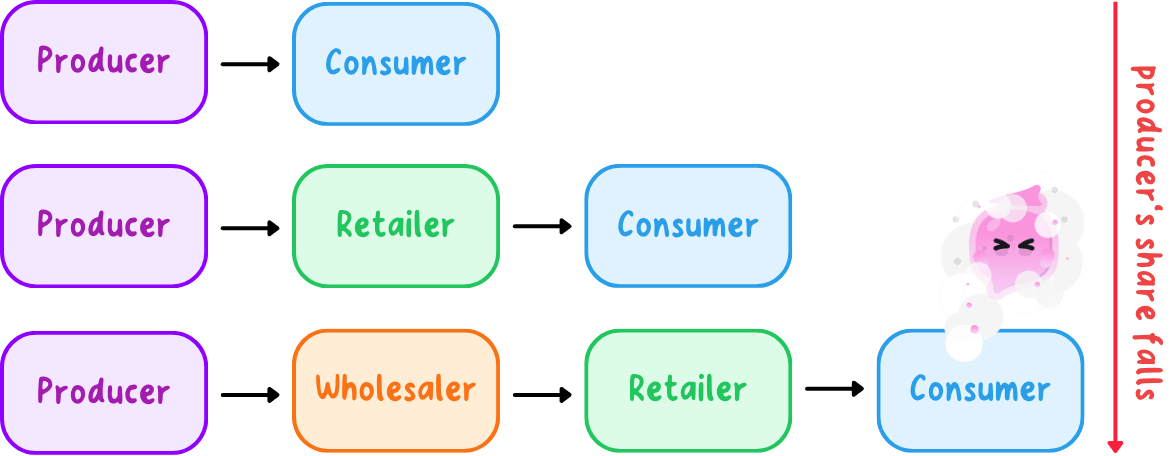
Note
This diagram shows distribution channels more broadly. For GCSE Edexcel, focus on retailers and e-tailers (e-commerce) as the specified methods of distribution.
Comparing the three routes: who owns the customer, and what it costs you
The three methods differ on three things at once, set side by side below.
| Retailers | E-tailers | Selling direct | |
|---|---|---|---|
| Who owns the customer | The shop | The platform | The business |
| Effect on margin | Shop takes a share | Fee on every sale | Whole margin kept |
| Effort for the business | Low, the shop sells | Low, the platform handles orders | High, you do all of it |
- Read the bottom two rows together and the pattern is a straight trade: the more of the work a channel does for you, the more of your price it keeps.
- The top row matters most over several years, because a shop or a platform that owns the buyer can drop your product and keep the customer, which is why Gymshark built its own website and sold through fitness influencers rather than handing its buyers to somebody else.
E-commerce: why place stopped being a question about the high street
Definition
E-commerce: buying and selling goods and services online, through a website or an app, rather than in a physical shop.
- E-commerce widened the market from the people who walk past your door to the whole country, and to other countries if you are willing to post there.
- A website takes orders at three in the morning and on a bank holiday, and it pays no high-street rent or shop wages, so the business can carry lower fixed costs than a shop of the same size.
- Those savings are spent again on packaging, delivery and returns on every order, and on competing with every other seller a customer can compare in one search, so a wider market does not automatically mean more profit.
Example
- A candle maker in Leeds sells around 200 candles a month at £8 each from a market stall, to whoever walks past that Saturday.
- Listing the same candles on Etsy puts them in front of shoppers across the UK, and orders now arrive overnight and at weekends.
- Each order costs about £3.50 in packaging and postage before Etsy's fee, so on an £8 candle the wider market only pays if she raises the price or sells in multiples.
- The stall stays open, because the customers who buy on the day cost nothing to deliver to.
Using more than one channel at once
- Most businesses now use more than one method of distribution at the same time, because no single route reaches every customer and each one does a different job.
- Click and collect exists because of that mix, letting the customer order on the website and pick the shopping up in store, so Tesco and Sainsbury's win the online sale without paying a driver to deliver it.
- The channels have to stay consistent, meaning the same product at the same price whichever way it is bought, because a shopper who finds the item cheaper online than on the shelf they just paid at stops trusting the business with either.
Exam technique
- Name the channel, then say what it does for this business, because "they should sell online" with no mechanism attached stays at the bottom of the levels.
- Carry the chain through: selling through a retailer reaches far more shoppers, so sales volume rises, but the retailer keeps a share of every price, so the profit on each unit falls.
- When the command word is explain or analyse, one channel followed all the way to its effect beats three channels listed.
- Use the channels the business in the source booklet already has, since application marks are gated on that context.
Self review
- Define channel of distribution.
- Give one advantage and one drawback of selling through a retailer rather than direct.
- Why does listing on an e-tailer such as Amazon or Etsy put pressure on your price?
- State two costs e-commerce adds and one cost it removes.
- What two channels does click and collect combine, and why must both show the same price?
