Induction training
Definition
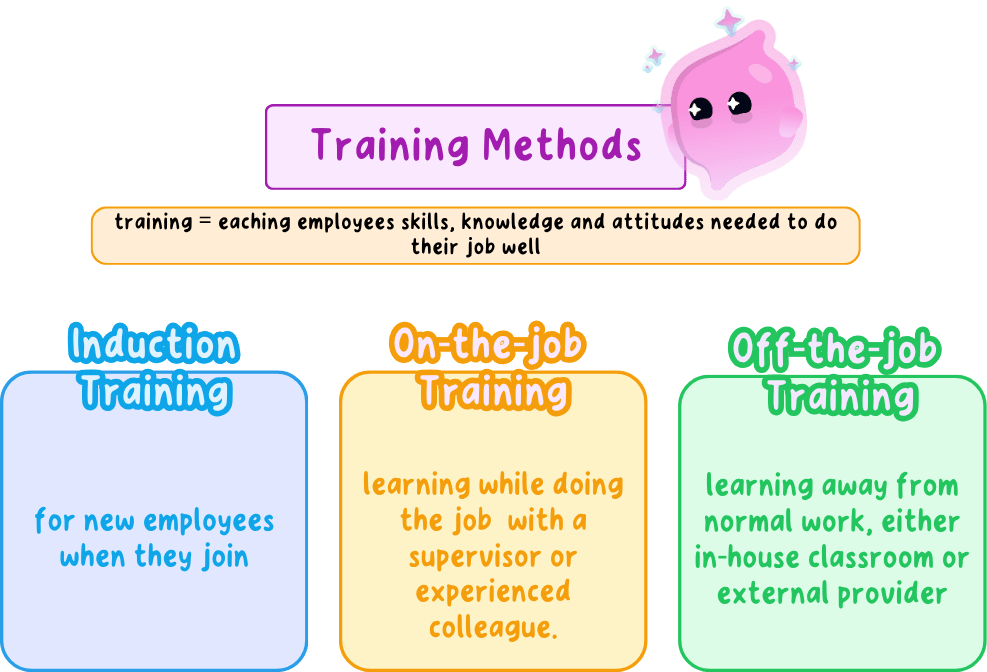
Induction training: the training given to an employee when they first start, to introduce them to the business and the way it works.
- Induction happens in the first days or weeks of a new job, which is what separates it from every other kind of training.
- A typical induction covers a tour of the workplace, the procedures and policies the employee has to follow, an introduction to the colleagues and managers they will work with, and health and safety, including fire exits and how to use equipment safely.
- It usually ends with the basics of the job itself, such as the till system, the paperwork or the software the employee will use every day.
Benefits of induction training
- The new starter reaches full speed sooner. Knowing where things are kept and how the systems work means less time spent asking, so the employee becomes productive in days rather than weeks.
- Fewer accidents and mistakes at the riskiest time: a new employee is most likely to hurt themselves or damage stock before they know the procedures, so covering safety and process on day one prevents both.
- Better retention: a starter who is welcomed, introduced to colleagues and told what is expected is far less likely to walk out in the first month.
- Losing a recruit early wastes everything already spent on hiring them, so a good induction protects the cost of recruitment.
- Less demand on managers: because the new employee knows who to ask and what the rules are, supervisors spend less time answering basic questions and can get on with their own work.
Example
- A new Tesco colleague spends a first shift on a store tour, fire evacuation routes, the chilled goods procedure and till basics before serving on their own.
- By the end of the week they can work a shift with normal supervision, so the cost of the induction is quickly repaid.
On-the-job training
Definition
On-the-job training: training that takes place at the workplace while the employee carries out the real job, usually guided by an experienced colleague.
- Shadowing: the trainee watches an experienced worker do the job, then takes over the simpler parts of it while still being watched.
- Mentoring: a more experienced colleague is assigned to give advice and answer questions over weeks or months while the employee settles into the role.
- Coaching: a manager or specialist works through one particular skill with the employee, watching them do it and giving feedback until it is right.
- Whatever the form, real work is being produced while the learning happens, and the skills learned are the ones this business actually uses.
Common Mistake
- The two types are told apart by where the training happens, not by what is taught: an employee learning at the till is being trained on the job, and the same skill taught at a college is off the job.
- So do not sort them by the content of the course, because either type can teach a skill that is specific to this business.
Off-the-job training
Definition
Off-the-job training: training that takes place away from the normal work position, either in a training room on site or with an outside provider such as a college or a training company, and often leading to a formal qualification.
- Common forms are a course at a college, often one day a week for an apprentice, a course run by an outside training company, a session at a specialist training centre, and training given by the supplier of new machinery at its own site.
- It is usually taught by a specialist and often leads to a recognised qualification, such as a food hygiene certificate, a first aid certificate or an engineering award.
- Because the employee is away from the queue, the phones and the production line, they can concentrate on learning a whole skill rather than picking pieces of it up between tasks.
Note
Weighing on-the-job against off-the-job training, and deciding which suits a particular business, is the job of the next article.
Exam technique
- A frequent instruction is explain the benefits of induction training to this business, so say when it is given and what it covers before naming the benefit.
- Writing that induction improves skills does not separate it from any other training, so name the workplace tour, the procedures, the introductions and the health and safety.
- Check who is being trained, because induction only fits somebody who has just started.
- When you describe a method, use the specific label such as mentoring or a college day release rather than only the broad type.
Self review
- When is induction training given?
- Name three things an induction usually covers.
- Give two benefits of induction training to the business.
- What makes training on-the-job rather than off-the-job?
- Give one example of off-the-job training.
