What the two profit margins measure
Definition
Gross profit margin: gross profit expressed as a percentage of revenue, showing how much of every £1 of sales survives after the cost of sales has been paid.
Net profit margin: net profit expressed as a percentage of revenue, showing how much of every £1 of sales survives after every cost has been paid.
- A profit in £ tells you the size of the prize but not how hard the business had to work for it, so a margin restates that profit as a percentage of the revenue that produced it.
- That makes businesses of very different sizes comparable: £40,000 of profit is excellent on £200,000 of sales and disappointing on £2 million of sales.
Example
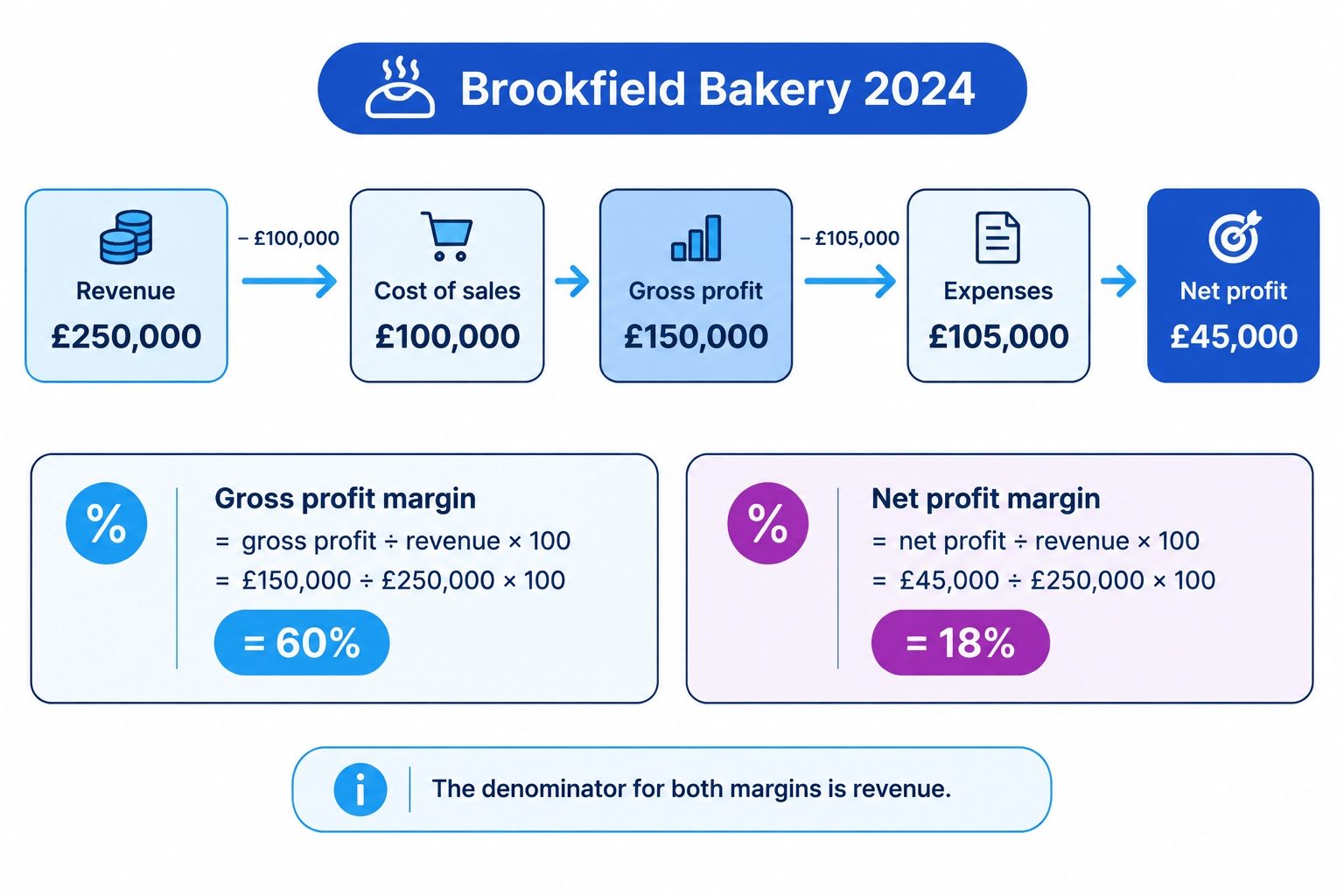
- Brookfield Bakery, an independent bakery in Sheffield, had revenue of £250,000 in 2024, a cost of sales of £100,000 and expenses of £105,000.
- In 2025 its revenue rose to £280,000, its cost of sales was £126,000 and its expenses were £112,000.
Calculating the gross profit margin
- The margin needs two figures, gross profit and revenue, so gross profit has to be worked out first by taking the cost of sales off revenue.
Example
- Brookfield Bakery's 2024 revenue was £250,000 and its cost of sales was £100,000.
- Learn the margin formula, because it is not given to you.
- A margin of 60% means that of every £1 taken over the counter, 60p is left once the flour, butter and packaging behind that sale have been paid for.
- That 60p is all the bakery has to cover rent, wages and every other overhead, so the owner should treat it as the money available to run the business rather than as profit she can keep.
Common Mistake
- Divide by revenue, never by the cost of sales, because profit divided by cost measures something else entirely.
- Match the profit to the margin, gross profit for the gross margin and net profit for the net margin, and finish the answer with a % sign rather than a £ amount.
Calculating the net profit margin
- Net profit takes the expenses off gross profit, so the net margin uses the same revenue as before but a smaller profit figure on top of the fraction.
Example
- Brookfield's 2024 expenses were £105,000, which come off the £150,000 of gross profit.
- The second formula also has to be learned.
- Of every £1 the bakery takes, 18p is genuinely profit and 82p has gone on costs.
- If the owner wants to draw £60,000 a year out of the business, 18p in the £1 on this level of sales will not deliver it, so either revenue has to grow or the margin has to widen.
Note
The gap between the 60% gross margin and the 18% net margin is the whole of the bakery's expenses, so 42p out of every £1 of sales is spent on running the business rather than on making the product.
Reading a margin that has moved
| Brookfield Bakery | 2024 £ | 2025 £ |
|---|---|---|
| Revenue | 250,000 | 280,000 |
| Cost of sales | 100,000 | 126,000 |
| Gross profit | 150,000 | 154,000 |
| Expenses | 105,000 | 112,000 |
| Net profit | 45,000 | 42,000 |
Example
- The 2025 column gives revenue of £280,000, a cost of sales of £126,000 and expenses of £112,000.
- Both margins have narrowed, the gross margin from 60% to 55% and the net margin from 18% to 15%.
- Revenue grew by £30,000 and yet net profit fell by £3,000, from £45,000 to £42,000.
- Selling more has made the bakery less profitable, and only the margins show that; the £ revenue figure on its own says the year was a success.
What a change in each margin points to
- A falling gross margin has only two possible causes, because the calculation contains only revenue and cost of sales: the cost of sales has risen faster than revenue, or prices have been cut.
- For Brookfield, 60% down to 55% would be explained by the wholesale price of butter and flour jumping, or by the discount it offered to win a new café contract, and the owner has to work out which before she reacts.
- A healthy gross margin above a weak net margin points somewhere completely different, at the expenses.
- If Brookfield's gross margin had held at 60% while the net margin still fell to 15%, buying and pricing would be under control and the damage would be in rent, wages, marketing or another overhead, so cutting an overhead is the fix rather than changing supplier.
Judging performance against a standard
- Against previous years: the bakery's own history is the fairest comparison, because the shop, the site and the customers are broadly the same, so the slide from 18% to 15% is hard to explain away as bad luck.
- Against competitors: a margin only becomes good or bad next to a rival's, so the owner has to find a comparable business and work its margin out too.
- Against what is normal for the industry: compare like with like, because Greggs works on thin margins and enormous volume, so an independent bakery that judged itself against a national chain's percentages would draw the wrong conclusion about its own pricing.
Example
- Halliwell's Bakery, two streets away, made £34,000 of net profit on revenue of £310,000.
- That answer has been rounded to one decimal place.
- Brookfield at 15% still turns each £1 of sales into more profit than Halliwell's does, even though it sells less.
- Its 2025 figures therefore look weak against its own past and strong against its neighbour, and a good answer says both rather than picking whichever suits.
How different stakeholders read the same figures
- The owner reads the margins as a verdict on her own decisions and on the return she gets for the hours she works, so the drop from 18% to 15% matters to her even though the bakery is still comfortably profitable.
- A lender asks one question, whether the profit reliably covers the repayments, so it reads £42,000 of net profit as ample cover for a loan costing £6,000 a year and worries less about the level than about the direction it is moving in.
- An employee reads the same pages for job security and pay: a bakery making £42,000 is not about to close, but a margin that is narrowing is a poor moment to ask for a rise or expect extra hours.
- A judgement on performance therefore has to name the viewpoint it is made from, because the same 15% is a disappointment to the owner, ample cover to the lender and a warning sign to the employee.
Self review
- Write out the formula for the gross profit margin and the formula for the net profit margin from memory.
- Revenue is £280,000 and net profit is £42,000: what is the net profit margin?
- What does a gross profit margin of 55% mean in pence out of every £1 of sales?
- A business has a steady gross margin but a falling net margin: where is the problem, and where is it not?
- Name three things a profit margin can be compared with, and say why a lender and an employee would read the same margin differently.