Needs and wants
Definition
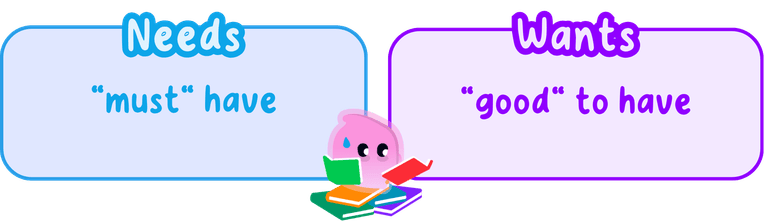
Need: a basic human requirement that a person must have, such as food, water, shelter, warmth and basic clothing.
Want: something a person would like to have but could manage without, such as a holiday, a takeaway or designer trainers.
- Everything a business sells is bought to satisfy either a need or a want, and businesses meeting needs tend to have steadier demand because customers keep buying whatever happens to their income.
- Wants are the first thing customers cut when money is tight, because nobody has to buy a meal out or a new phone this month.
- The same product can be a need for one customer and a want for another, so a car is a need for a district nurse driving between patients in rural Cumbria and a want for someone who lives ten minutes from a station.
Example
- Bread from a Tesco shelf meets a need, because the customer has to eat.
- A Nando's meal out meets a want, because the customer could have eaten at home for far less.
Common Mistake
- Do not label expensive things wants and cheap things needs.
- A £1,200 boiler repair in January is a need, and a 99p chocolate bar is a want.
- What decides it is whether the customer could manage without the product, not the price on the label.
Goods and services
Definition
Good: a physical, tangible product a customer can touch and own, such as a loaf of bread or a laptop.
Service: an intangible action or activity carried out for a customer, such as a haircut, a bus journey or an insurance policy.
- A good is tangible, so it can be physically touched, stored in a warehouse and sold on second hand.
- A service is intangible, so it cannot be physically touched, cannot be stored for later and is produced at the moment the customer receives it.
- An unsold good can be discounted next week, whereas an empty seat on the 8am train from Manchester is revenue that cannot be recovered.
Analogy
- Think of a good as a parcel and a service as a performance.
- The parcel exists whether or not you open it today, so it can sit on a shelf until somebody buys it.
- The performance only exists while it is happening, which is what intangible means.
Most businesses sell goods and services together
- Greggs sells a sausage roll, which is a good, and speed of service, which is a service.
- Currys sells a washing machine, which is a good, plus delivery, installation and a repair plan, which are services.
- The distinction belongs to the item, not to the business, so Currys is not a goods business or a services business but a business selling some of each, and you classify each item separately.
Self review
- Define a need and give one example.
- Define a want and give one example.
- What does intangible mean?
- Why can a service not be stored for later?
- Name one good and one service sold by the same business.
