Type 1 and type 2 diabetes disrupt glucose control
Definition
Diabetes
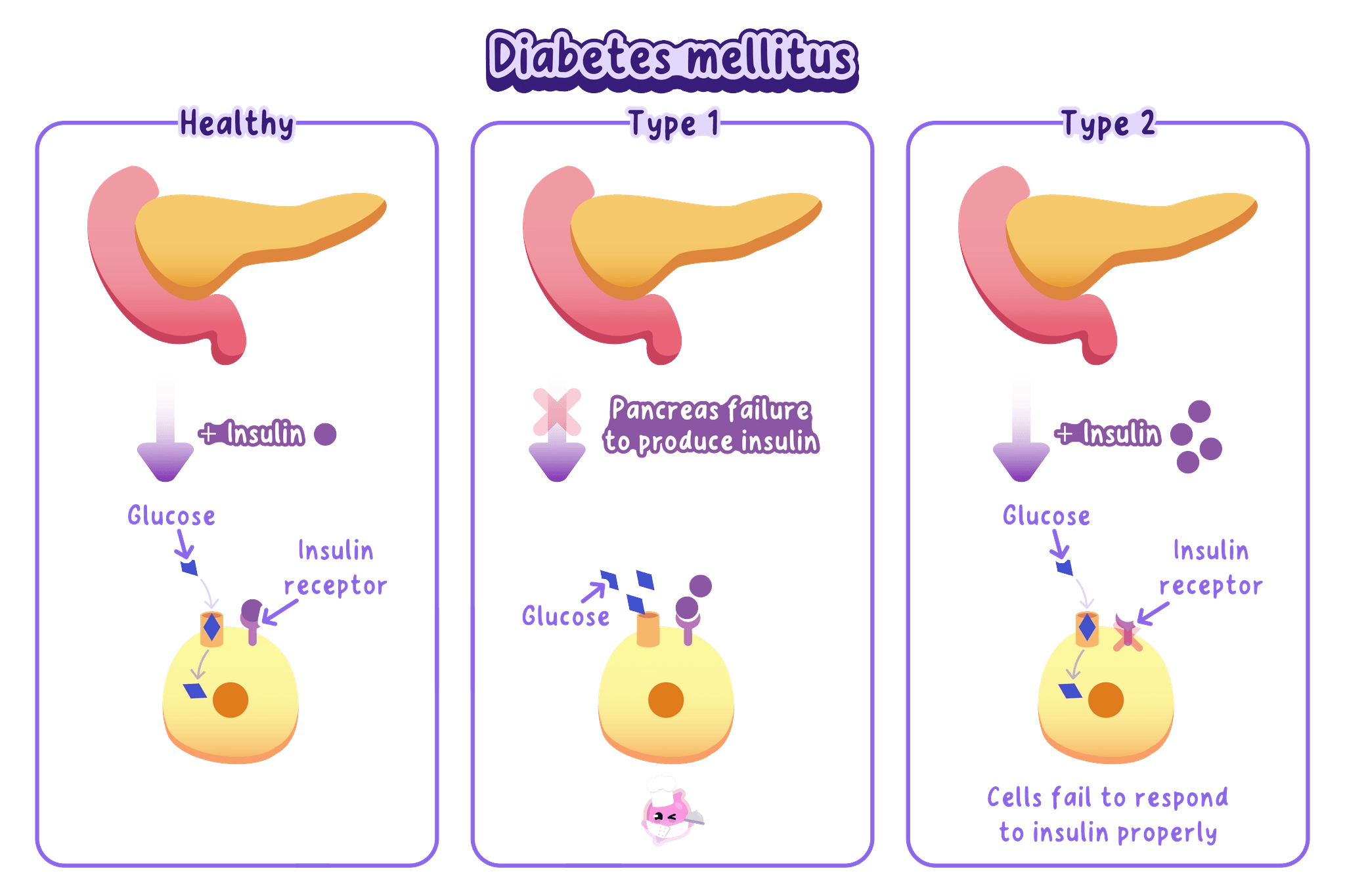
A condition in which blood glucose concentration cannot be controlled properly and can rise dangerously high, either because too little insulin is made (type 1) or because the body's cells stop responding to insulin (type 2).
- Diabetes is a condition in which blood glucose concentration cannot be controlled effectively and may remain too high.
- Common signs include persistent thirst, frequent urination, tiredness and glucose in the urine.
- Long-term high blood glucose can damage blood vessels and organs, including the eyes, kidneys, nerves and heart.
Type 1 diabetes results from too little insulin
- In type 1 diabetes, the immune system destroys insulin-producing cells in the pancreas.
- The pancreas therefore produces little or no insulin, so body cells do not remove enough glucose from the blood after a meal.
- Blood glucose rises higher than normal and remains high for longer.
- When blood glucose is very high, the kidneys cannot reabsorb all the filtered glucose, so glucose remains in the urine.
- Glucose lowers the water potential of the urine, causing more water to remain in the urine and increasing urination.
- The resulting water loss produces thirst and can lead to dehydration.
- Cells may receive less usable glucose despite the high blood glucose concentration, contributing to tiredness and loss of body mass.
- Type 1 diabetes often develops in childhood or adolescence, although it can begin at any age.
Common Mistake
- Type 1 diabetes is not caused by eating too much sugar.
- Its direct cause is the loss of insulin-producing cells, leading to insufficient insulin.
Type 1 treatment replaces insulin
Definition
Insulin
A hormone that lowers blood glucose concentration; people with type 1 diabetes must be given insulin.
- Insulin is supplied by injection or an insulin pump because insulin is a protein that would be digested if swallowed.
- Rapid-acting insulin can control the rise after meals, while longer-acting insulin provides background control between meals.
- The dose is adjusted using blood glucose measurements, carbohydrate intake and planned physical activity.
- Exercise increases glucose uptake by muscles, so the insulin dose or carbohydrate intake may need adjustment.
- Too little insulin allows blood glucose to remain high, while too much can lower it dangerously.
- Regular monitoring is required because food intake, illness, stress and exercise can change the insulin needed.
- A balanced diet and regular exercise help keep blood glucose within a safer range but do not cure type 1 diabetes.
Type 2 diabetes involves insulin resistance
- In type 2 diabetes, body cells respond less strongly to insulin, which is called insulin resistance.
- The pancreas may still produce insulin, especially early in the condition, but the response is insufficient to control blood glucose effectively.
- The pancreas may initially release more insulin to compensate for insulin resistance.
- Over time, insulin-producing cells may fail to meet the increased demand, so control becomes less effective.
- Risk increases with obesity, low physical activity, age and genetic factors, although a person can develop type 2 diabetes without being obese.
- Excess body fat, particularly around abdominal organs, is associated with increased insulin resistance.
- A family history increases risk, showing that inherited and lifestyle factors can interact.
- It usually develops gradually and is more common in adults, but it can occur in younger people.
Type 2 treatment improves glucose control
- A controlled diet can reduce large rises in blood glucose and support weight loss where needed.
- Dietary management controls the amount and timing of carbohydrate rather than removing all carbohydrate.
- Regular exercise increases glucose use by muscles and can improve the response of cells to insulin.
- Weight loss can reduce insulin resistance in some people, allowing their insulin to control blood glucose more effectively.
- Medicines may be used to improve insulin action, reduce glucose production by the liver or increase insulin release.
- Some people require insulin if other treatments no longer control blood glucose sufficiently.
- Repeated blood glucose measurements show whether the treatment is working and whether it needs adjustment.
Example
- A person whose blood glucose rises sharply after a meal and remains high may have ineffective insulin control.
- Evidence that the pancreas still produces insulin but cells respond weakly supports type 2 diabetes rather than type 1 diabetes.
Comparisons must use matched points
- Both types cause poor control of blood glucose and can produce similar symptoms and long-term complications.
- Type 1 involves insufficient insulin production, whereas type 2 involves reduced cellular response to insulin.
- Type 1 is treated by replacing insulin, whereas type 2 is first managed with diet, exercise and appropriate medicines, with insulin used in some cases.
Exam technique
- Compare the two types using the same categories: cause, insulin production or response, typical development and treatment.
- Avoid absolute claims such as type 2 diabetes is always caused by obesity or is never treated with insulin.
Self review
- What causes type 1 diabetes?
- What is insulin resistance?
- How is type 1 diabetes treated?
- How can diet and exercise help manage type 2 diabetes?
- State one similarity and one difference between the two types.
