The skin detects temperature and controls heat transfer
Definition
Thermoregulation
The control of body temperature, keeping it close to about 37 degrees Celsius so that enzymes work efficiently.
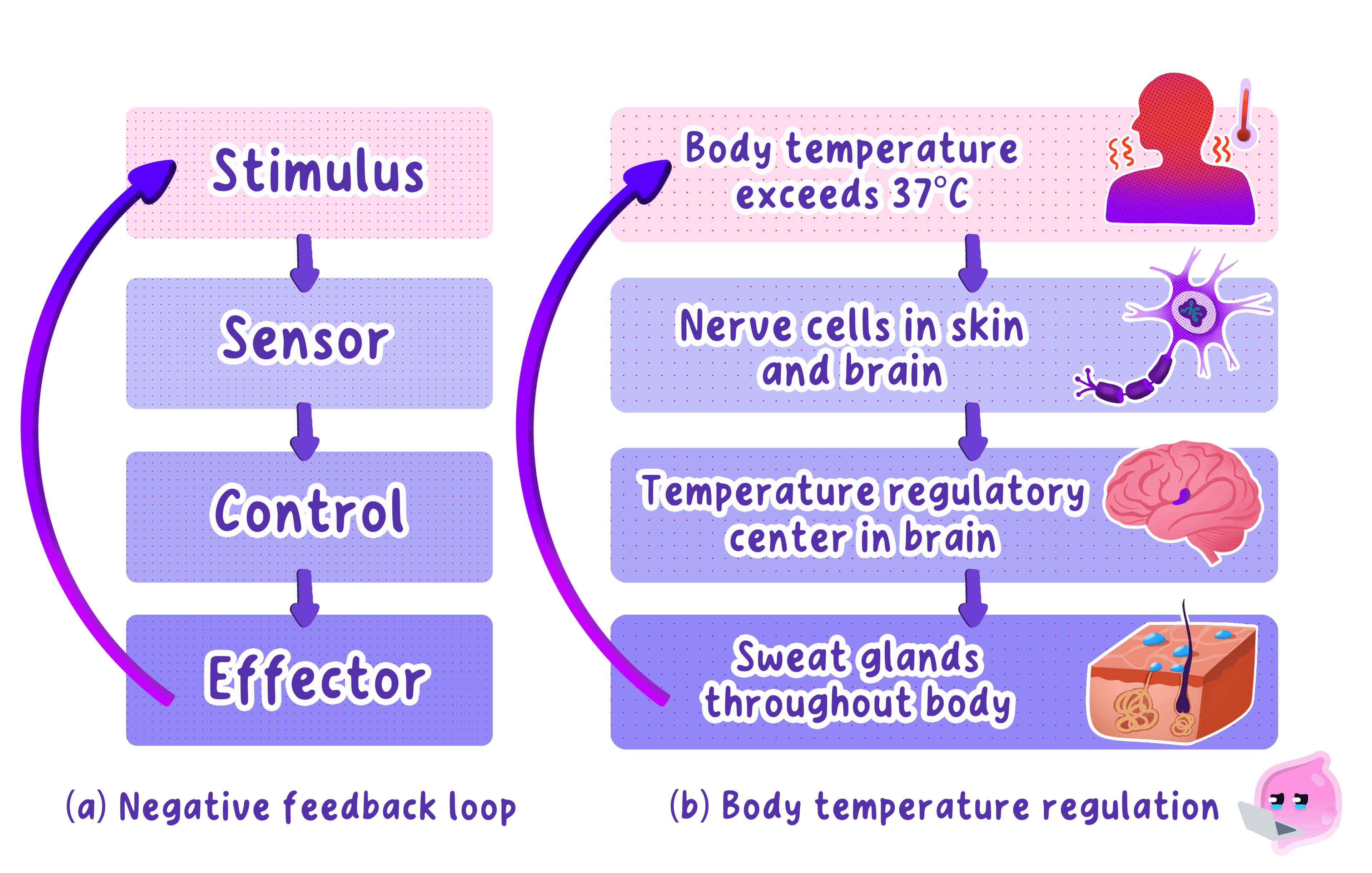
- Thermoregulation keeps core body temperature close to 37 ∘C37\,^\circ\text{C}37∘C so enzyme-controlled reactions proceed at suitable rates.
- Temperature receptors in the skin detect external temperature, while receptors in the brain monitor the temperature of the blood.
- The brain coordinates responses by effectors including sweat glands, skin blood vessels and skeletal muscles.
Hot conditions increase heat loss
Definition
Vasodilation
The widening of the blood vessels supplying the skin capillaries when the body is too hot, so more blood flows near the surface and more heat is lost.
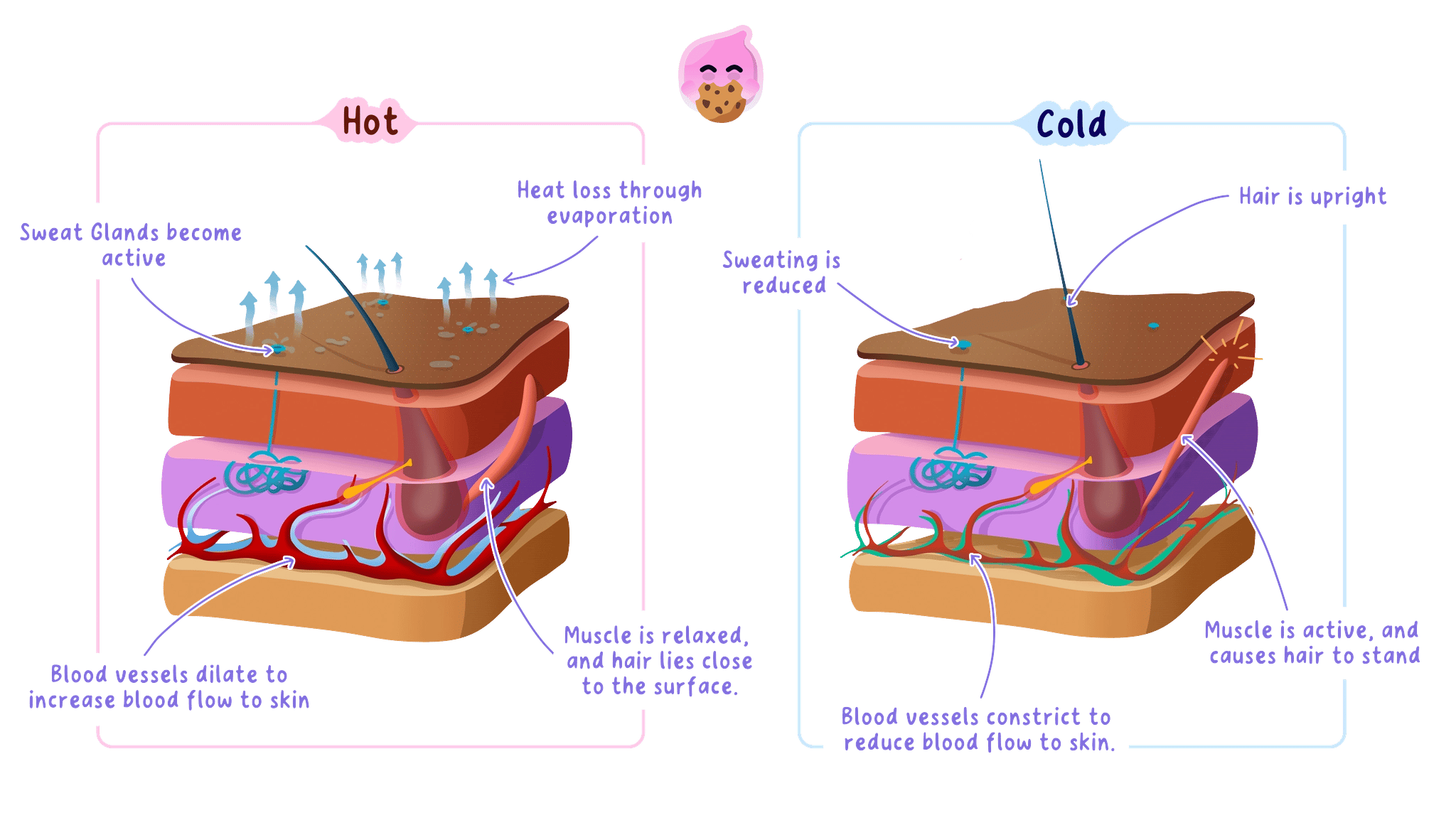
- When body temperature rises, sweat glands release more sweat onto the skin surface.
- The highest-energy water molecules escape as the sweat evaporates, transferring thermal energy from the skin to the surroundings.
- Evaporation therefore cools the skin and helps lower body temperature.
- Sweating is less effective in humid air because the air already contains more water vapour, so evaporation is slower.
- Prolonged sweating removes water and mineral ions from the body, increasing the risk of dehydration.
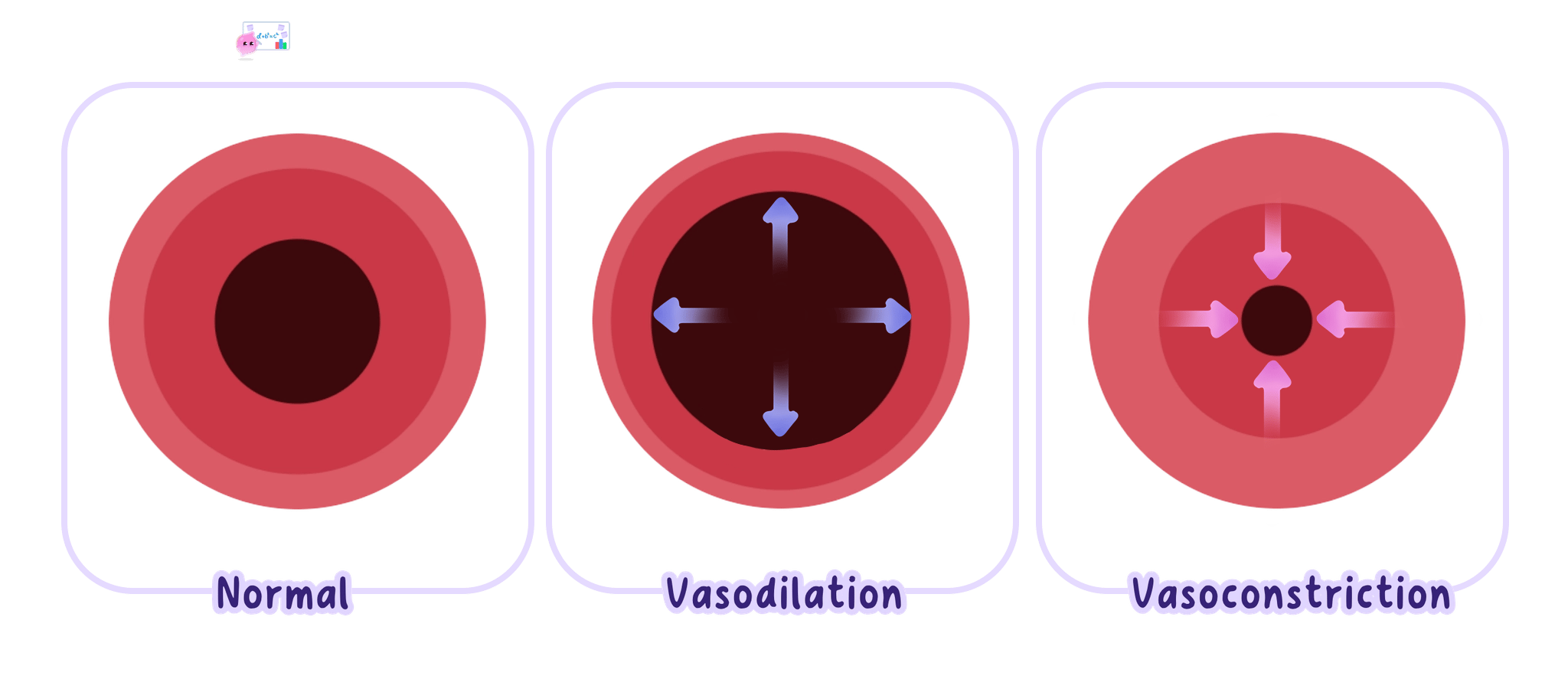
- The arterioles supplying surface capillaries widen during vasodilation, so more warm blood flows close to the skin surface.
- A larger transfer of thermal energy from the blood to the surroundings increases heat loss.
- Vasodilation changes the diameter of the arterioles rather than moving blood vessels closer to the surface.
- Hair erector muscles relax, so body hairs lie flat and trap less insulating air.
Common Mistake
- Sweat cools the body only when it evaporates.
- Do not say that blood vessels move towards the surface during vasodilation, because the vessels widen and increase blood flow through existing surface capillaries.
Cold conditions conserve and generate heat
Definition
Vasoconstriction
The narrowing of the blood vessels supplying the skin capillaries when the body is too cold, so less blood flows near the surface and less heat is lost.
- When body temperature falls, the arterioles supplying surface capillaries narrow during vasoconstriction.
- Less warm blood flows near the skin surface, so less thermal energy is transferred to the surroundings.
- Vasoconstriction does not stop skin blood flow completely because skin cells still require oxygen and glucose.
- Sweat production decreases, reducing cooling by evaporation.
- Skeletal muscles contract rapidly during shivering, increasing respiration and the transfer of energy as heat.
- Shivering generates additional heat, while vasoconstriction reduces the rate at which heat is lost.
- Hair erector muscles contract, so hairs stand upright and trap an insulating layer of air.
- The insulating effect of raised hairs is small in humans because human body hair is sparse.
- The layer of fat beneath the skin also reduces heat transfer because fat is a poor thermal conductor.
Example
- During vigorous exercise, respiration in muscles releases more heat and body temperature begins to rise.
- Sweating and vasodilation increase heat loss until temperature returns towards its normal range.
Exam technique
- For vasodilation, link wider vessels to more blood near the skin and then to more heat transfer.
- For shivering, link muscle contraction to increased respiration and then to greater heat production.
Self review
- Where are changes in external temperature detected?
- How does evaporation of sweat cool the body?
- How does vasodilation increase heat loss?
- How does vasoconstriction reduce heat loss?
- Why does shivering warm the body?
