Carbon moves between major stores
Definition
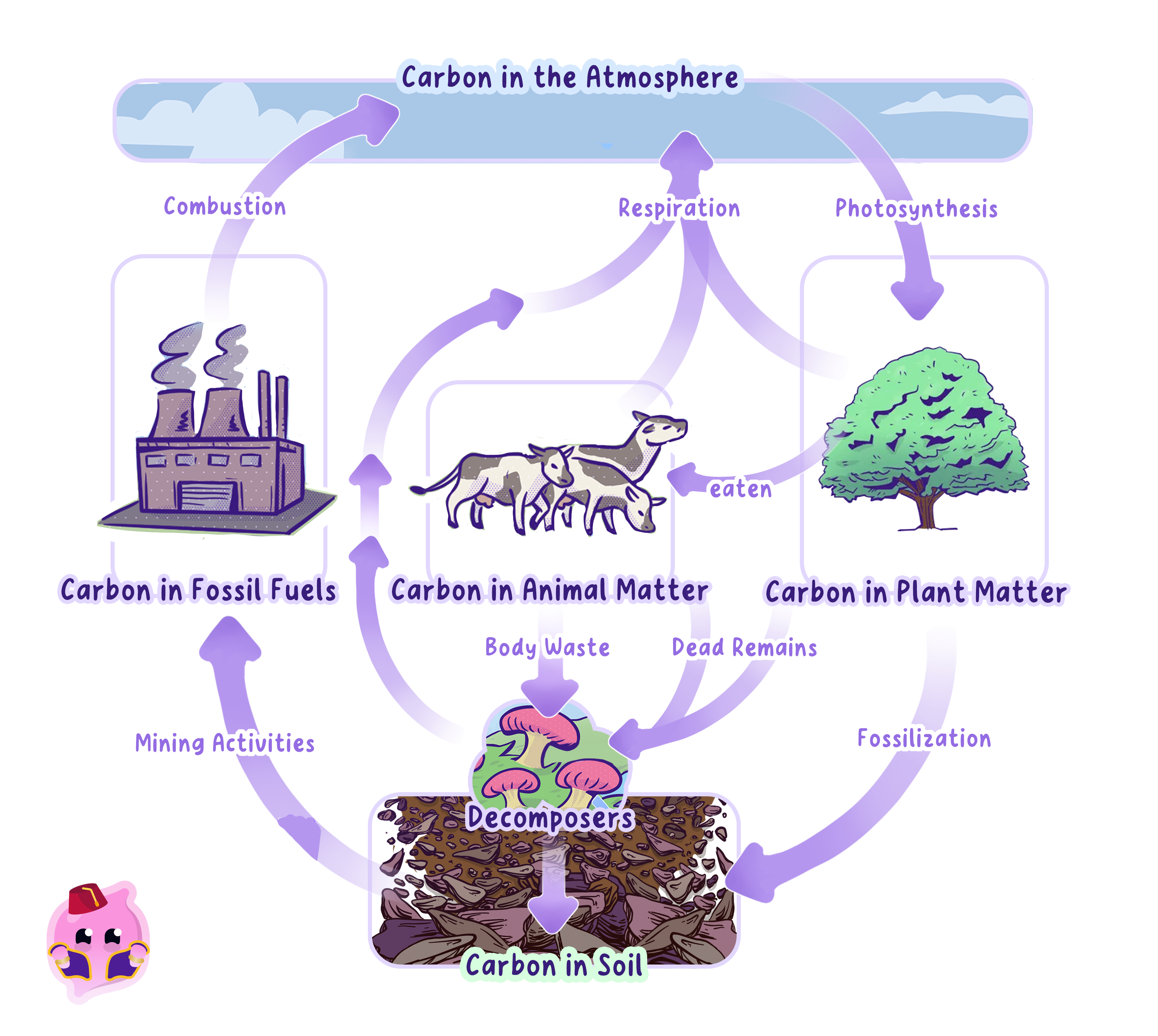
Carbon cycle
The movement of carbon between the atmosphere, living organisms and the non-living environment through photosynthesis, feeding, respiration, decomposition and combustion.
- Carbon dioxide in the atmosphere and dissolved in water is an abiotic store of carbon.
- Living biomass, dead organic matter, soils, peat, oceans, carbonate rocks and fossil fuels also store carbon for different lengths of time.
- The cycle is important because living organisms need carbon to make carbohydrates, lipids, proteins and nucleic acids.
Photosynthesis starts the food-chain route
Definition
Biomass
The total mass of living material, usually measured as dry mass, present in an organism or at a trophic level.
- Producers take carbon dioxide from the air or water during photosynthesis and use its carbon atoms to make glucose.
- Plants convert glucose into other carbon compounds, so the carbon becomes part of their biomass.
- Feeding transfers carbon through a food chain when consumers eat producers or other consumers.
- The carbon remains in living tissue until it is respired, excreted, egested or the organism dies.
Respiration and decay return carbon dioxide
Definition
Decomposer
An organism that gets its energy from dead or waste organic material.
- Plants, animals and microorganisms carry out respiration, which releases carbon dioxide to the atmosphere or water.
- Bacteria and fungi secrete enzymes onto dead organisms and waste, absorb the soluble products and use them for growth and respiration.
- Microorganisms therefore return carbon dioxide while also releasing mineral ions that producers can absorb.
- A low rate of decomposition can leave carbon stored in peat or sediments, and some buried carbon eventually forms fossil fuels over geological time.
Combustion releases stored carbon
Definition
Combustion
The burning of fuels such as wood and fossil fuels, which releases carbon dioxide into the atmosphere.
- Combustion of wood and fossil fuels transfers stored carbon to the atmosphere as carbon dioxide.
- Burning fossil fuels returns carbon that had been outside the rapid biological cycle for millions of years.
- If carbon dioxide is added faster than photosynthesis and ocean uptake remove it, the atmospheric store increases.
Example
- A complete explanation can begin with atmospheric carbon dioxide entering plants by photosynthesis and becoming plant biomass.
- It then links feeding to consumers, respiration by plants, animals and microorganisms, and decomposition of dead material and waste.
- It finishes by explaining that combustion returns carbon from wood and fossil fuels as carbon dioxide.
Exam technique
- For a six-mark response, cover carbon entering biomass, passing by feeding and returning through respiration, decomposition and combustion.
- Use directional language such as from the atmosphere into plant biomass so each transfer is unambiguous.
Carbon cycling supports continued growth
- Photosynthesis would slow if carbon dioxide were not returned, reducing the production of plant biomass and the food available to consumers.
- Decomposition prevents carbon and mineral nutrients remaining locked in dead organisms and waste.
- Carbon stores can change in size, but carbon atoms are transferred rather than created or destroyed.
Self review
- Which process transfers carbon dioxide into living biomass?
- How do microorganisms return carbon dioxide during decomposition?
- Name three abiotic stores of carbon.
- Which linked processes should appear in a full carbon-cycle explanation?
