FSH matures an egg
Definition
FSH (follicle-stimulating hormone)
A hormone released by the pituitary gland that causes an egg to mature in the ovary and stimulates the ovaries to produce oestrogen.
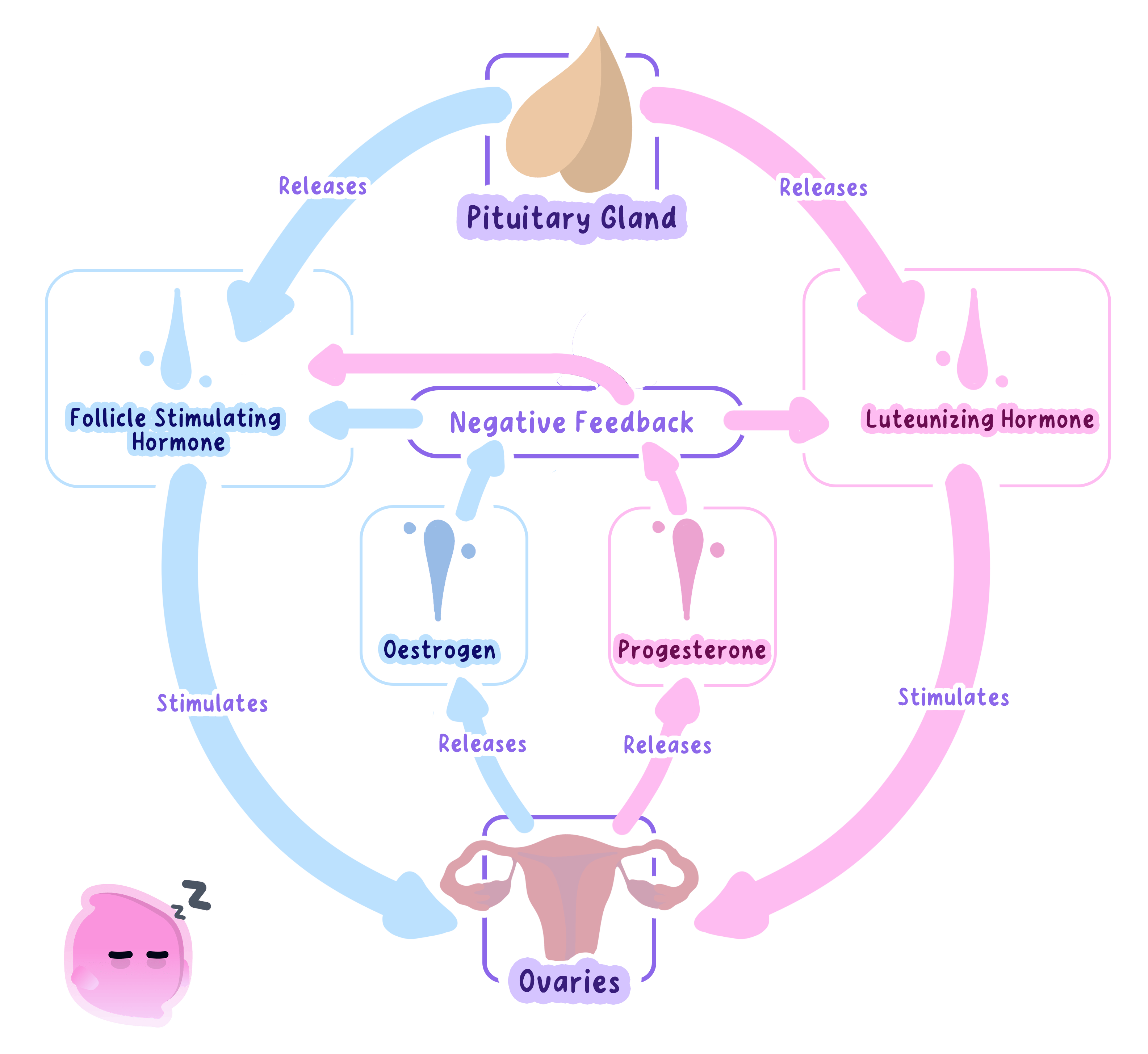
- FSH is released by the pituitary gland and travels in the blood to the ovaries.
- FSH stimulates a follicle in an ovary to develop, so the egg inside it matures.
- FSH also stimulates the developing follicle to release oestrogen.
Exam technique
- Keep the source and target separate: the pituitary gland releases FSH, but FSH acts on an ovary.
- A complete FSH answer links the hormone to follicle development, egg maturation and increased oestrogen.
Oestrogen rebuilds the lining
Definition
Oestrogen
The main female sex hormone, made in the ovaries, which controls female secondary sexual characteristics and helps regulate the menstrual cycle.
- Oestrogen released by the developing follicle repairs and thickens the uterus lining after menstruation.
- As oestrogen rises, it inhibits further FSH release so several follicles do not usually continue maturing.
- A high oestrogen concentration also stimulates the pituitary gland to release a surge of LH.
Example
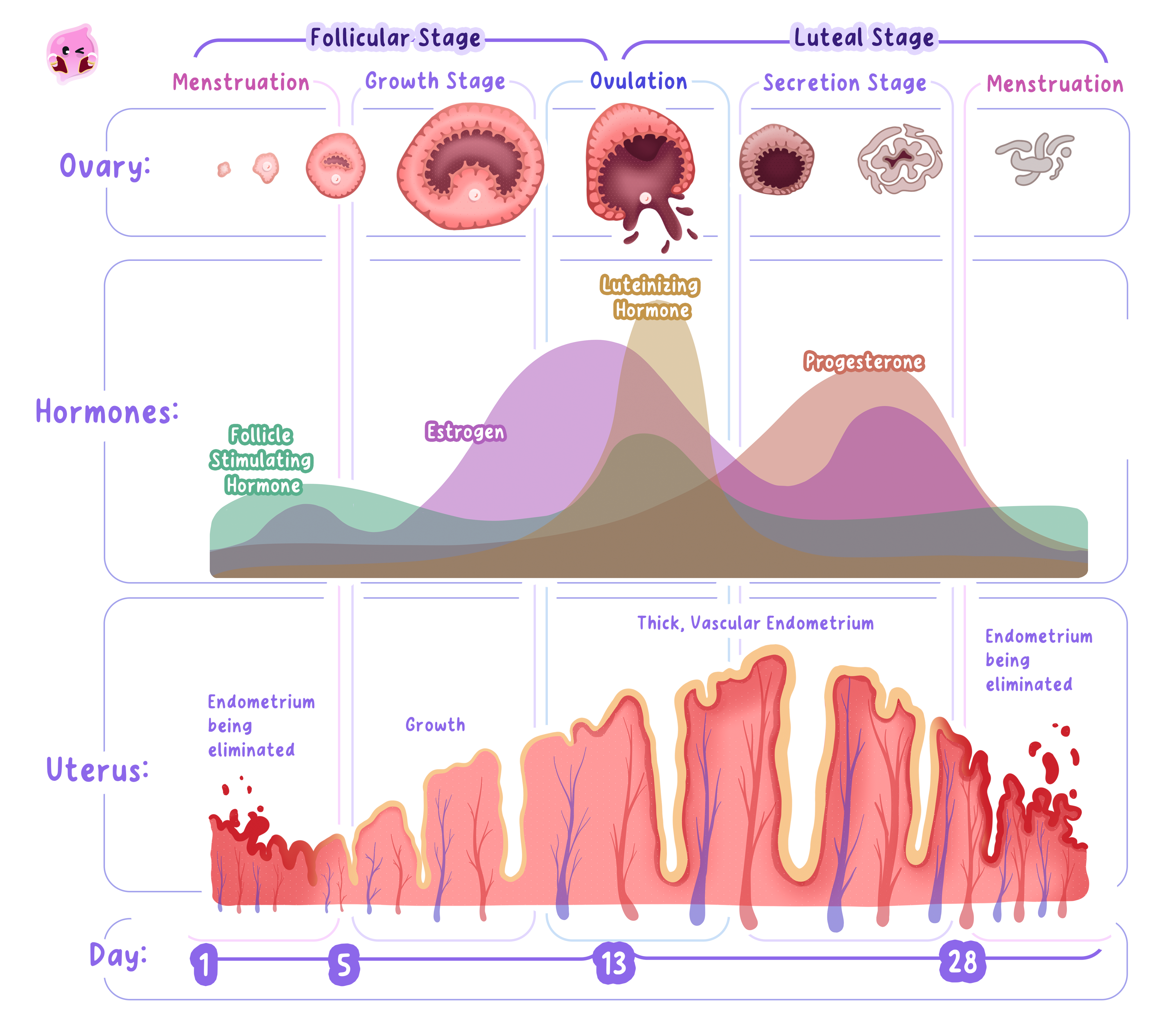
- A graph shows rising oestrogen followed by a sharp LH peak.
- The correct link is that high oestrogen stimulates the LH surge, which then triggers ovulation.
LH triggers ovulation
Definition
LH (luteinising hormone)
A hormone released by the pituitary gland that triggers ovulation, the release of a mature egg from the ovary.
- LH is released by the pituitary gland and travels to the ovaries in the blood.
- The sharp LH surge causes the mature follicle to release its egg, which is ovulation.
- After ovulation, LH supports the change of the empty follicle into a structure that releases progesterone.
Common Mistake
- Do not state that FSH causes ovulation.
- FSH matures the follicle and egg, while the LH surge releases the mature egg.
Progesterone maintains the lining
Definition
Progesterone
A female sex hormone that maintains the lining of the uterus during the second half of the menstrual cycle and during pregnancy.
- Progesterone is released by the ovary after ovulation and keeps the uterus lining thick.
- Progesterone inhibits FSH and LH, preventing another follicle from maturing and another ovulation during the same cycle.
- If the egg is not fertilised, the progesterone-producing structure breaks down and progesterone falls.
Exam technique
- For an explanation, build a linked chain with the hormone, its source, its target and its effect.
- Use causal words such as causes, stimulates and inhibits so each marking point follows from the previous one.
Falling hormones start menstruation
- When progesterone and oestrogen fall, the uterus lining is no longer maintained and it breaks down.
- The fall removes inhibition of FSH, allowing FSH to rise and begin the next cycle.
- On a graph, the LH peak marks ovulation, the progesterone peak follows ovulation, and the fall in progesterone matches the start of menstruation.
Self review
- Where is FSH released, and what two effects does it have?
- How does high oestrogen lead to ovulation?
- What does progesterone do to the uterus lining and to FSH and LH?
- Why do falling progesterone and oestrogen concentrations lead to menstruation?
