Mendel's pea plant experiments
- Gregor Mendel was a monk who studied inheritance in pea plants in the 180018001800s.
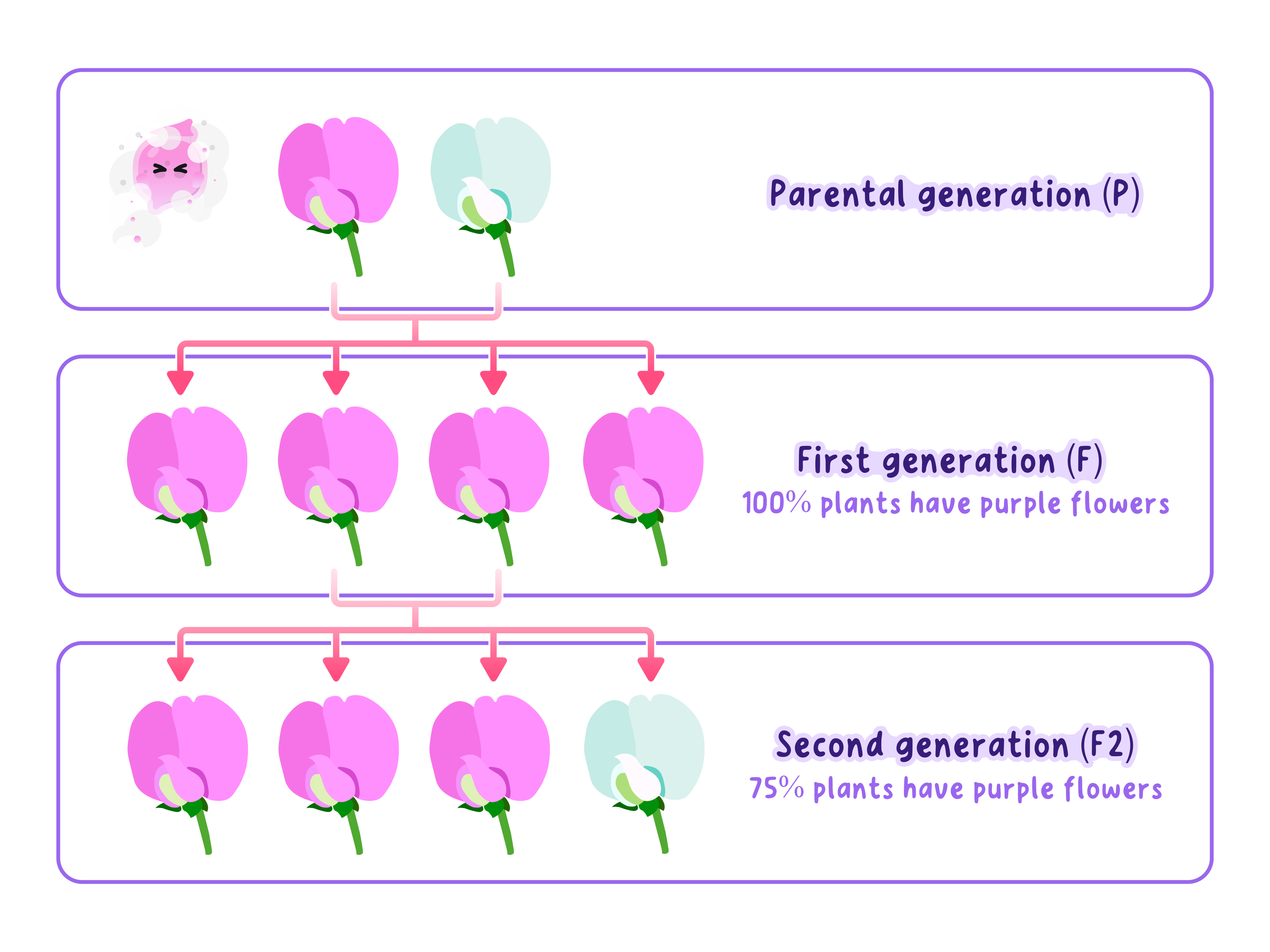
- He crossed pea plants with different features, such as tall and short, and counted the offspring.
- He found that features were passed on in fixed ratios, such as 3:13:13:1.
- From this he proposed that features are controlled by separate units of inheritance passed from parents to offspring.
Note
Mendel worked before chromosomes, genes or DNA were known about.
Example
Crossing tall and short peas, then breeding the offspring, gave a 3:13:13:1 ratio of tall to short.
From Mendel to modern genetics
Definition
Gene
A short section of DNA that codes for a particular protein and controls a characteristic.
- Mendel's work was not widely accepted during his lifetime.
- Later, chromosomes were seen moving during cell division.
- Then genes were identified on chromosomes, and DNA was found to be the genetic material.
- Mendel's units of inheritance were then understood to be genes.
Key Idea
Mendel described how features are inherited long before anyone knew that genes or DNA existed.
Hint
Remember the order: Mendel's units, then chromosomes, then genes and DNA.
Self review
- Who was Gregor Mendel and what did he study?
- What did Mendel call the things that carry features?
- Why were Mendel's ideas not accepted at first?
- What are Mendel's units of inheritance now known to be?
