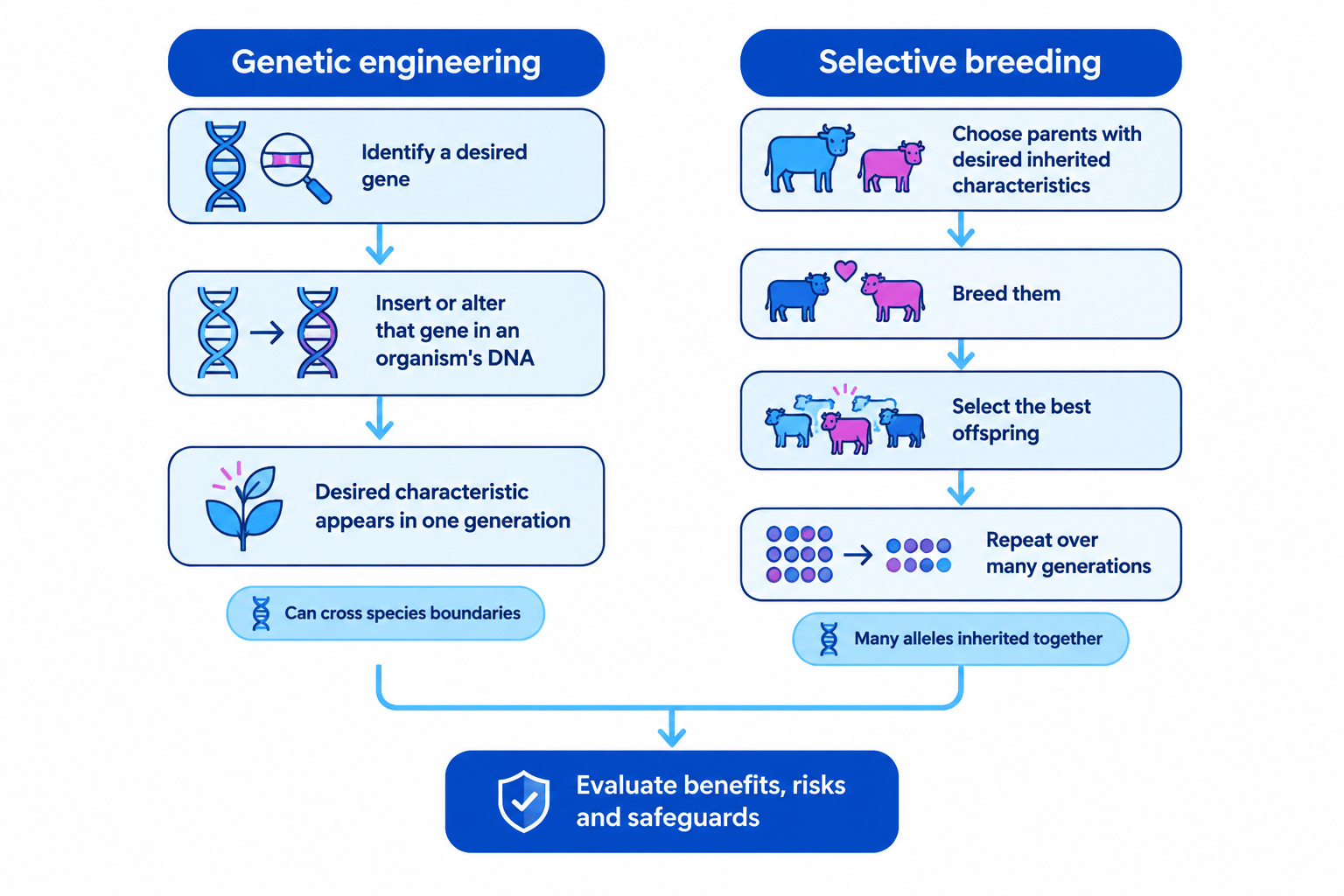
The methods change populations in different ways
Genetic engineering
Changing an organism's characteristics by transferring a gene from one organism into another, so the second organism produces a desired protein or feature.
- Genetic engineering directly changes DNA by inserting, removing or altering a gene, so a chosen characteristic can be introduced in one generation.
- It can cross species boundaries and target a known protein, but the inserted gene may have unexpected effects or spread into other populations.
- The method requires specialist equipment, testing and regulation, which can make development expensive.
Selective breeding uses existing variation
Selective breeding
Choosing organisms with a desired characteristic and breeding them together over many generations so the characteristic becomes stronger in the offspring. Also called artificial selection.
- Selective breeding chooses parents with desirable inherited characteristics and repeats selection over many generations.
- It is widely used and does not require direct DNA manipulation, but it is slower and transfers many alleles together.
- Inbreeding can reduce genetic diversity and increase the frequency of harmful recessive disorders.
Producing disease-resistant cattle by selective breeding may also concentrate an unwanted recessive allele, while inserting a known resistance gene is more targeted but raises different technical and ethical questions.
Agricultural benefits have linked risks
- Higher yield, improved nutrition, disease resistance and drought tolerance can strengthen food security.
- Reduced pesticide use can lower costs and harm to non-target organisms.
- Gene flow, resistant pests, reduced biodiversity and dependence on patented seed can create environmental or economic costs.
- Animal breeding for extreme production may reduce welfare if rapid growth or body shape causes pain or disease.
Medical uses require ethical safeguards
- Genetically modified microorganisms can produce human proteins such as insulin in large, consistent quantities.
- Genetic technologies may help treat disease, but changes to body cells and inherited changes to embryos have different consequences.
- Ethical concerns include consent, fairness of access, animal welfare, ownership of genetic material and effects on future generations.
- Risk is reduced by testing, containment, monitoring, regulation and comparing the method with available alternatives.
Build an evaluation from specific benefits, specific risks, evidence from the context and a justified conclusion that states the conditions under which the benefit outweighs the risk.
Ethical concern alone is not a conclusion; explain who or what may be affected and how.
- How does genetic engineering differ from selective breeding?
- Give one benefit and one risk of each method.
- Why can selective breeding reduce genetic diversity?
- What makes an evaluation judgement justified?