A base change can alter a protein
Definition
Mutation
A random change in the base sequence of DNA that can produce a new allele.
- A mutation changes the base sequence of DNA.
- A mutation in a coding region may change a codon and therefore alter the amino acid sequence of a protein.
- A changed amino acid sequence may alter how the polypeptide folds.
- Different folding can change the protein's three-dimensional shape and its function.
- If an enzyme's active site changes shape, fewer substrates bind and the reaction rate may decrease.
Note
Trace the full causal chain in an explanation: base sequence →\rightarrow→ codon →\rightarrow→ amino acid sequence →\rightarrow→ protein shape →\rightarrow→ protein function →\rightarrow→ phenotype.
Non-coding mutations can change gene expression
- A mutation in non-coding DNA can change whether a gene is switched on or off.
- It can also change how much protein the cell produces.
- A change in the amount of protein can alter the phenotype even when the protein's amino acid sequence is unchanged.
Mutations have different effects
- Most mutations have no effect on phenotype.
- A coding mutation may have no effect because the altered codon specifies the same amino acid.
- Some mutations have a small effect, while a rare mutation may have a large harmful or beneficial effect.
- Whether a mutation is advantageous depends on the environment.
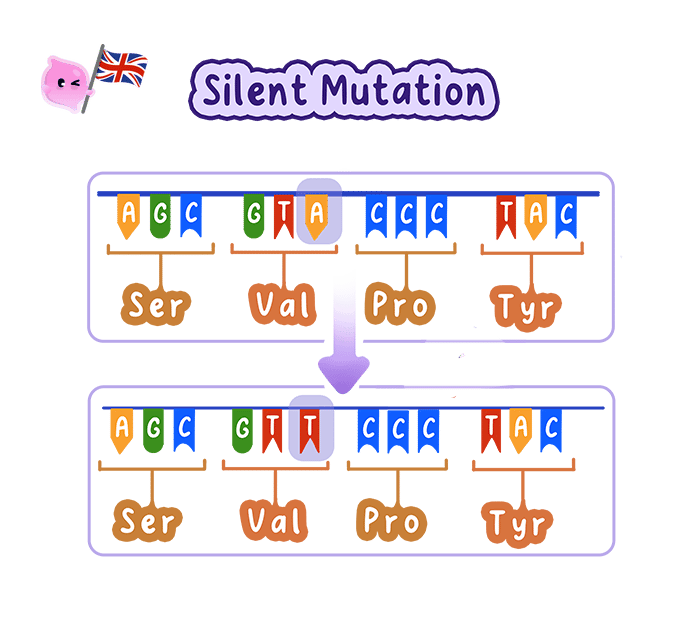
A mutation can produce a new allele
Definition
Allele
A different version of a gene.
- A mutation within a gene creates a new allele of that gene.
- DNA replication copies the allele so that it passes to daughter cells.
- A mutation in a body cell is not normally inherited by offspring.
- A mutation in a cell that forms a gamete can be inherited.
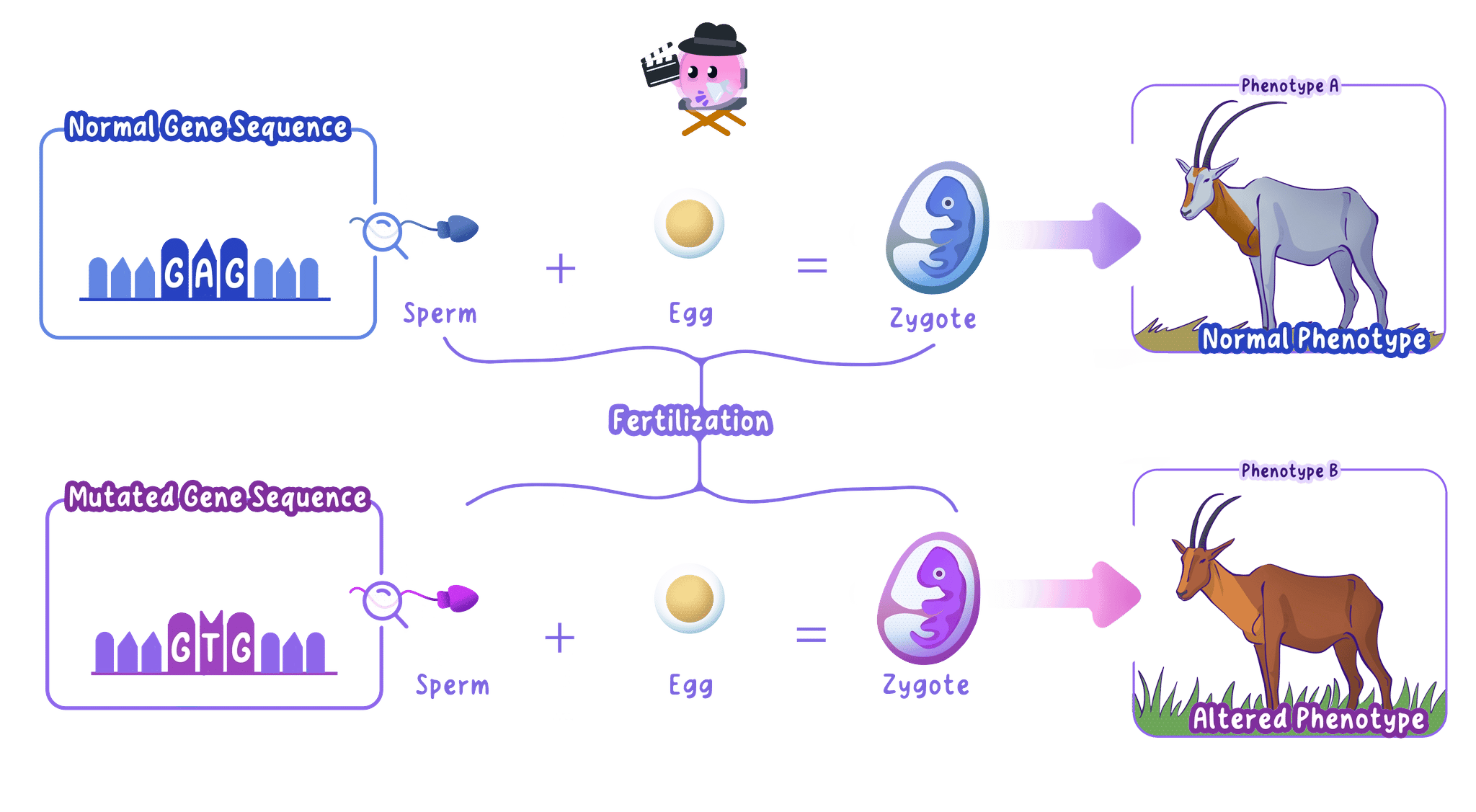
Example
- DNA change: a substitution changes one codon in a gene coding for an enzyme.
- Protein change: the new codon places a different amino acid in the polypeptide.
- Shape change: the polypeptide folds differently and changes the active site.
- Phenotype change: fewer enzyme-substrate complexes form and the reaction rate decreases.
Gene and allele must not be confused
- A gene is a section of DNA that codes for a protein or functional RNA.
- An allele is a different version of the same gene.
- A mutation normally creates a new allele rather than a completely new gene.
Self review
- What is a mutation?
- How can a coding mutation alter phenotype?
- How can a non-coding mutation alter phenotype?
- When can a mutation be inherited?
- How does an allele differ from a gene?
