Antibiotics Target Bacterial Processes
Antibiotic
A medicine that kills bacteria or stops them growing inside the body, curing a bacterial disease. Antibiotics have no effect on viruses.
- An antibiotic is a medicine that kills bacteria or stops them reproducing.
- Different antibiotics inhibit processes such as bacterial cell-wall synthesis, protein synthesis or DNA replication.
- These targets differ from the host's cell processes, so a suitable dose harms bacteria more than body cells.
- Other antibiotics bind bacterial ribosomes or inhibit bacterial DNA replication, stopping growth and reproduction.
- Human cells lack peptidoglycan walls and have different ribosomes, which provides selective toxicity at a therapeutic dose.
- Penicillin inhibits enzymes that join bacterial cell-wall material, so a growing bacterium cannot resist internal pressure and may burst.
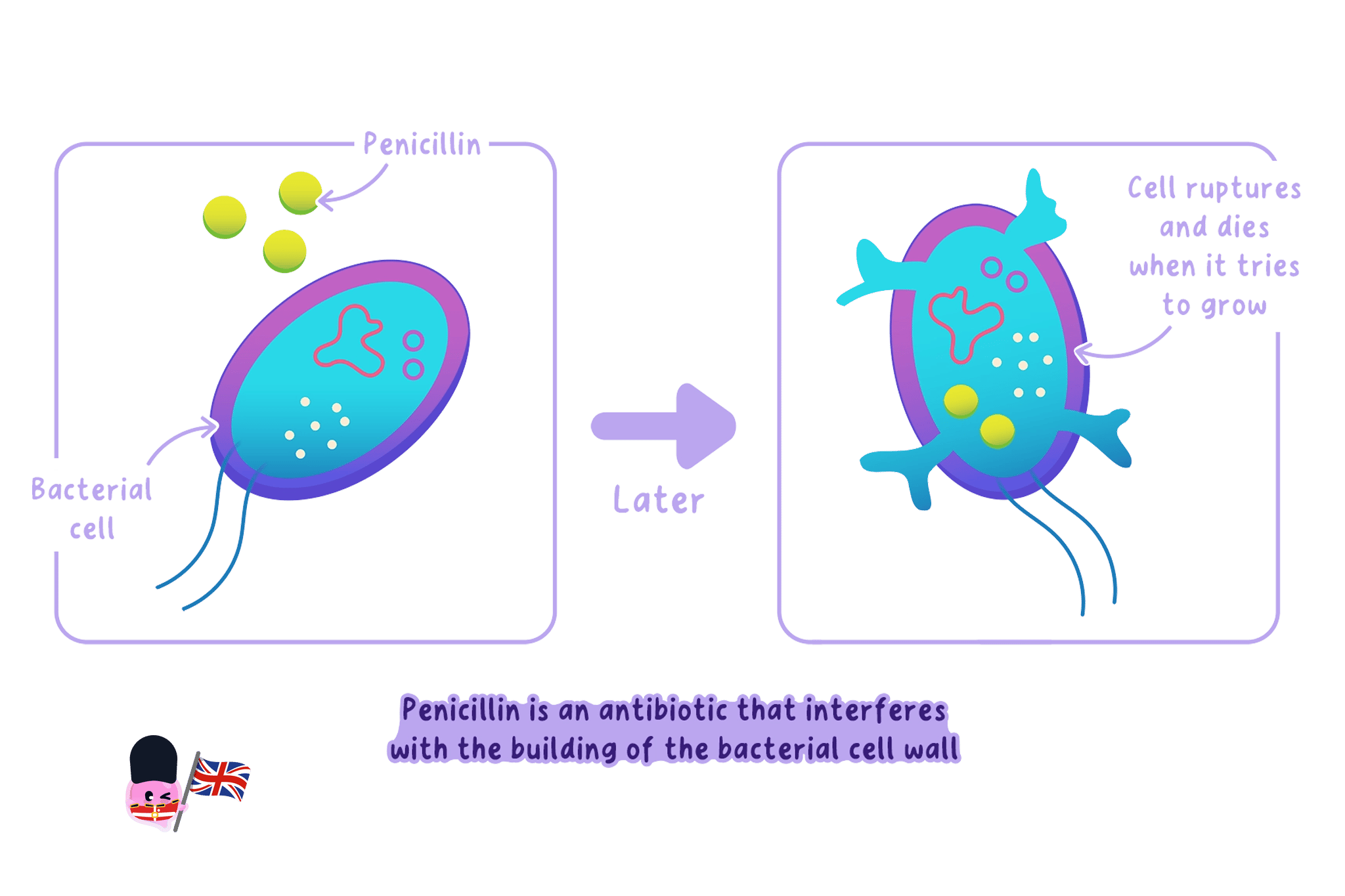
Selective toxicity depends on a bacterial target that is absent from, or sufficiently different in, human cells.
Antibiotics Do Not Treat Viruses
Virus
A non-cellular infectious particle made of a strand of genetic material enclosed in a protein coat, which can reproduce only inside a living host cell.
- Viruses have no cell wall, ribosomes or independent metabolism for an antibiotic to target.
- They reproduce using host-cell machinery, so antibiotics do not stop viral replication.
- Painkillers may reduce viral symptoms but do not kill the virus.
Do not prescribe antibiotics for colds or influenza because both are viral infections.
Correct Use Slows Resistance
Antibiotic resistance
When bacteria are no longer killed by an antibiotic that used to work, because resistant bacteria have been selected for and have spread.
- Random mutations can make some bacteria resistant to an antibiotic.
- Treatment kills susceptible bacteria, while resistant bacteria survive, reproduce and pass on resistance alleles.
- Using antibiotics only when necessary reduces selection pressure, and completing the prescribed course reduces surviving bacteria.
- Resistance alleles arise by mutation before treatment; the antibiotic selects resistant bacteria rather than causing directed mutation.
- Resistant survivors reproduce and pass resistance alleles to descendants, increasing the resistant proportion of the population.
penicillin inhibits bacterial cell-wall formation, so a growing bacterium takes in water and bursts while human cells are unaffected because they have no cell wall.
Choose Evidence-based Treatment
- A culture can be tested against antibiotic discs, and a larger zone of inhibition indicates greater bacterial growth inhibition under the test conditions.
- The chosen antibiotic must also reach the infection site safely inside the patient.
- Explain why an antibiotic works by naming the bacterial process it inhibits and stating why the host is not affected in the same way.
- For resistance, write the sequence variation, selection, survival and reproduction.
Separate Treatment From Symptom Relief
- Antibiotics treat the bacterial cause, while painkillers lower pain or fever without removing the pathogen.
- The immune system still removes dead bacteria and damaged cells.
- Why can antibiotics treat bacterial infections?
- Why do antibiotics not treat viruses?
- How does antibiotic resistance increase?
- What does a zone of inhibition show?
