Immunisation Protects Individuals and Populations
Definition
Vaccination
Introducing a harmless form of a pathogen into the body so the immune system produces antibodies and memory cells, giving protection against future infection.
- Vaccination produces memory cells, so later infection triggers a faster and stronger antibody response.
- Fewer vaccinated people develop disease, severe complications or long-term damage.
- Reducing infections also lowers healthcare demand and time lost from school or work.
- Vaccination reduces an individual's probability of infection and severe disease, but protection is not complete and differs between people.
Key Idea
An evaluation balances benefits, limitations and the circumstances that affect them.
Herd Immunity Reduces Transmission
Definition
Herd immunity
When enough of a population is immune to a disease that it cannot spread easily, which protects even those who are not immune.
- Herd immunity occurs when enough people are immune that an infected person is unlikely to meet a susceptible host.
- Transmission chains are interrupted, protecting people who cannot be vaccinated or who do not respond strongly.
- The proportion needed depends on how easily the disease spreads and how effective the vaccine is.
- Herd immunity works only when immunity is common enough to reduce the pathogen's reproductive spread through the population.
- People who cannot receive a vaccine benefit because they are less likely to contact an infected person, not because they personally become immune.
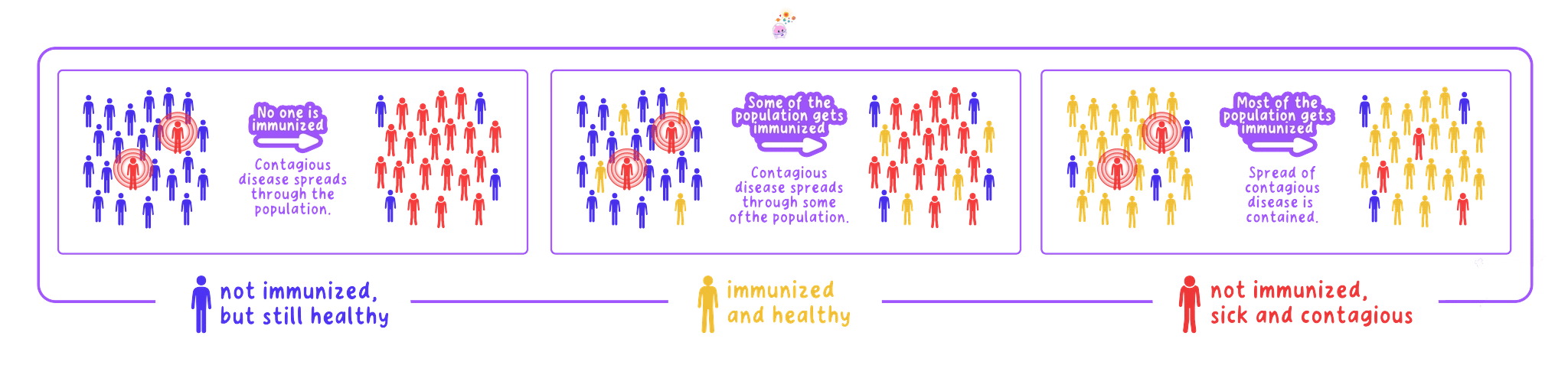
Example
if most contacts of an infected person are immune, the pathogen reaches few susceptible people and an outbreak is less likely to grow.
Immunisation Has Limitations
- Vaccines can cause short-lived pain, swelling or fever, while serious adverse reactions are rare.
- No vaccine protects every recipient, and immunity may decline so booster doses are needed.
- Some pathogens change their antigens, reducing protection from an older vaccine.
- Developing, storing and delivering vaccines costs money, and low uptake prevents herd immunity.
- A fair evaluation compares the frequency and severity of vaccine side effects with the frequency and severity of the disease.
- Low uptake, reduced vaccine effectiveness or antigen changes can allow outbreaks despite an immunisation programme.
Common Mistake
Do not treat a rare side effect and the disease risk as equally likely without comparing their probabilities and severity.
Reach a Justified Judgement
- For diseases that cause serious harm and have effective vaccines, the individual and population benefits usually outweigh the small risk of side effects.
- The judgement may change if effectiveness is low, protection is short-lived or the disease is uncommon and mild.
Exam technique
- For 'discuss', develop both advantages and disadvantages before reaching a judgement.
- Link herd immunity to interrupted transmission, not merely to a high percentage being vaccinated.
Use Evidence Carefully
- Compare infection rates in similar vaccinated and unvaccinated groups while considering age, exposure and health differences.
- A correlation between vaccination and lower disease incidence supports effectiveness but other variables must be considered.
Self review
- How does vaccination protect an individual?
- How does herd immunity protect susceptible people?
- Give two limitations of immunisation.
- What makes an evaluation judgement justified?
