5.3.7 Negative feedback
Negative Feedback Keeps Levels Steady
Negative feedback
A control mechanism in which a change in a condition triggers a response that reverses the change and brings the condition back to its normal level.
- Many conditions in the body are kept steady by negative feedback.
- If a level rises above normal, changes take place that lower it again.
- If a level falls below normal, changes take place that raise it again.
In negative feedback the response always works in the opposite direction to the change, pulling the level back to normal.
Adrenaline Prepares the Body for Fight or Flight
Adrenaline
A hormone released by the adrenal glands in times of fear or stress that raises the heart rate and boosts the supply of oxygen and glucose to the brain and muscles.
- Adrenaline is produced by the adrenal glands, which sit just above the kidneys, in times of fear or stress.
- It increases the heart rate.
- It boosts the delivery of oxygen and glucose to the brain and muscles.
- This prepares the body for fight or flight, giving the muscles more fuel for respiration to release energy.
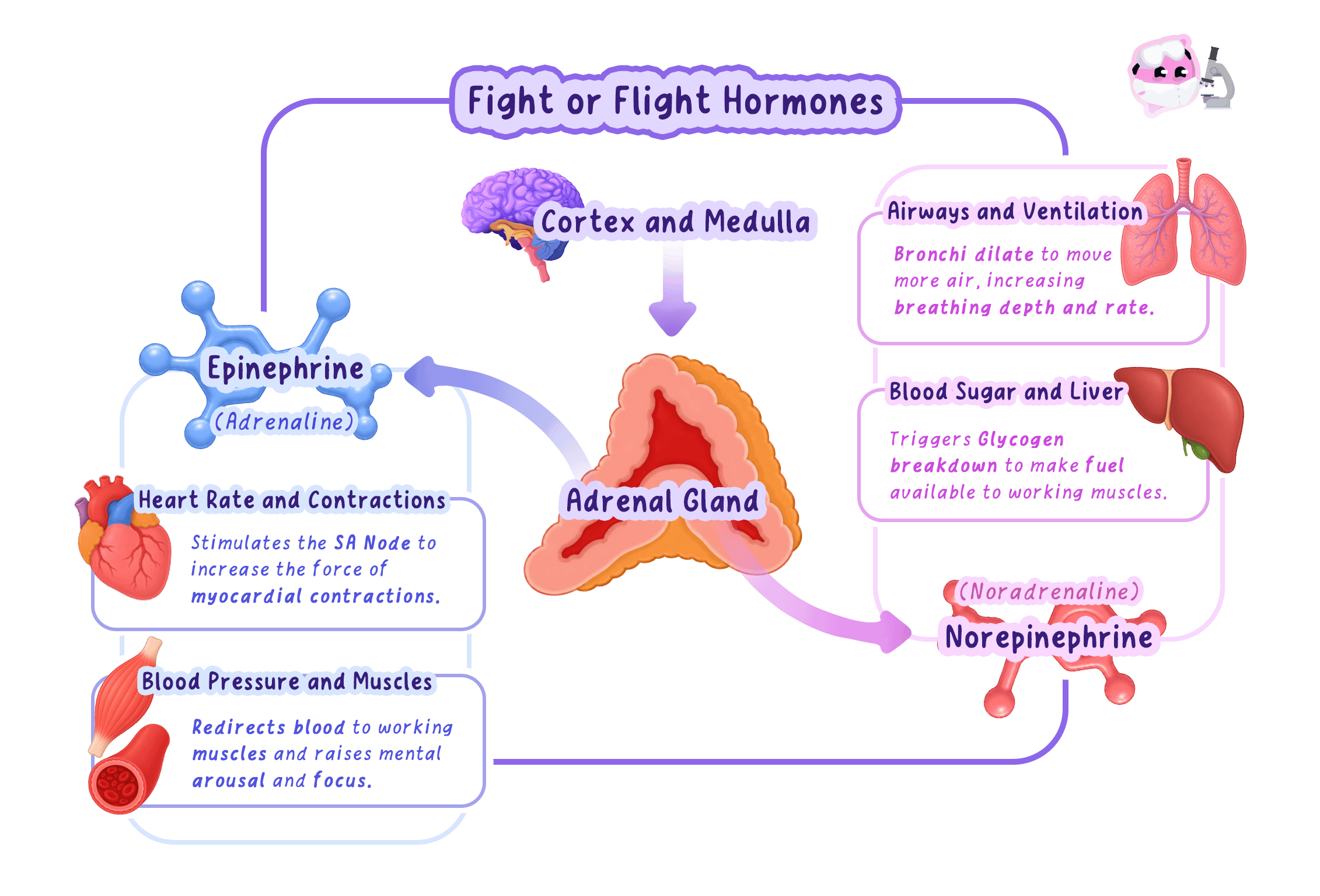
Adrenaline is not controlled by negative feedback; the adrenal glands simply stop releasing it once the danger has passed.
Thyroxine Controls the Basal Metabolic Rate
Thyroxine
A hormone from the thyroid gland that stimulates the basal metabolic rate and is important in growth and development; its level is controlled by negative feedback.
- Thyroxine is released by the thyroid gland in the neck.
- It stimulates the basal metabolic rate, the rate at which the body carries out its chemical reactions at rest.
- It also plays an important part in growth and development.
- The level of thyroxine in the blood is controlled by negative feedback.
The basal metabolic rate is how fast your resting body carries out its chemical reactions.
How Negative Feedback Controls Thyroxine
- The pituitary gland releases TSH (thyroid-stimulating hormone), which makes the thyroid release thyroxine.
- If thyroxine rises above normal, it inhibits the release of TSH, so the thyroid makes less thyroxine.
- If thyroxine falls below normal, more TSH is released, so the thyroid makes more thyroxine.
- Either way, the thyroxine level is brought back to normal.
- low thyroxine→more TSH released→thyroid releases more thyroxine→level returns to normal\text{low thyroxine} \rightarrow \text{more TSH released} \rightarrow \text{thyroid releases more thyroxine} \rightarrow \text{level returns to normal}low thyroxine→more TSH released→thyroid releases more thyroxine→level returns to normal
- What is negative feedback?
- Where is adrenaline made, and what does it do to the body?
- Is adrenaline controlled by negative feedback?
- What are the roles of thyroxine in the body?
- Describe what happens when the thyroxine level falls too low.
