Meiosis makes gametes
Meiosis
A type of cell division that produces genetically different haploid gametes, halving the chromosome number of the parent cell.
- Meiosis is a type of cell division that takes place only in the reproductive organs, the ovaries and testes in humans.
- It produces gametes, the sex cells that carry genetic information from a parent to its offspring.
- In animals the gametes are sperm cells and egg cells; in flowering plants they are pollen and egg cells.
- Before meiosis begins, the cell copies all of its DNA, so every chromosome is doubled.
- The cell then divides twice in quick succession, turning one parent cell into four gametes.
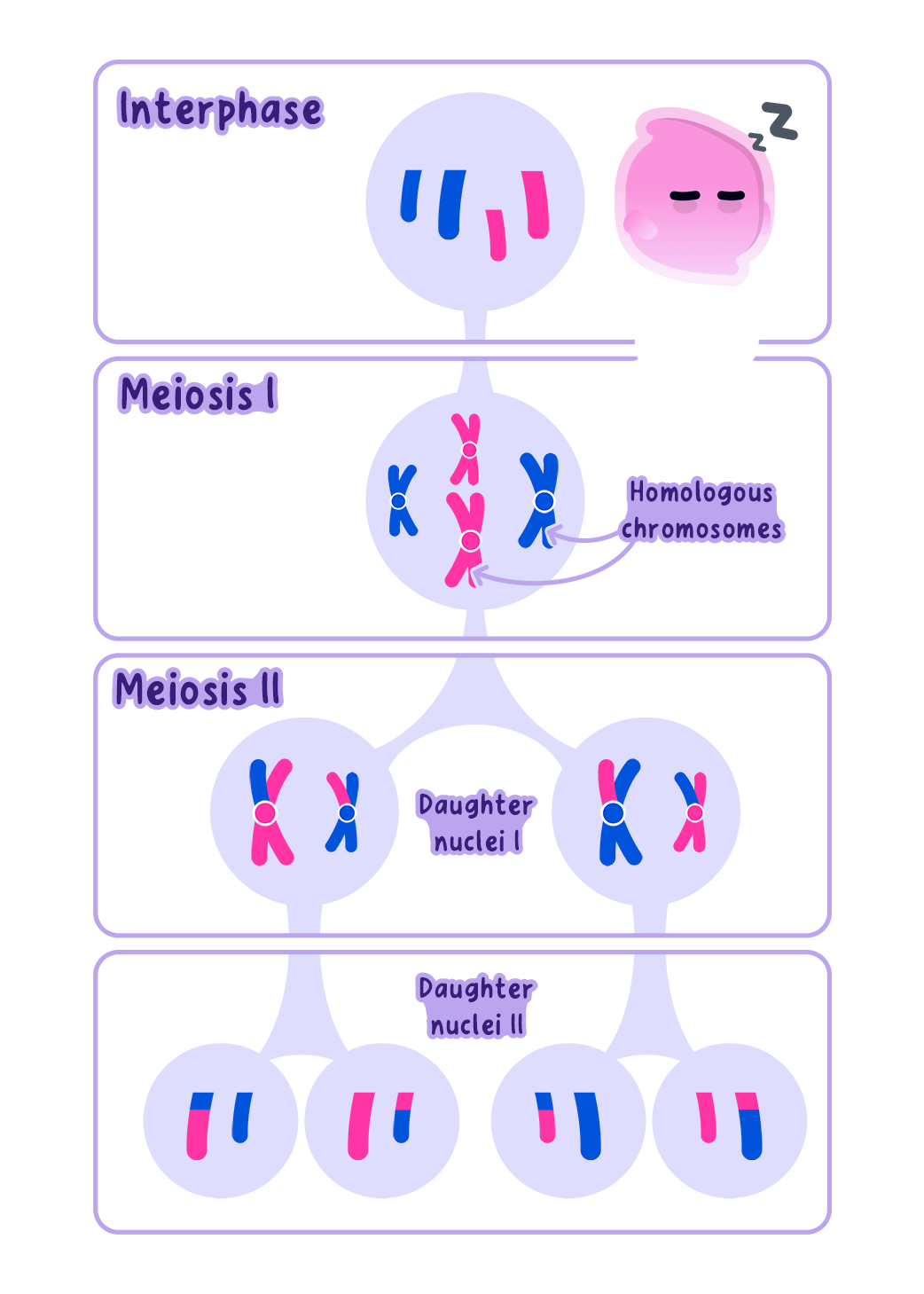
One parent cell divides twice by meiosis to make four gametes.
Haploid gametes and diploid cells
Haploid
Describes a cell or nucleus that contains a single set of chromosomes, half the number found in a normal body cell.
- A normal body cell is diploid: it has two sets of chromosomes, one set inherited from each parent.
- Meiosis halves this number, so each gamete is haploid and carries only a single set of chromosomes.
- This is why meiosis is described as a reduction division.
- In humans, a diploid body cell has 464646 chromosomes, so each gamete it makes has 232323.
- Halving the number in the gametes keeps the chromosome number of the species constant from one generation to the next.
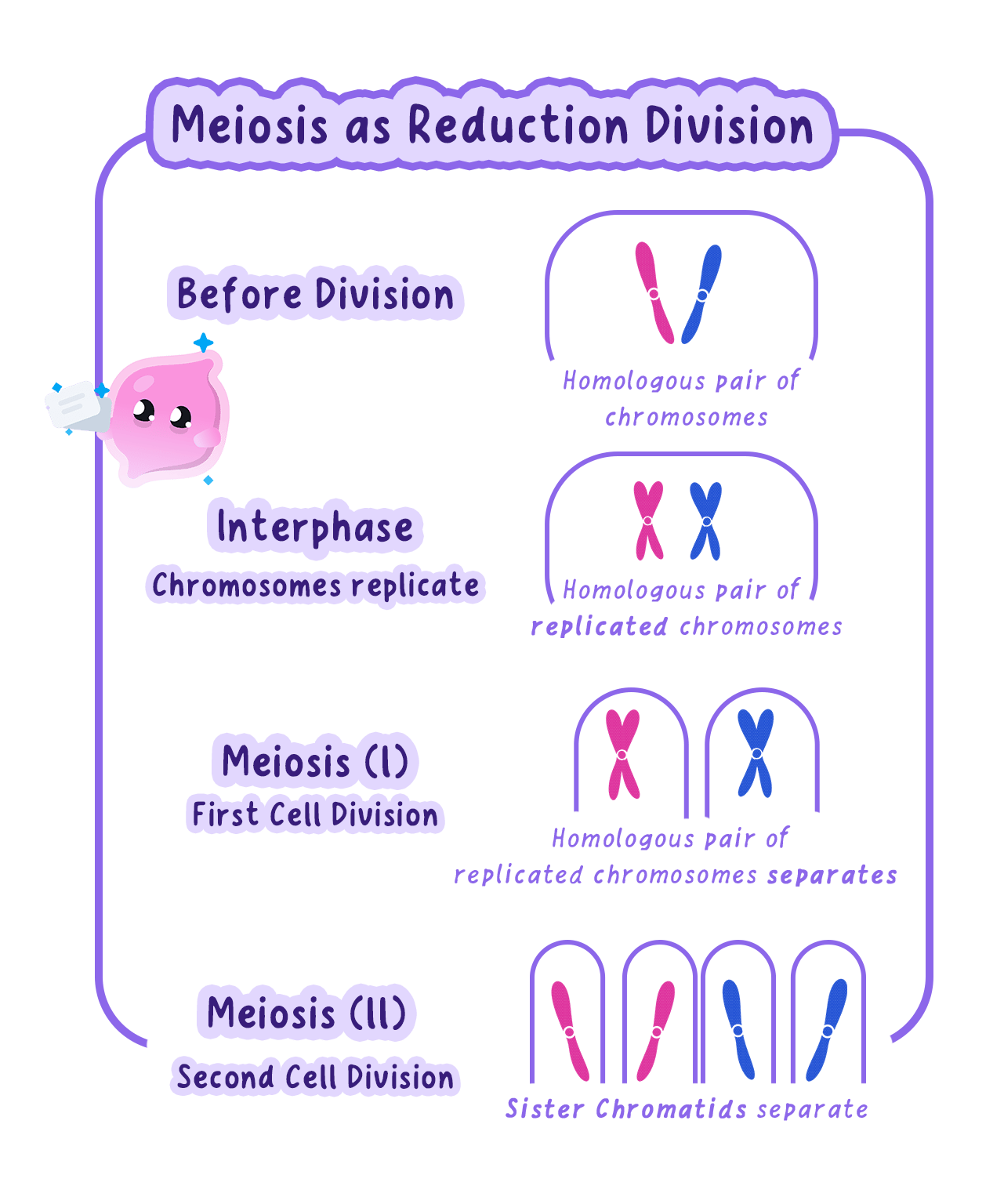
Do not muddle the two words: gametes are haploid, ordinary body cells are diploid.
Fertilisation restores the number
Fertilisation
The fusion of a male gamete nucleus with a female gamete nucleus to form a diploid zygote.
- At fertilisation, a haploid male gamete fuses with a haploid female gamete.
- Their nuclei join, so the two half-sets of chromosomes combine into one full set.
- This produces a single diploid cell called a zygote, with the full chromosome number restored.
- The zygote then divides by mitosis to produce many genetically identical cells.
- As this ball of cells grows into an embryo, the cells differentiate into the specialised cell types the organism needs.
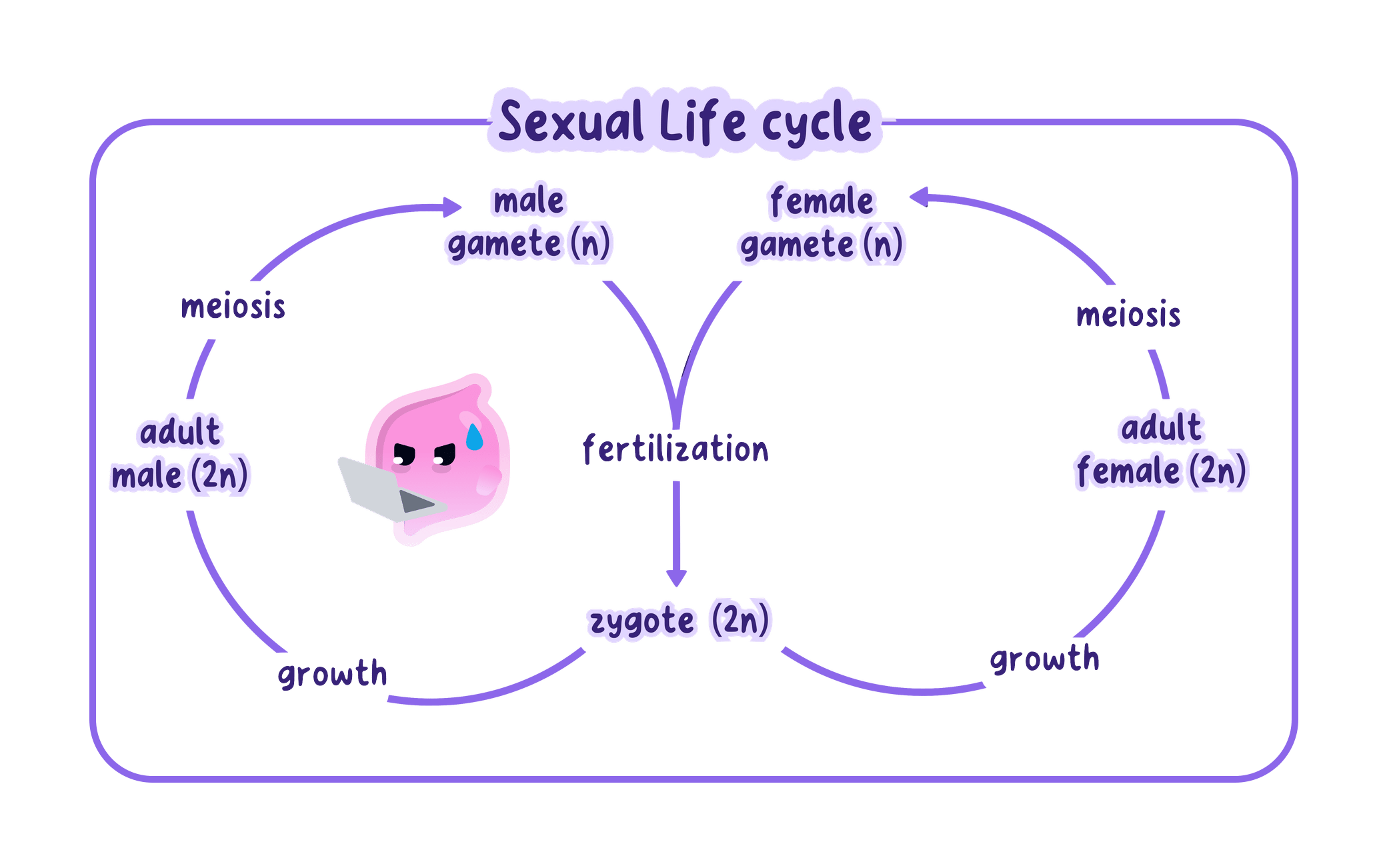
Meiosis halves the chromosome number and fertilisation doubles it back, so the number stays the same across generations.
Meiosis is not mitosis
Mitosis
A type of cell division that produces two genetically identical diploid daughter cells, used for growth and repair.
- Mitosis produces two daughter cells that are genetically identical to the parent cell and to each other.
- Meiosis produces four daughter cells that are all genetically different from each other and from the parent.
- Mitosis keeps the chromosome number the same, while meiosis halves it, from diploid to haploid.
- Because the four gametes are genetically different, meiosis is a source of variation in the offspring.
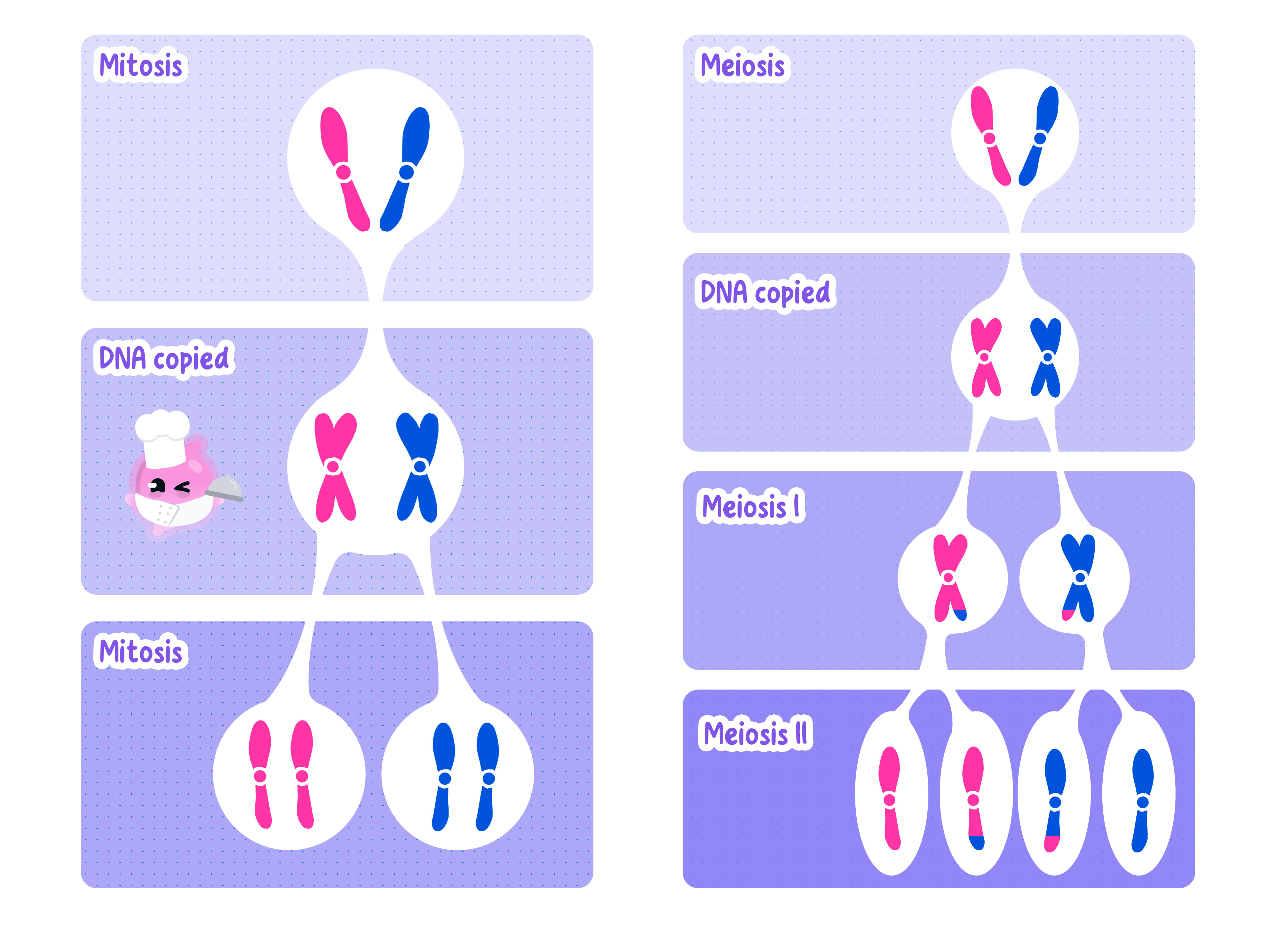
Mitosis makes two identical diploid body cells; meiosis makes four different haploid gametes.
- Where in the body does meiosis take place?
- How many gametes does one cell make by meiosis, and are they identical?
- What do the terms haploid and diploid mean?
- How does fertilisation restore the full chromosome number?
- Give one way meiosis differs from mitosis.
