Definition
Biodiversity
The variety of all the different species of organisms in an ecosystem or on Earth.
- Biodiversity is the variety of all the different species of organisms in an ecosystem or on Earth.
- A habitat with many different species has high biodiversity, while one with few species has low biodiversity.
- A tropical rainforest has very high biodiversity, while a car park has almost none.
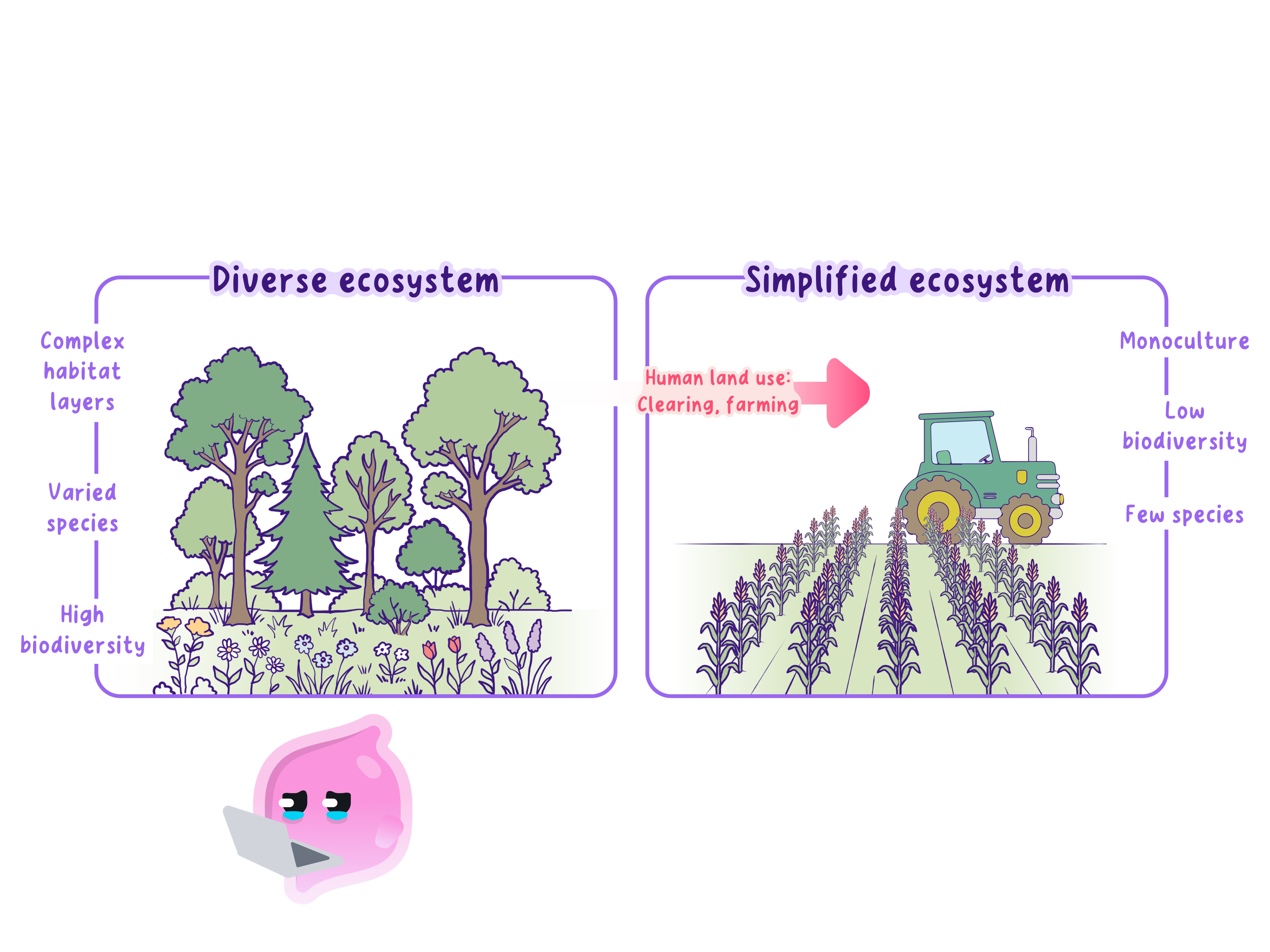
Biodiversity keeps ecosystems stable
- In an ecosystem, species depend on one another for food, shelter and to keep the physical environment in balance.
- High biodiversity reduces how much one species depends on any single other species.
- So an ecosystem with high biodiversity copes better when one species declines, making it more stable.
Key Idea
The more species an ecosystem has, the less it depends on any one of them, and the more stable it is.
Human population and resource use
- The human population is growing rapidly, and the standard of living is rising.
- This means more resources are used and more waste is produced.
- Unless this waste and the chemicals in it are handled properly, more pollution is caused, which reduces biodiversity.
Common Mistake
- Do not think biodiversity is just the number of animals.
- It is the variety of all species, including plants and microorganisms.
Why maintaining biodiversity matters
- The future of the human species relies on us maintaining a good level of biodiversity.
- We depend on other species for food, clean air and water, materials and medicines.
- Many human activities are reducing biodiversity, and only recently have measures been taken to slow this reduction.
Self review
- What is biodiversity?
- Why does high biodiversity make an ecosystem more stable?
- How does a growing human population reduce biodiversity?
- Give two reasons why maintaining biodiversity matters to humans.
