The Demand Curve
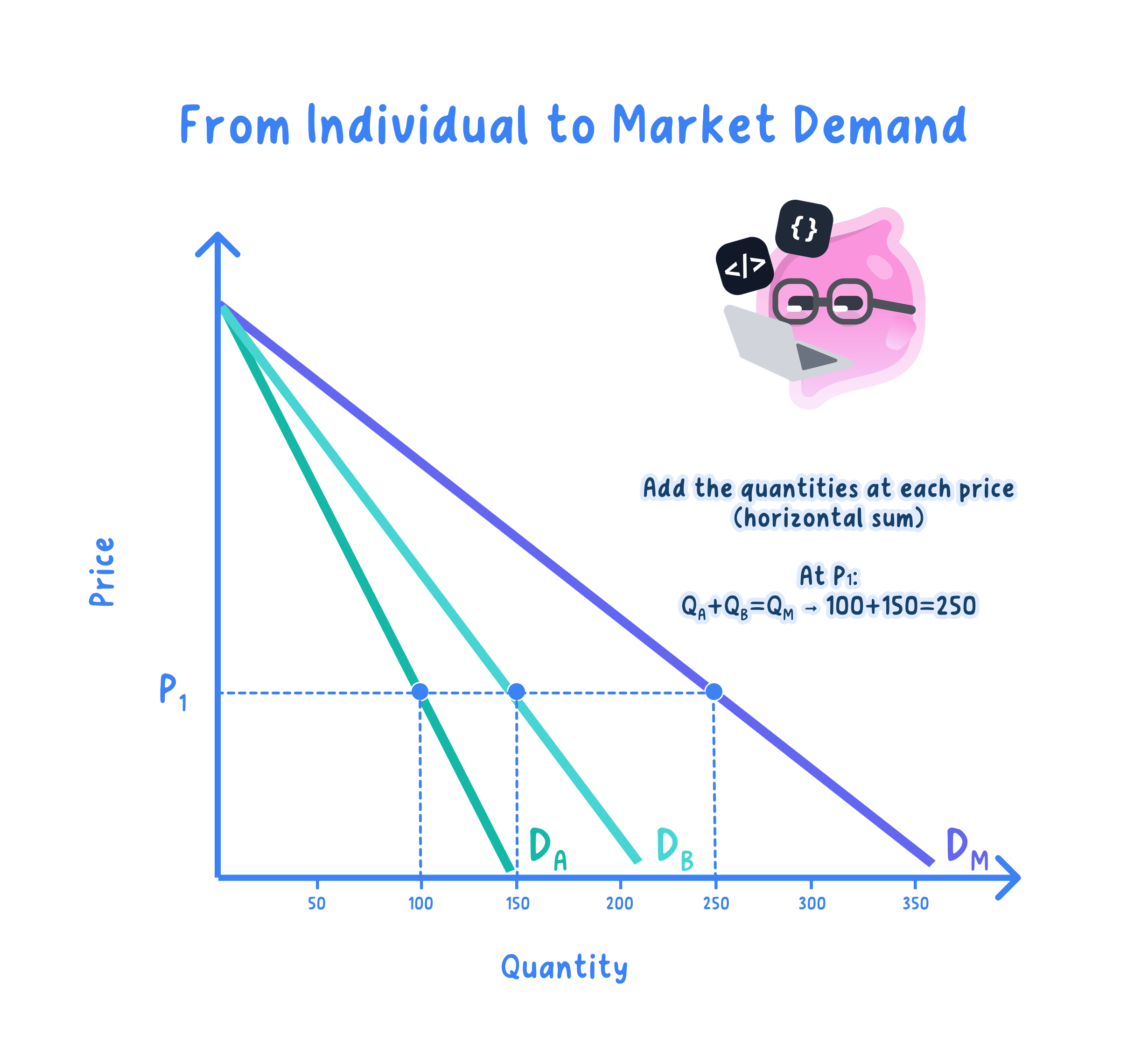
Demand: the quantity buyers are willing and able to buy at each price over a period, so it needs both willingness and ability to pay, not mere desire.
Law of demand: ceteris paribus, a lower price raises quantity demanded and a higher price lowers it, giving the demand curve its downward slope.
- Because it requires ability as well as willingness, this is effective demand, which is what markets actually respond to.
- On the diagram price is on the vertical axis and quantity demanded on the horizontal axis, and the curve slopes down from left to right.
Movements Along the Curve
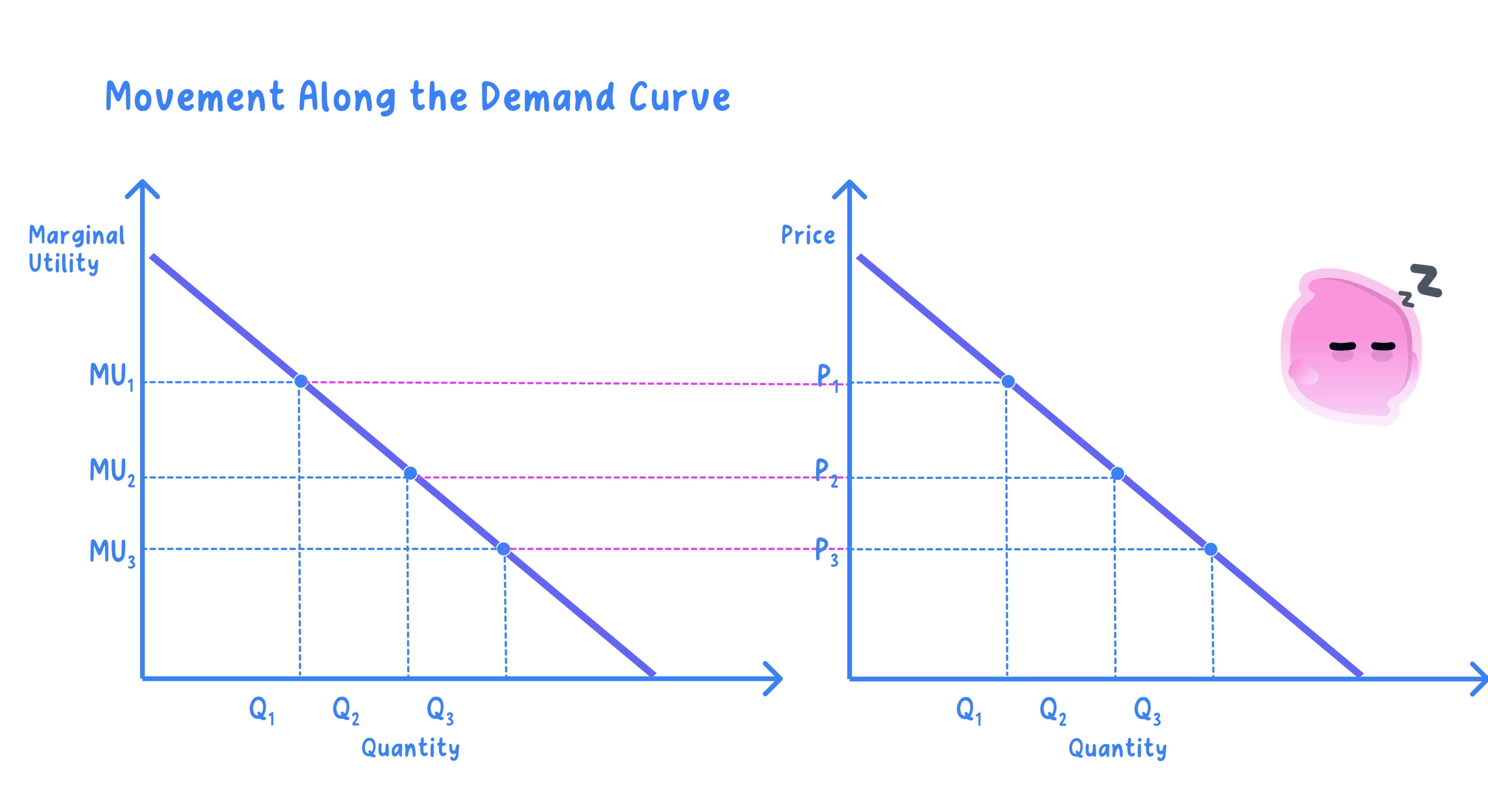
Movement along the demand curve: a change in quantity demanded caused only by a change in the good's own price.
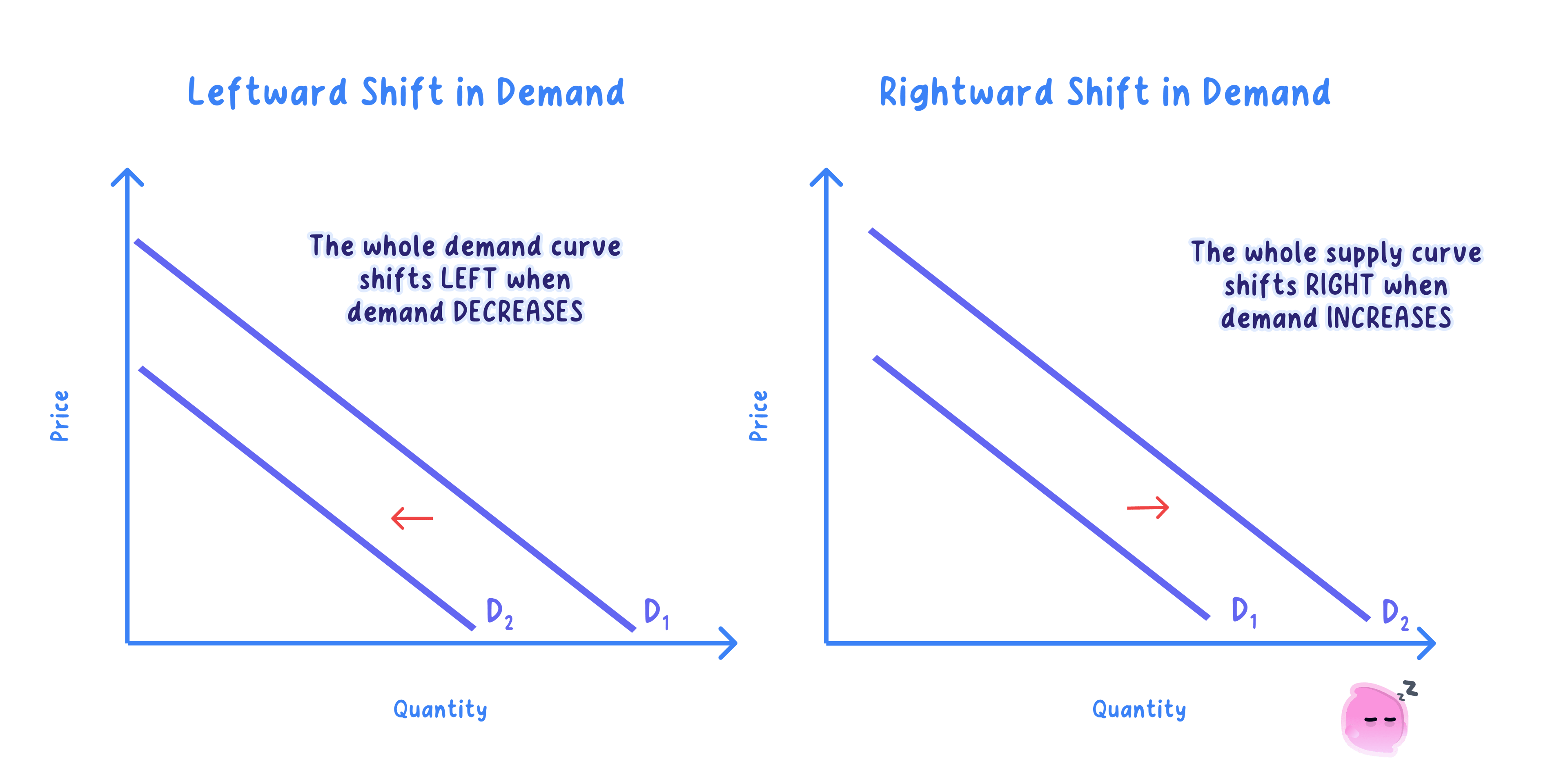
Shift of the demand curve: a change in demand at every price caused by a change in a condition of demand other than own price.
- A rise in own price is shown as moving up and to the left along the same curve to a smaller quantity, and a fall as moving down and to the right.
- If the price of coffee falls and more coffee is bought, this is a movement down along the demand curve.
- If incomes rise and more coffee is bought at every price, the whole curve shifts to the right.
Shifts of the Curve
- A change in any condition of demand shifts the whole curve: a favourable change shifts it right and an unfavourable change shifts it left.
- A rightward shift means more is demanded at every price and is drawn as the whole curve moving right to a new labelled position.
Conditions of Demand
Normal good: a good whose demand rises as real income rises.
Inferior good: a good whose demand falls as real income rises, because buyers switch to preferred alternatives.
- The conditions of demand can be recalled as PIRATES: population, real income, related goods (the prices of substitutes and complements), advertising, tastes and fashion, expectations of future prices, and seasonal factors, with interest rates also relevant for goods bought on credit.
- For a normal good, such as restaurant meals, higher real income shifts demand right, while for an inferior good, such as supermarket value ranges or bus travel, higher income shifts demand left.
- A dearer substitute shifts demand right and a dearer complement shifts it left, so cheaper consoles raise demand for games.
- Heavy advertising for a new drink is a change in tastes that shifts its demand curve to the right.
- A fall in the price of tea, a substitute, shifts the demand for coffee to the left.
Diminishing Marginal Utility
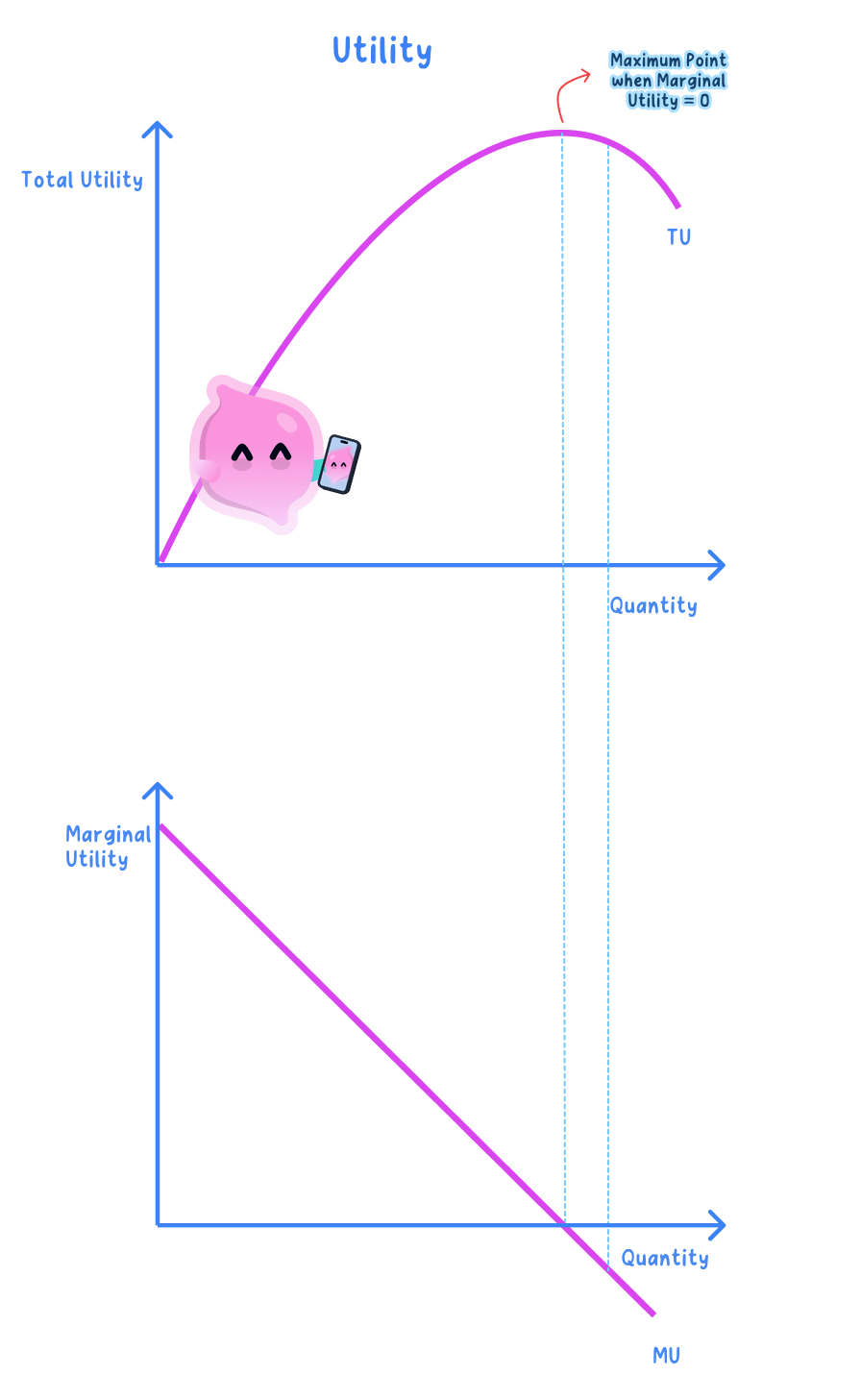
Diminishing marginal utility: the tendency for the extra satisfaction from each further unit to fall as consumption rises within a period.
- Because each extra unit is worth less, a buyer takes more only at a lower price, which is why diminishing marginal utility helps explain the downward-sloping demand curve.
- The first glass of water on a hot day gives the most satisfaction, the second adds less and the third less again.
- Total utility keeps rising while marginal utility is positive and only falls once marginal utility turns negative.
Does demand always slope downwards?
- It holds for almost every good because of the law of demand and diminishing marginal utility: at a lower price each extra unit is worth the smaller outlay.
- But for Veblen goods, such as a Birkin bag or a designer watch, a higher price signals status, so demand can rise as price rises.
- But for a Giffen good, a staple such as rice for very poor households, a price rise can force buyers to consume even more of it as they cut back on costlier foods.
- On balance, the curve slopes down in almost every real market; the exceptions are rare and depend on the good being a status symbol or a dominant staple.
- Diagnose the cause first: an own-price change is a movement along, any other condition is a shift, and state the direction.
- Justify the downward slope rather than just stating it, using diminishing marginal utility.
- Label the axes price and quantity demanded and label the new curve after any shift.
- Do not treat a change in the good's own price as shifting the curve; it is a movement along, a change in quantity demanded.
- Do not assume every good's demand rises with income, because demand for an inferior good falls as income rises.
- What is the difference between a movement along and a shift of the demand curve?
- Name four conditions of demand and the direction each shifts the curve.
- What is diminishing marginal utility?
- How does diminishing marginal utility help explain the downward-sloping demand curve?
