Three hydrocarbons commonly present in hydrocarbon mixtures are shown in Fig. 22. 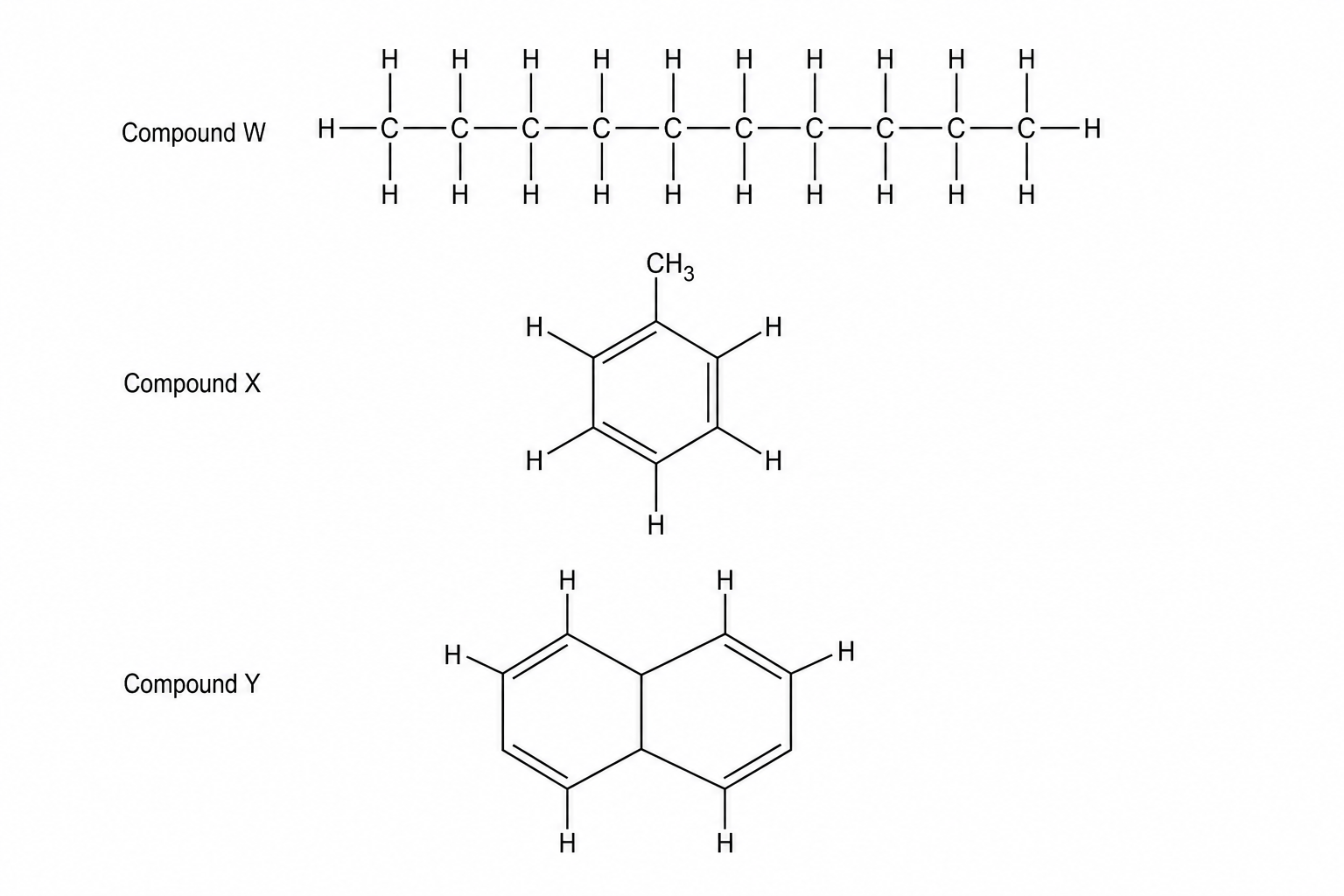
Compound W shows some structural similarities with fatty acids. State one structural difference between compound W and a saturated fatty acid.
A hydrocarbon mixture is spilled into the marine environment. Specialized bacteria can break down these hydrocarbons.
(i) The rate of hydrocarbon breakdown by bacteria can be increased by spraying the oil with a dispersant. Dispersants break up the oil into small droplets, increasing their surface area.
- Student A concluded that the dispersant speeded up the rate of hydrocarbon breakdown only because it increased the surface area of hydrocarbon upon which the bacteria could grow.
- Student B concluded that the dispersant also increased the growth rate of the bacterial population by an alternative chemical mechanism.
Use the information in Fig. 22 and your knowledge of bacterial growth requirements to provide support for Student B's conclusion.
(ii) Suggest one piece of evidence that would further support Student B's conclusion.
Bacteria that are able to digest and metabolize the hydrocarbons are more common in areas around offshore oil rigs where spillages are common. Suggest an explanation for this observation.
Listed below are three approaches, A, B and C, that can be taken to maintain biodiversity:
- A: ex situ conservation
- B: in situ conservation
- C: preservation
For each of the statements below, indicate whether it could be consistent with in situ conservation, ex situ conservation or preservation by inserting the correct letter or letters (A, B, and/or C):
- Organisms remain in their natural environment.
- Active human intervention or management takes place.