Reading the Stage from Language
- A scenario describes how a child talks, and your task is to work out their stage from it.
- The language feature is your clue to the correct Piagetian stage.
- You then explain what that stage reveals about the child's thinking, since thought is what drives the language.
Key Idea
- Use the language feature in the scene as a clue to the stage.
- Then link the stage back to what the child can and cannot yet think.
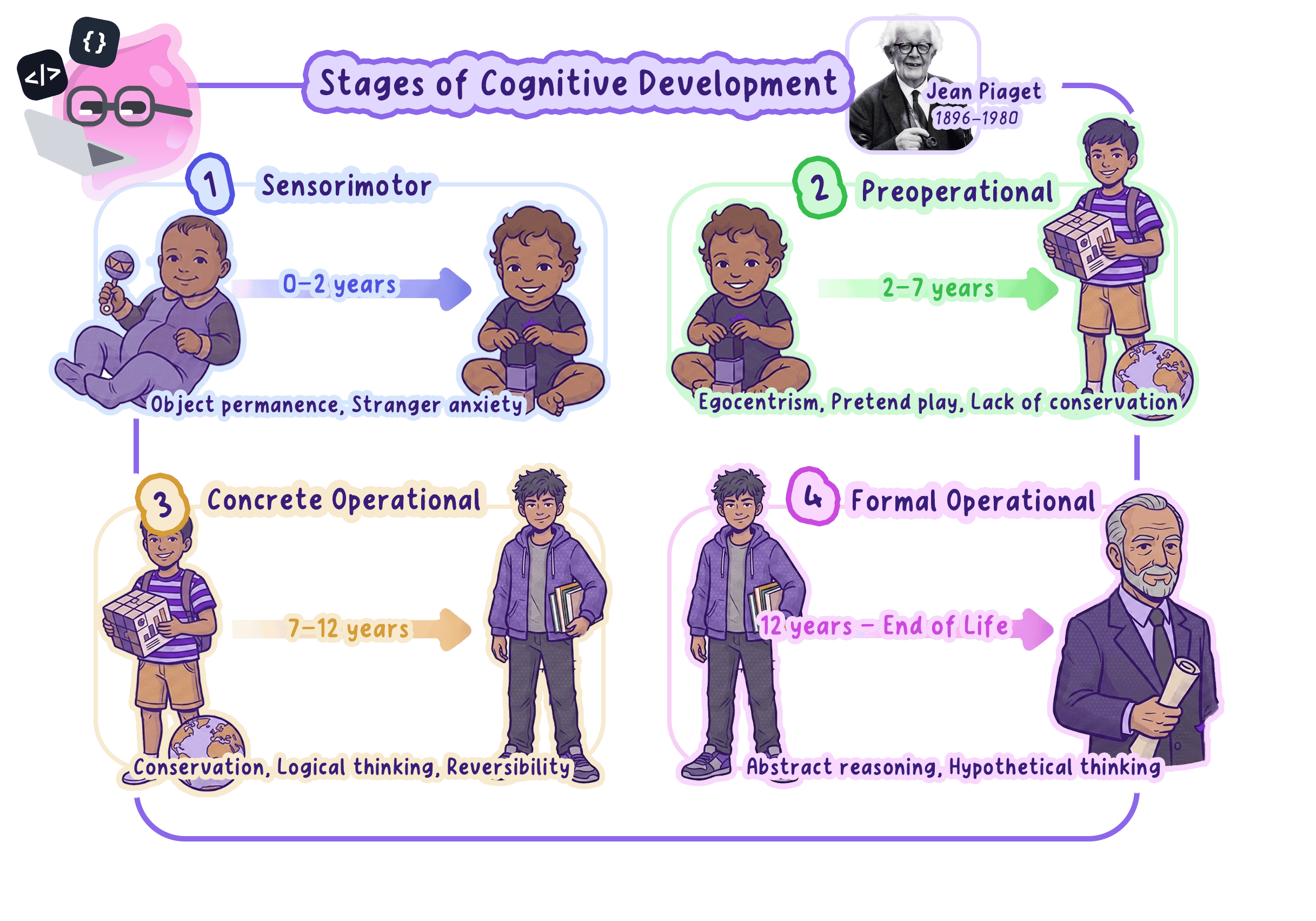
Language at Each Stage
- Repetitive, action-tied words and first labels
- These point to the sensorimotor stage.
- Egocentric speech and animism
- These point to the pre-operational stage.
- Socialised speech that takes a listener into account
- This points to the concrete operational stage.
- Abstract and hypothetical talk
- This points to the formal operational stage.
Example
- At the park a five-year-old says "the slide is happy today", treating it as alive.
- That is animism, so the child is in the pre-operational stage.
- A nine-year-old carefully explaining the rules of a game to a new friend shows socialised speech, so concrete operational.
How Reliable the Reading Is
- The reading is strongest when the language clearly matches one stage, because children tend to use words only for ideas they already understand.
- Language is not a perfect window on thinking, so a child may grasp more than they can put into words, or repeat a phrase they do not fully understand; weigh several clues rather than one line.
Writing the Answer
- Quote the exact phrase from the scene, then name the feature it shows, such as animism or egocentric speech.
- Name the stage and justify it from that feature, rather than guessing from the child's age alone.
- The mark most people miss is naming a stage with no evidence, so always tie it back to the language in the scene.
Self review
- Which stage does animism point to?
- Which stage does abstract, hypothetical talk point to?
- What does socialised speech tell you about a child's stage?
- Why should you weigh several language clues rather than trusting one line?
