Language Depends on Thought
- Piaget argued you can only put into words what you can already think.
- So a child's language is a readout of their current stage of cognitive development.
- As thinking matures through four stages, language matures alongside it.
- Thought leads and language follows, which is the opposite of saying language shapes thought.
Key Idea
- Cognitive development drives language development, not the other way round.
- Each new stage of thinking unlocks a new kind of language.
The Four Stages
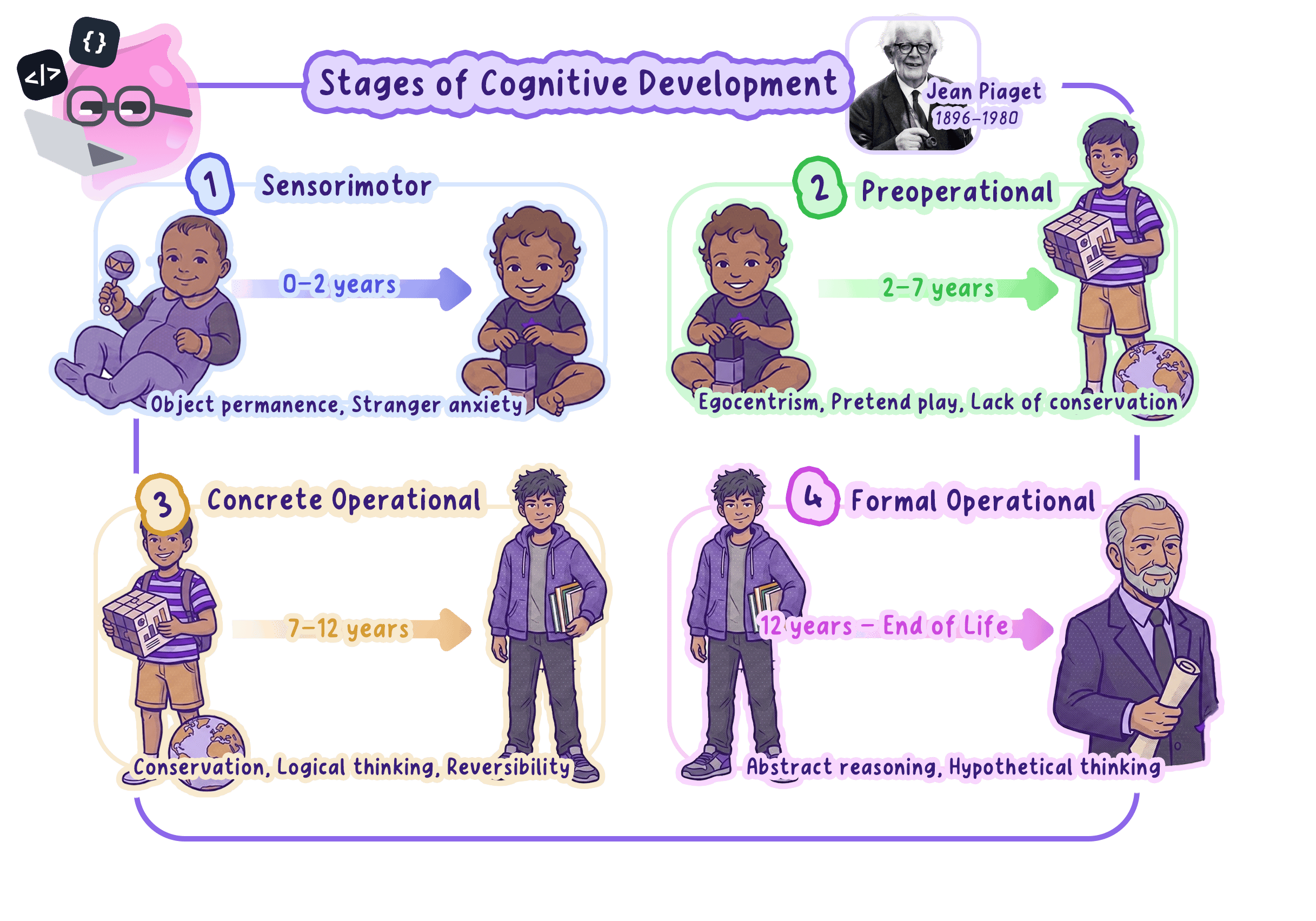
- Sensorimotor (birth to about 2)
- Language is repetitive and tied to physical action, such as babbling, gestures and first words for things the child can see or touch.
- Pre-operational (about 2 to 7)
- Speech is symbolic, using words and images to stand for objects and events, but it is egocentric (the child cannot take another point of view) and shows animism, talking about objects as if they were alive, such as "the naughty table hurt me".
- Concrete operational (about 7 to 11)
- Thought and speech decentre, so speech becomes socialised, using questions, answers and commands as the child takes the listener's point of view.
- Formal operational (about 11 and up)
- Language can handle abstract and hypothetical ideas, so a teenager can argue about fairness or what might happen "if".
Example
- A four-year-old on the phone to Gran points and says "look at THIS", forgetting she cannot see the room.
- That egocentric speech fits the pre-operational stage.
- A 14-year-old, by contrast, can debate whether a rule is fair, which needs formal operational thought.
Why Thought Comes Before Language
- A child cannot name a hidden object until they grasp that it still exists, so the idea has to be in place before the word.
- Speech only stops being egocentric once the child can decentre and imagine what the listener knows.
- Abstract words like "justice" mean nothing until abstract thinking arrives, which is why they appear only in the final stage.
Self review
- What does Piaget mean by saying language depends on thought?
- What language features mark the pre-operational stage?
- Why does speech become socialised in the concrete operational stage?
- What kind of language becomes possible in the formal operational stage?
