Skip to content

Course home

Revision guides·5.4.4 Argument for psychodynamic motivation in marketing
Sign up

5.4.4 Argument for psychodynamic motivation in marketing

The Argument for the Approach

  1. If unconscious feelings drive buyers, a nostalgic advert should pull them towards a product.
  2. In Merchant et al.'s study 3, adults viewed print adverts designed to stir nostalgia and rated their feelings, attitudes and intentions to buy.
  3. Their results give you evidence that hidden feelings, not logic, shift buyers towards a brand.
Key Idea
  • The more nostalgia an advert stirred, the stronger people's attitudes and intentions to buy.
  • That fits the psychodynamic claim that unconscious emotion guides buyers.

What the Study Found

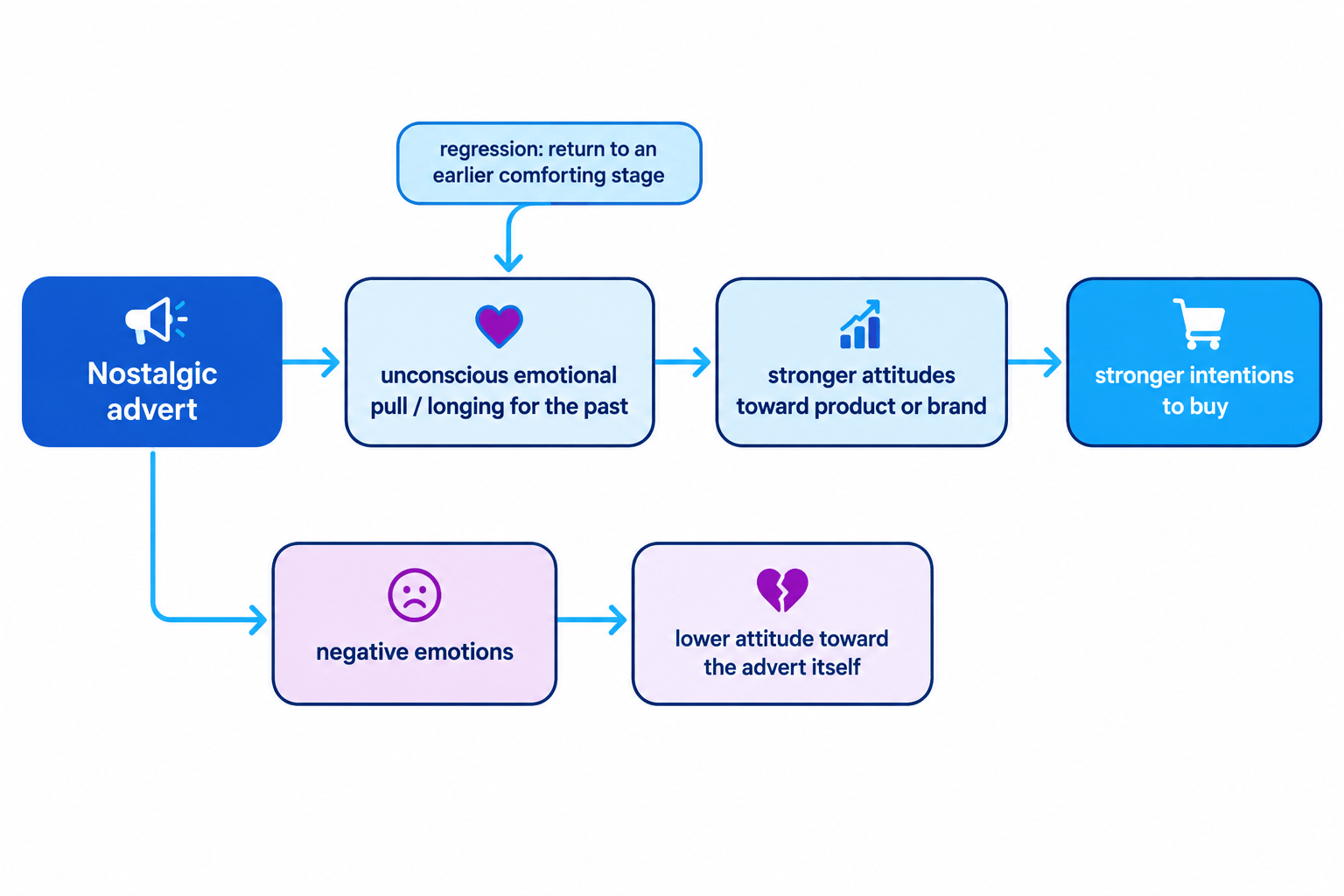
  1. The more nostalgia an advert created, the stronger people's attitudes and behavioural intentions towards the product or brand.
  2. Where a nostalgic advert also stirred negative emotions, that lowered people's attitude towards the advert itself.
  3. So it was the feeling of nostalgia, not the product's features, that was doing the persuading.
Example
  • The Hovis 'boy on the bike' advert wheels a loaf up a cobbled street to a brass band.
  • That warm pull to the past makes viewers feel fondly towards the bread, not because of its taste.

What It Shows

  1. Nostalgia in advertising can influence product choice by appealing to unconscious desires and a longing for the past.
  2. This is evidence for the psychodynamic view that hidden, emotional motives drive buying.
  3. Nostalgia also links to regression, the defence mechanism of returning to an earlier, comforting stage.
Note
  • For this argument you are marked on the results and what they show, not the aim or procedure.
  • Say nostalgia raised attitudes and buying intentions, then tie it to unconscious motivation and regression.

Using It in the Exam

  1. State that more nostalgia meant stronger attitudes and intentions to buy.
  2. Link the pull of nostalgia to unconscious, emotional motives.
  3. Name regression as the defence mechanism that nostalgia draws on.
Self review
  • What did nostalgic adverts do to people's attitudes and buying intentions?
  • What happened when a nostalgic advert also stirred negative emotions?
  • How does the study support the psychodynamic approach?
  • Which defence mechanism links to nostalgia?

PreviousNext

How was this guide?

Teach Genie

Review 5.4.4 Argument for psychodynamic motivation in marketing by teaching Genie

Teach it back in your own words, spot gaps, and remember it better.

Start teaching
Genie and Baby Genie

Lesson

Recap your knowledge with an interactive lesson

8 minute activity

Start lesson

Flow diagram showing a nostalgic advert leading to an unconscious emotional pull, stronger attitudes and stronger intentions to buy, with negative emotions lowering attitude toward the advert and nostalgia linked to regression

The psychodynamic approach argues that buying can be guided by unconscious feelings and desires rather than logical evaluation. Advertisers may therefore use nostalgia to create an emotional pull towards a product or brand.

Nostalgia can also be linked to regression, a defence mechanism involving a psychological return to an earlier, more comforting stage. A consumer may associate a nostalgic product with safety or happiness without consciously analysing why.

Questions

Put it into practice with exam-style questions

8 exam-style questions

Practice questions

Question 1

4 marks

A researcher shows adults an advert for a cinema. The advert includes scenes of families visiting the cinema during school holidays and is designed to stir nostalgia. The adults rate their attitude towards the cinema and their likelihood of buying a ticket. Mean ratings are shown in the table.

Adults' reported nostalgiaMean attitude towards the cinema (1 = very negative, 7 = very positive)Mean likelihood of buying a ticket (1 = very unlikely, 7 = very likely)
Lower nostalgia3.02.7
Higher nostalgia5.85.4

Flashcards

Remember key concepts with flashcards

21 flashcards

Practice flashcards

What effect did greater nostalgia in an advert have on people's attitudes towards the product or brand?

5.4.4 Argument for psychodynamic motivation in marketing Revision Guide

  1. IGCSE
  2. /Psychology
  3. /5.4.4 Argument for psychodynamic motivation in marketing

Revision notes for CIE IGCSE Psychology 5.4.4 Argument for psychodynamic motivation in marketing: explanations and worked examples.

More revision guides