What Serotonin Is
- Serotonin is a neurotransmitter whose main job is to help regulate your mood.
- Its level shapes how positive or low you feel, and that in turn shapes how likely you are to help.
- This makes serotonin one strand of the biological explanation of prosocial behaviour.
Key Idea
- Higher serotonin is linked to a more positive, settled mood.
- A more positive mood is linked to more prosocial behaviour.
How Serotonin Leads to Helping
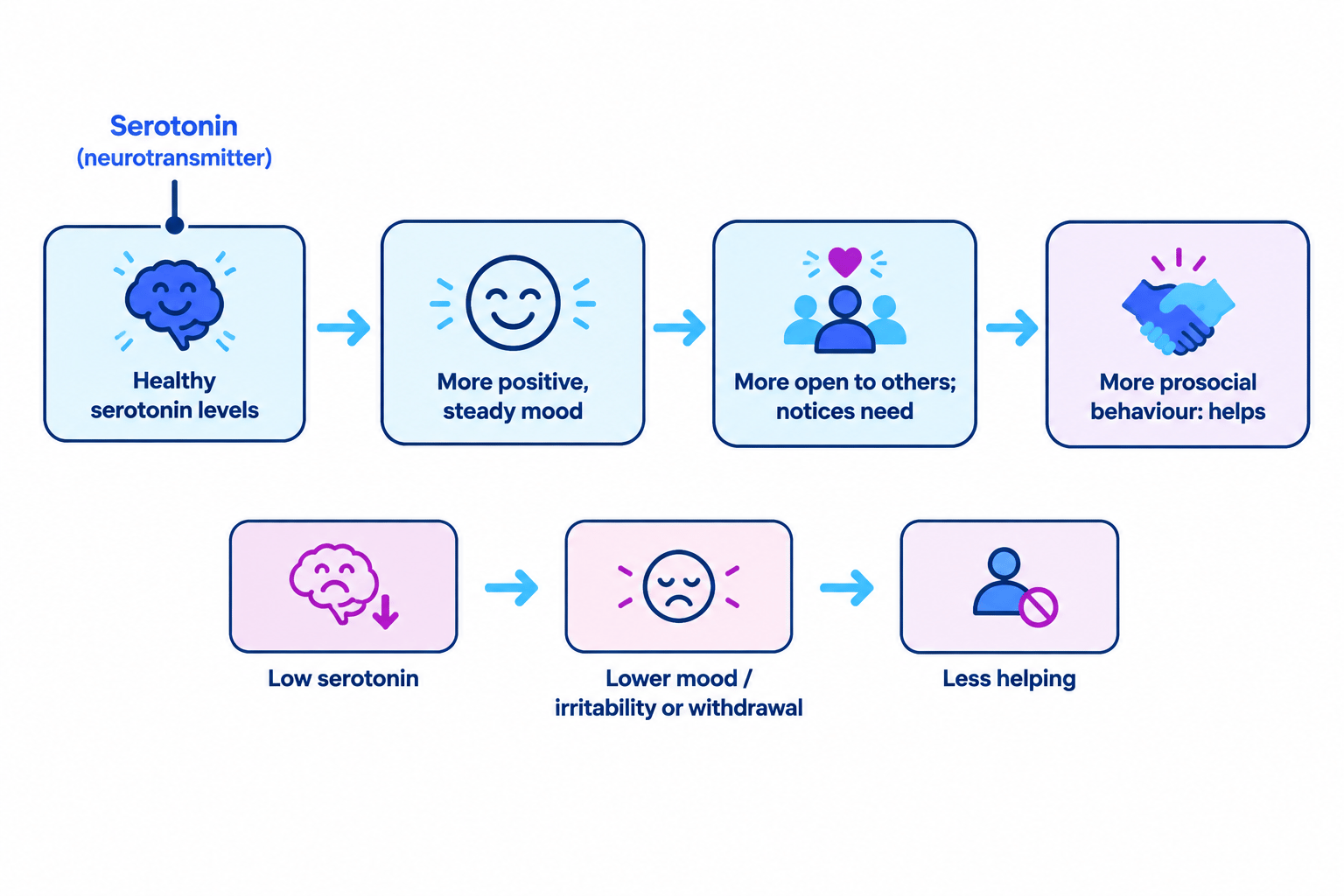
- When serotonin levels are healthy, your mood tends to stay positive and steady.
- A positive mood makes you more open to other people and quicker to notice when someone needs a hand.
- When serotonin is low, mood drops and you may feel irritable or withdrawn, so you help less.
Example
- Walking home in a good mood after your team wins on a Saturday, you happily stop to give a lost tourist directions.
- That easy, positive mood is exactly what healthy serotonin levels help support.
Where Serotonin Fits in the Biological Account
- Serotonin gives helping a chemical basis, not just a personality or upbringing one.
- It works alongside oxytocin and the brain areas covered in the next guides.
- Together they build the case that biology shapes how prosocial you are.
Common Mistake
- Do not treat serotonin as the whole story; it is one biological strand among several.
- Mood and helping are shaped by other things too, such as your personality and the situation you are in.
Explaining Serotonin's Role in an Answer
- Start by saying serotonin regulates mood.
- Then give each link as a separate step, since the marks are in the chain: healthy serotonin lifts mood, and a positive mood makes you quicker to notice and help.
- Only add that serotonin is one strand among several if the question asks you to evaluate; in a plain explain that hedge earns nothing, so spend the words on the causal chain.
Self review
- What is serotonin and what does it mainly do?
- How does a higher serotonin level relate to mood?
- How does mood then affect prosocial behaviour?
- Why is serotonin only one part of the biological explanation of helping?