REM and Non-REM Sleep
Definition
REM sleep
Rapid eye movement sleep: a stage in which the eyes dart about and the brain is highly active, when most dreaming happens, while the body's muscles stay relaxed and still.
- Each night your sleep splits into two kinds: REM and non-REM sleep.
- REM stands for rapid eye movement; non-REM simply means the sleep without that darting eye movement.
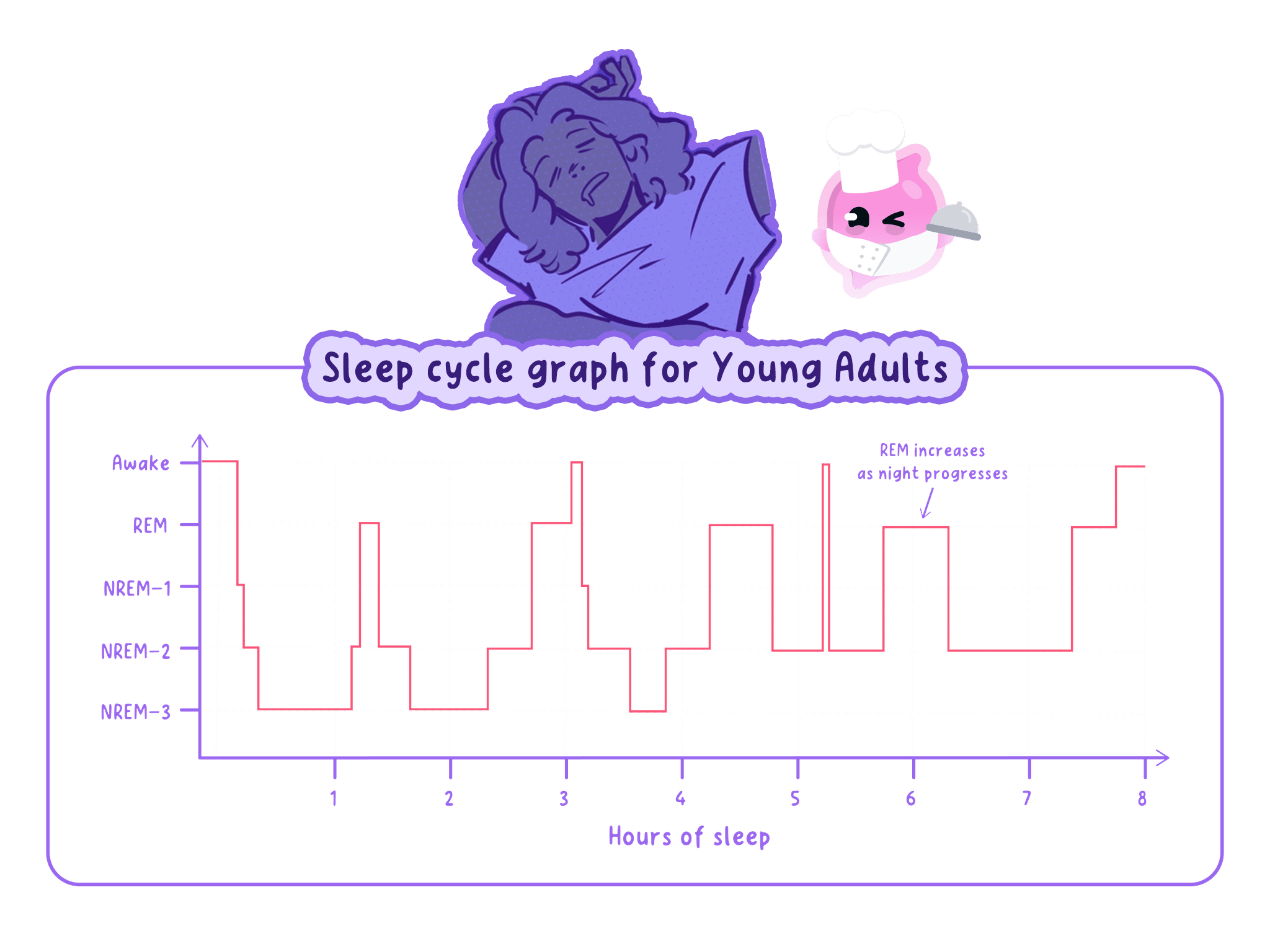
- You cycle between them all night, dropping down into deep non-REM and rising back into REM roughly every 90 minutes.
Key Idea
- REM is the dream-heavy sleep where the brain is almost as active as when you are awake.
- Non-REM is the deep, slow-wave sleep that rests and repairs the body.
Features of REM and Non-REM Sleep
Definition
Non-REM sleep
Non-rapid eye movement sleep: the calmer, deeper stages of the sleep cycle where brain activity slows, the body repairs itself and little dreaming occurs.
- REM sleep
- Brain activity is fast and busy, close to being awake, so on an EEG the waves look small and rapid.
- The eyes dart about under closed lids, yet the body's muscles go limp and still.
- Vivid dreaming happens here, and REM makes up only about a quarter of a night's sleep.
- Non-REM sleep
- Brain activity slows into large, slow waves, and it is deepest later in a non-REM period.
- The eyes stay still and the muscles keep some tension.
- It fills roughly three quarters of the night and contains the deep sleep that repairs the body.
Example
- Watch a younger sibling nap on a long drive down the M5: in REM you can see their eyes flicking under closed lids while their body lies completely limp.
- Try to wake them from deep non-REM and they are groggy and disorientated, because that is the hardest sleep to surface from.
Comparing REM and Non-REM Side by Side
- Brain activity is fast in REM but slow in non-REM.
- The eyes dart in REM but stay still in non-REM.
- The muscles go limp in REM but hold some tension in non-REM.
- Vivid dreaming sits in REM, while non-REM is deeper and mostly dreamless.
Common Mistake
- The body does not thrash about in REM: the muscles go limp even though the brain is buzzing.
- Vivid dreaming is not in deep non-REM, which is quiet and mostly dreamless.
Answering a Compare Question
- Contrast REM against non-REM on the same feature in one sentence; a comparison, not two separate descriptions, is what scores.
- Run through all four features: brain activity, eye movement, muscle tension and dreaming, each a separate compare mark.
- Add the rough split, about a quarter REM to three quarters non-REM, if the marks are there.
Self review
- What does REM stand for?
- In which type of sleep does most vivid dreaming happen?
- What happens to the body's muscles during REM sleep?
- Roughly what fraction of the night is spent in REM?
