The Argument Against
- Each theory in this topic has one argument for it and one against it, and you need both.
- The argument for these structures is the case of HM, which is covered separately.
- The single argument against is that other parts of the brain are also involved in memory.
Key Idea
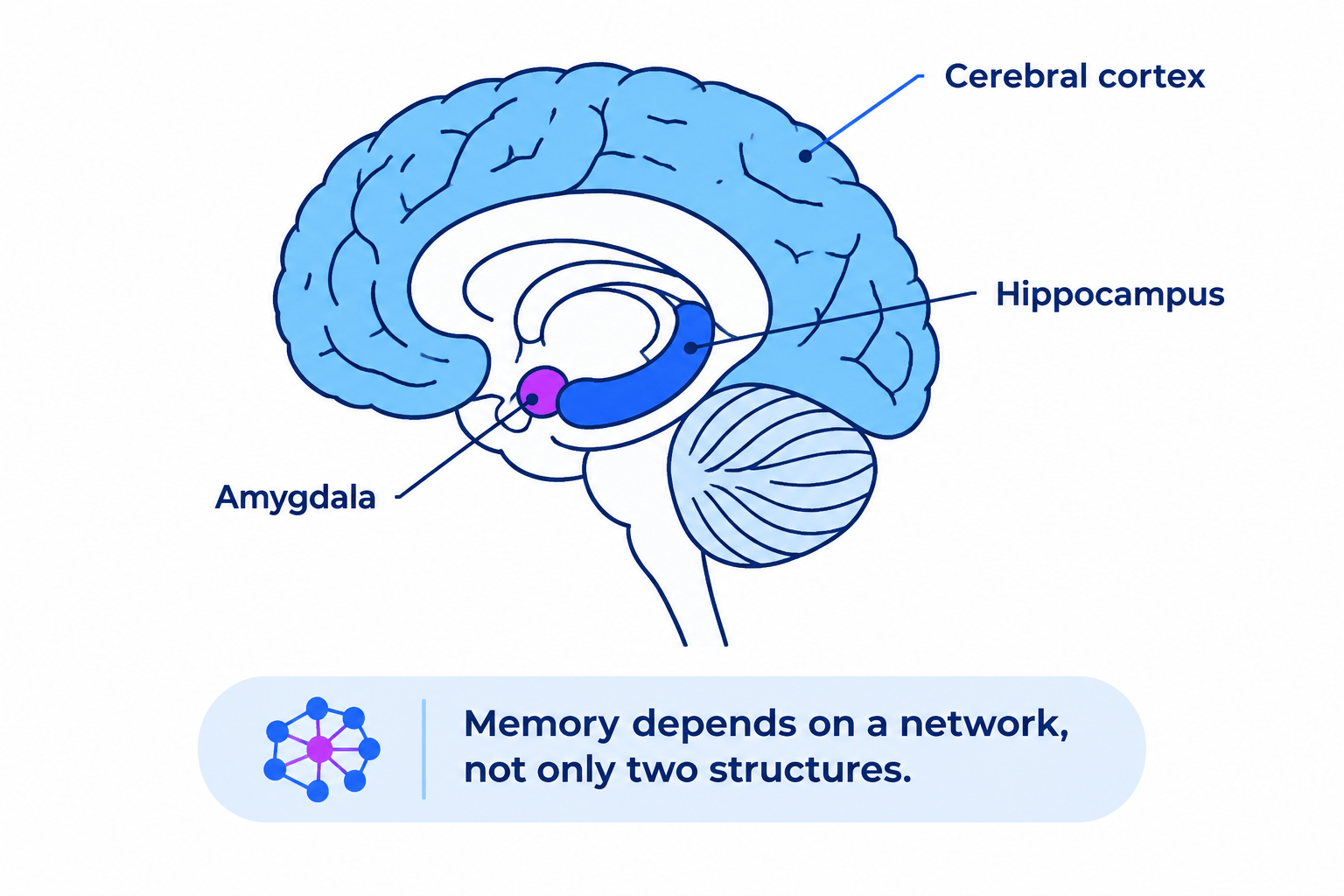
- Memory is not handled by the amygdala and hippocampus alone.
- Other areas, especially the cerebral cortex, also play a part.
Other Brain Areas Are Involved Too
Definition
Cerebral cortex
The outer layer of the cerebrum, involved in reasoning, memory, learning and language. Different parts of it also help store and use memories.
- Parts of the cerebral cortex, the outer layer of the cerebrum, also help store and use memories.
- The cerebral cortex is also involved in reasoning, learning and language.
- Brain damage rarely removes one exact memory function while leaving everything else perfectly intact.
- This suggests memory relies on a network of areas, not just these two structures.
Example
- Even in HM, memories from long before his operation survived.
- Those older memories must have been stored outside the hippocampus, in areas such as the cerebral cortex.
- So the hippocampus and amygdala are not the only parts of the brain that matter for memory.
Using the Argument in an Answer
- State the weakness as a plain point: the amygdala and hippocampus are not the only areas involved in memory.
- Explain it: other parts, especially the cerebral cortex, also help store and use memories, as HM's surviving old memories show.
- If the item asks for one argument for and one against, pair this with the HM case, because giving only one side caps a four-mark answer at three.
Self review
- What is the one argument against the role of the amygdala and hippocampus?
- Which other brain area is involved in memory?
- What is the cerebral cortex, and what does it do?
- Why does HM keeping his old memories suggest other areas store memory?