Ionising radiation harms living things by damaging cells
Definition
Mutation
A change in the genetic material of a cell, which may then be copied into every cell that the damaged cell produces.
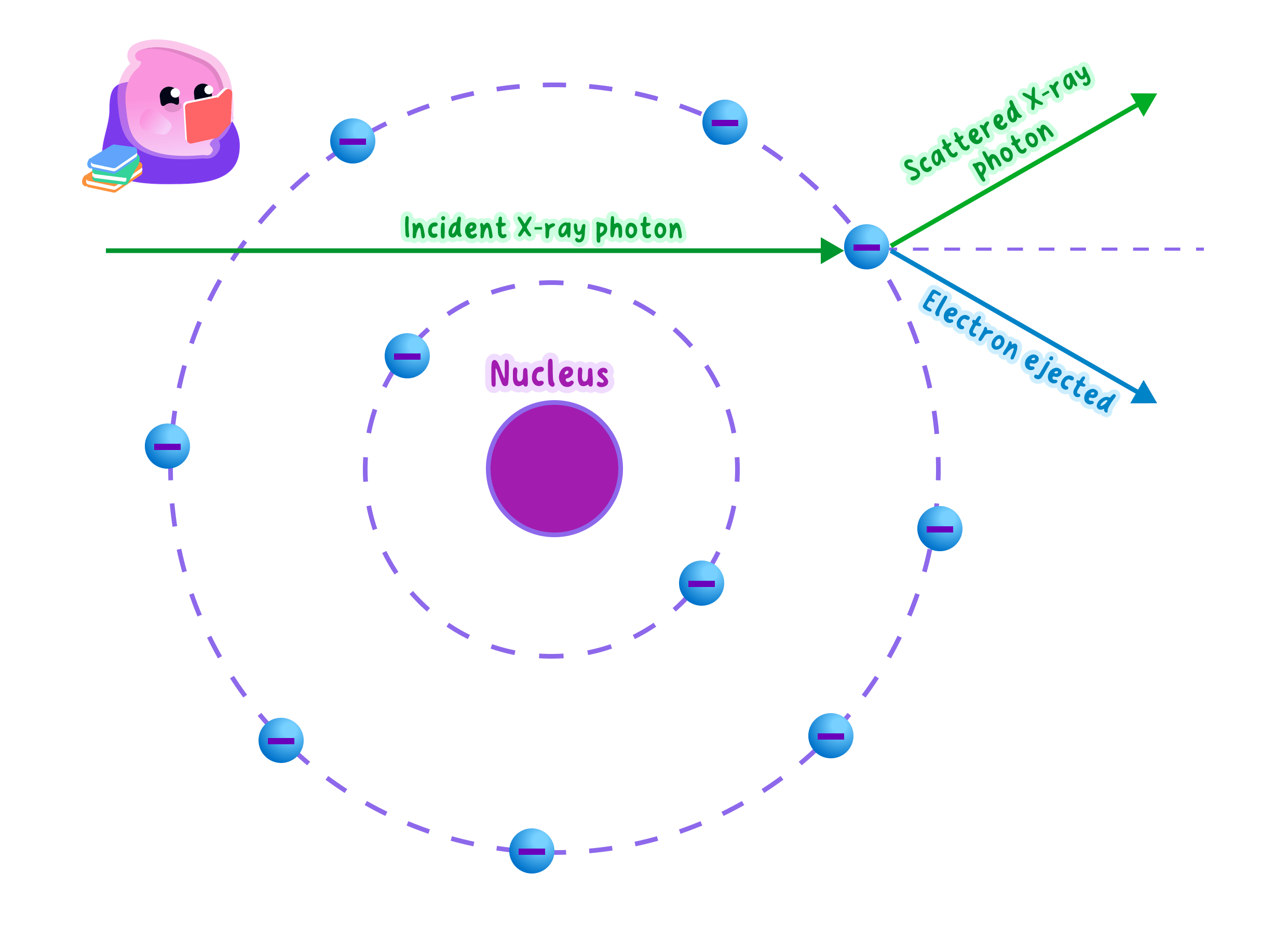
- The damage starts with ionisation: radiation passing through tissue knocks electrons out of atoms in the molecules that make up a cell.
- Once an atom in a large molecule is ionised, the molecule can break apart or react in ways it should not, and the cell's chemistry is disrupted.
- What follows depends on how much damage a cell takes.
- A large dose damages so many molecules at once that the cell cannot function, and the result is cell death; killing many cells at once produces radiation burns and radiation sickness.
- A smaller dose may leave the cell alive but with damaged genetic material, which is a mutation.
- A mutated cell may start dividing uncontrollably, and that uncontrolled division is cancer.
- A mutation in a reproductive cell can be passed on to a person's children, so the effects are not always limited to the person exposed.
- Cancer may appear many years after the exposure that caused it, which is why doses are kept low even when nobody feels any immediate effect.
Which type does most harm depends on where the source is
- From outside the body, gamma and beta are the greater hazard, because they penetrate the skin and reach living tissue underneath.
- Alpha from an external source is largely harmless, since a few centimetres of air and the dead outer layer of skin absorb it before it reaches anything living.
- From inside the body, after a source is swallowed or inhaled, the ranking reverses and alpha becomes by far the most dangerous.
- Alpha is the most strongly ionising type, so once it is surrounded by tissue it dumps all its energy into a very small volume of cells.
- This is why radon gas matters: it is breathed in, so its alpha emissions happen inside the lungs where the skin cannot protect anything.
Moving, using and storing radioactive materials safely
- Sources are stored in lead-lined containers, inside a locked cupboard, with a written record of what is taken out and returned.
- They are moved with long-handled tongs and never with bare hands, and are carried in their shielded container rather than in the open.
- In use, the open end of the source is kept pointing away from people, and the source is out of its container for the shortest time the experiment allows.
- Anyone working with sources regularly wears a film badge or dosimeter so the total dose they have received can be checked and limited.
- Areas where sources are kept or used carry the radiation hazard symbol, so nobody enters without knowing what is there.
- Where strong sources are handled in hospitals and industry, the work is done behind thick concrete or lead walls, using remote handling arms so no one shares the room with the source.
Every precaution is time, distance or shielding
- Reducing the exposure time works because the dose a person receives builds up steadily for as long as they stay near the source.
- Half the time next to the source means half the dose, which is why a source is returned to its container as soon as the reading is taken.
- Increasing the distance works because radiation leaves a source in all directions and spreads out over an ever larger area as it travels.
- The same radiation is shared over a bigger area further out, so the amount entering a given piece of tissue falls sharply as you step back.
- Air helps as well, absorbing alpha within a few centimetres and beta within about a metre, so distance alone removes those two entirely.
- Using shielding works because an absorbing material placed between the source and the body soaks up the radiation before it can reach living tissue.
- The material has to match the radiation: paper or thin card for alpha, a few millimetres of aluminium for beta, and several centimetres of lead or metres of concrete to cut gamma down.
- Lead is chosen for gamma because it is very dense, and gamma is only reduced rather than removed however thick the shield.
Common Mistake
- Do not say radiation "gives you radiation"; name the actual effects, which are cell death, mutations and cancer.
- Do not call an irradiated person radioactive; absorbing radiation does not make a body a source.
- Do not answer that alpha is always the safest; inside the body it is the most dangerous.
- Do not list a precaution without its reason, since "wear gloves" on its own explains nothing and gloves stop no gamma.
- Do not claim lead blocks gamma completely; it reduces the amount getting through.
Exam technique
- Safety answers are point-marked as a precaution plus a reason, so pair every measure with the time, distance or shielding idea behind it.
- Use time, distance, shielding as your checklist, because three distinct precautions from three different categories are hard to get wrong.
- Check whether the question puts the source inside or outside the body before ranking the hazards, because the answer flips completely.
- Name the shielding material that matches the radiation in the question rather than writing "lead" for everything.
Self review
- State three effects of ionising radiation on living things.
- How does ionisation lead to a cell becoming cancerous?
- Why is alpha the most dangerous type when the source is inside the body?
- Describe how radioactive sources should be stored and moved.
- Explain how reducing time, increasing distance and using shielding each lower the dose received.
