Overview and argument
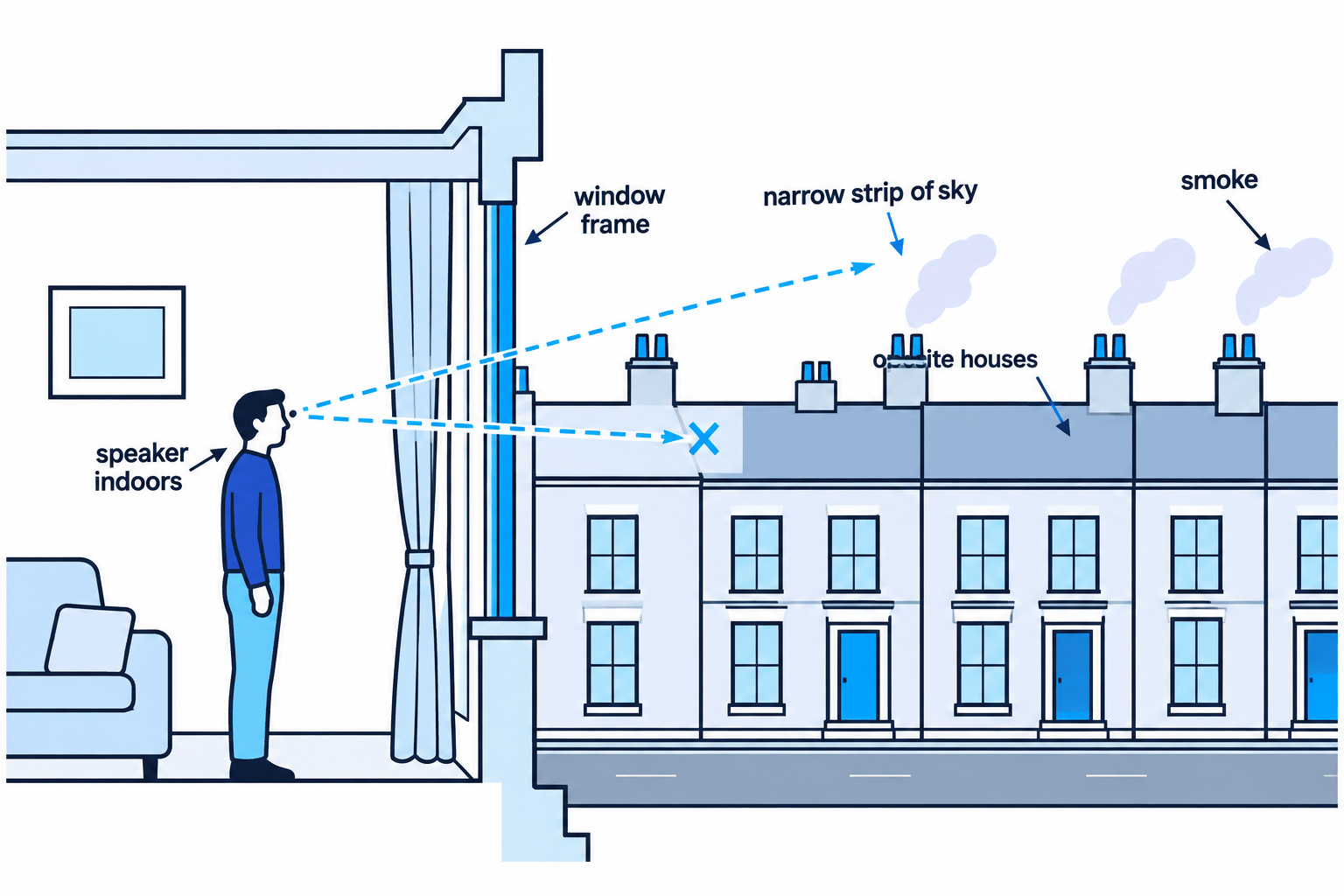
- Begin inside the room: The speaker observes London through a drawing-room window. This socially comfortable interior might imply privilege and safety, yet the window behaves like a frame that confines vision. Distance from the street offers no imaginative freedom. Read alongside connect form to viewpoint, this point gives In a London Drawing Room its larger movement. The opening establishes begin inside the room, while later consequences test its limits and make the ending a judgement on what came before.
Voice and perspective
- Read the street as a channel: The long road narrows between facing houses and draws the eye towards a limited strip of sky. Perspective creates apparent depth while repeatedly blocking escape, making city planning itself communicate pressure and enclosure. Read the street as a channel gains force through its relationship with follow drained colour. In In a London Drawing Room, the two ideas develop together, so choices and consequences should be analysed as parts of one argument rather than separate topics.
Central ideas
- Follow drained colour: Smoke, dirt and muted light flatten distinctions between sky, walls and road. Eliot withholds the varied colours associated with natural landscape, so industrial pollution becomes both a physical condition and a way of representing exhausted perception. The work's language and form make follow drained colour perceptible to the reader or audience. Track recurrence, contrast and placement across In a London Drawing Room to explain how the method develops meaning rather than merely identifying a feature.
Language and imagery
- Watch mechanical movement: Carriages, wheels and pedestrians create constant activity, but the movement lacks spontaneity or connection. Traffic passes in regulated lines, suggesting a city that is busy without being alive and crowded without producing community. The most relevant context clarifies watch mechanical movement. Connect the conditions, conventions or audience surrounding In a London Drawing Room to a precise choice in the text, keeping contextual discussion subordinate to interpretation.
Form and structure
- Notice absent nature: Any fragment of sky or organic life is restricted by masonry and smoke. The absence of birds, open horizons and changing shadows matters because the poem defines urban confinement partly through what the speaker cannot see or hear. Compare In a London Drawing Room with Half-past Two through their treatment of read. For In a London Drawing Room, use this connection: a connection based on the work's central conflict Judge the difference through .
Development and ending
- Connect form to viewpoint: The poem’s compressed, sonnet-like argument and accumulating syntax hold the street within a tight verbal frame. Unlike the separate ‘Drawingroom’ guide, this reading centres the observing consciousness: the window organises every detail and turns looking into an experience of limitation. Build an exam paragraph around connect form to viewpoint. Use one precise reference from In a London Drawing Room, analyse how the choice is shaped and developed, and connect its effect directly to both the question and the whole work.
Comparison routes
Compare the poem through place, identity, memory, family, power or change. Make the comparison method-led by explaining how different voices, images, forms and endings create distinct attitudes.
Exam strategy
Build a thesis around the poem's developing argument. Use concise evidence from the opening, a turning point and the ending, linking each method to its immediate effect and wider meaning.
Self review
- How does the drawing-room viewpoint complicate ideas of comfort?
- Which perspective effects make the street appear enclosed?
- How do colour and pollution merge the urban scene?
- How does the poem’s verbal frame reproduce the window’s restriction?
Exam technique
Analyse how voice, setting and structure work together. Avoid identifying techniques without explaining their function.
Self review
Self-check: can you explain how the ending changes or intensifies the poem's central idea?