Neuroticism and a reactive nervous system
Definition
Autonomic nervous system
The branch of the peripheral nervous system that controls automatic bodily functions you do not think about, such as heart rate, breathing and digestion.
- Neuroticism is Eysenck's dimension covering anxiety, moodiness and strong reactions to anything unpleasant.
- A high scorer feels fear, worry or anger quickly, and stays worked up long after the trigger has gone.
- Eysenck put that down to an unstable, highly reactive nervous system.
- Two structures do the work: the autonomic nervous system and the limbic system.
- The limbic system generates the emotion, and the autonomic nervous system turns it into a reaction you can feel in your body.
Key Idea
- A high neuroticism scorer has an unstable, highly reactive nervous system, so a small setback produces a large emotional reaction.
- The limbic system generates the emotion and the autonomic nervous system turns it into a pounding heart, fast breathing and sweating.
- Because the parasympathetic branch is slow to bring the body back down, the anger lasts long enough to be acted on.
The limbic system and the autonomic nervous system
Definition
Limbic system
A network of structures deep in the brain, including the hippocampus and amygdala, involved in processing emotion, learning and memory.
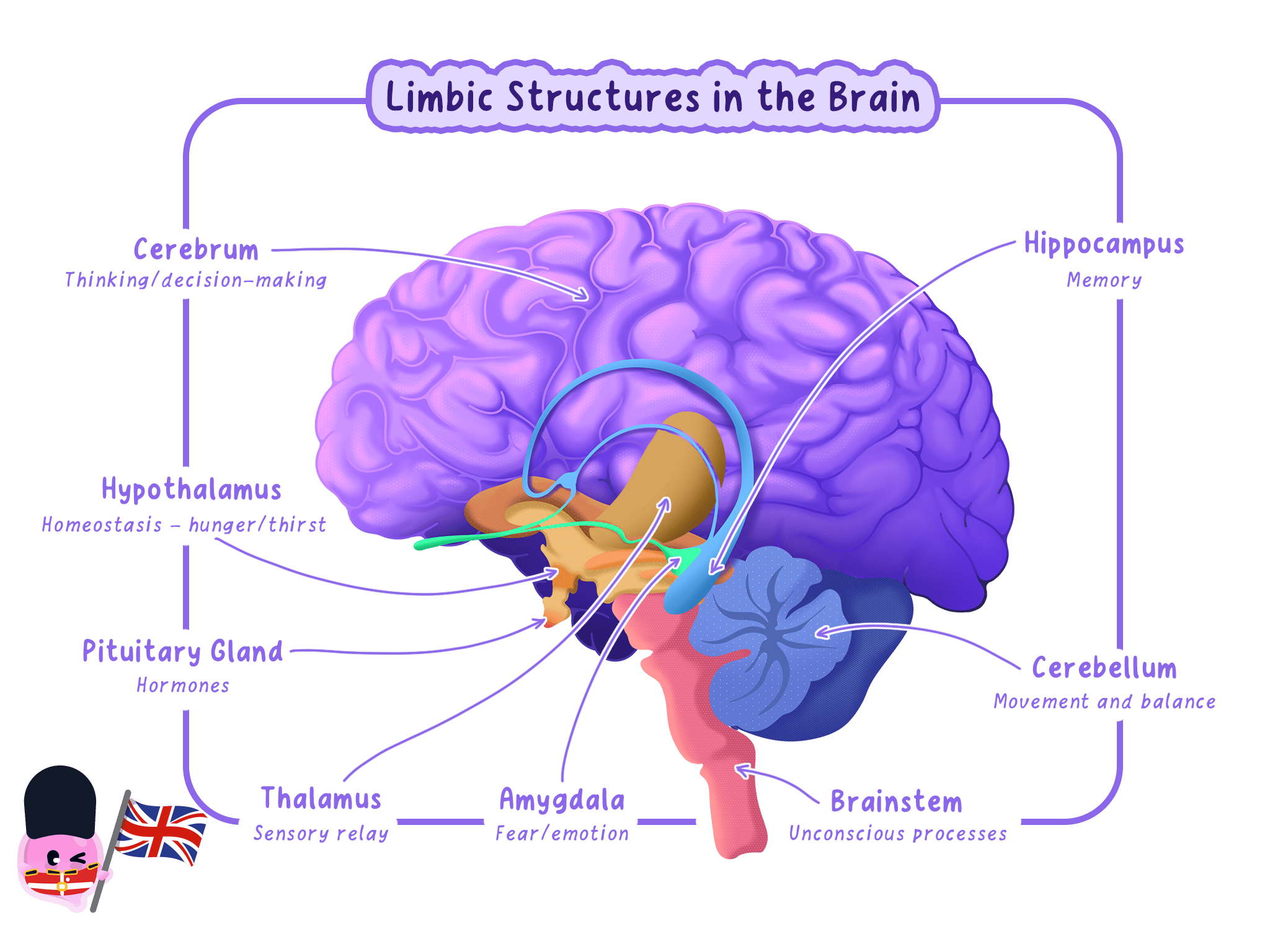
- Limbic system: a group of structures deep inside the cerebrum that produce emotion and store emotional memories.
- The amygdala flags anything threatening and generates the fear or anger you feel.
- The hippocampus stores the memory of the event, so a similar situation sets the reaction off again.
- The hypothalamus passes the alarm on to the body by triggering the autonomic nervous system.
- Autonomic nervous system: the branch of the peripheral nervous system that runs automatic functions such as heart rate, breathing and digestion.
- Its sympathetic branch drives fight or flight, releasing adrenaline so the heart races and breathing quickens.
- Its parasympathetic branch slows everything back to normal once the threat has passed.
- In a high neuroticism scorer the sympathetic branch fires fast and hard, while the parasympathetic branch is slow to bring things back down.
Example
- An over-reactive limbic system works like a smoke alarm set far too sensitive.
- Burning one slice of toast sets the whole thing shrieking.
- It then takes an age to reset, which is the slow parasympathetic branch.
- A small setback works the same way, triggering a big burst of fear or anger that is slow to fade.
The chain from trigger to reaction
Definition
Physiological arousal
The bodily changes that come with strong feelings, such as a faster heartbeat, quicker breathing and sweating, produced by the autonomic nervous system.
- Something unpleasant happens, such as being shoved in a busy corridor.
- The amygdala reads it as a threat within a fraction of a second.
- The limbic system produces a burst of fear or anger, and in a high neuroticism scorer that burst is far bigger than the shove warrants.
- The hypothalamus signals the autonomic nervous system to get the body ready.
- The sympathetic branch releases adrenaline, so the heart pounds, breathing quickens and the palms sweat.
- Those bodily changes are physiological arousal, and they feel like being tense and shaky.
- Once the moment has passed the parasympathetic branch should calm everything, but in this person it works slowly.
- So arousal stays high, and the next small annoyance lands on a body that is already worked up.
Common Mistake
- The autonomic nervous system is not part of the central nervous system, because it belongs to the peripheral nervous system.
- The limbic system does not make your heart race, since driving the body is the autonomic nervous system's job.
- These two structures belong to neuroticism, while the reticular activating system and dopamine belong to the other two dimensions.
Neuroticism and offending
- While arousal is high, attention narrows onto the threat and self-control drops.
- So an argument a calm person would walk away from can escalate into violence.
- Because the body stays aroused, the anger lasts long enough to be acted on instead of fading first.
- Constant anxiety also makes a high neuroticism child difficult to condition, because they are anxious so often that a telling-off does not stand out.
- Neuroticism accounts for one dimension of the criminal personality, and extraversion and psychoticism account for the other two.
Note
- Neuroticism sets how hard a person reacts, but it does not decide what they react to.
- High neuroticism is far more common than offending, so for most high scorers the reaction shows up as anxiety.
- A burst of arousal is short lived, while Eysenck's claim is about a lasting trait that makes such bursts frequent.
Turning this into marks
- When both structures are asked for, give each its own job: the limbic system producing the emotion and the autonomic nervous system producing the bodily reaction, rather than one point written twice.
- Name the structure and the branch, such as the amygdala and the sympathetic branch, because writing that the person gets stressed does not secure the knowledge mark.
- The mark most often lost is placing the autonomic nervous system inside the central nervous system, when it belongs to the peripheral nervous system.
Self review
- Which three limbic structures are named here, and what does each do?
- What is the difference between the sympathetic and parasympathetic branches of the autonomic nervous system?
- Why does high neuroticism mean strong emotional reactions that last a long time?
- Which part of the nervous system does the autonomic nervous system belong to?
- How can emotional reactivity raise the risk of offending?
